
Tag: appraisal reviews

The importance of appraisal reviews in protecting financial institutions

By Casey Simpson; consultant and manager of appraisal review services, Young & Associates

In the real estate industry, accurate and unbiased property appraisals are critical. These influence lending decisions, investment strategies, tax assessments and legal outcomes. Appraisal reviews are a safeguard for financial institutions, investors and the public. Additionally, the regulators outlined this process as a requirement.

Accurate and unbiased property appraisals drive critical decisions in lending, investment strategies, tax assessments and legal outcomes. Appraisal reviews provide safeguards for financial institutions, investors and the public, and regulators mandate the process.

Although appraisal value thresholds have changed over time, the obligation to review appraisals has not. Financial institutions must still conduct a review whenever an appraisal supports a transaction.

The Interagency Appraisal and Evaluation Guidelines from 2010 specifically states, “As part of the credit approval process and prior to a final credit decision, an institution should review appraisals and evaluations to ensure that they comply with the Agencies’ appraisal regulations and are consistent with supervisory guidance and its own internal policies. This review also should ensure that an appraisal or evaluation contains sufficient information and analysis to support the decision to engage in the transaction.”
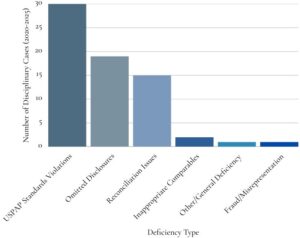
Appraisal Disciplinary Actions chart
Disciplinary cases show that nearly all appraisal deficiencies could have been remediated or prevented through proper reviews. Data: Ohio Appraiser Disciplinary Actions 2020-2025

What are real estate appraisal reviews?

A real estate appraisal review evaluates an appraisal report for completeness, accuracy, consistency and compliance with applicable standards.

Qualified professionals who are independent from the subject transaction and have experience in the relevant property type should perform appraisal reviews to maximize the benefits. Use consistent review checklists with a clear understanding of the client’s scope of work. Align with client-specific requirements and regulatory compliance. Provide a detailed narrative of the transaction appraisal that documents findings and highlights deficiencies or recommendations.

Key benefits of real estate appraisal reviews

  • Enhances accuracy and reliability: Errors, omissions, or flawed assumptions in an appraisal can result in inaccurate valuations. A review identifies discrepancies and unsupported conclusions to ensure the final report is accurate and defensible.
  • Mitigates financial risk: For lenders and investors, misvalued properties carry significant risks. Reviews serve as a risk.
  • Ensures regulatory and standards compliance: Financial institutions are subject to strict regulatory requirements, including the Uniform Standards of Professional Appraisal Practice (USPAP), the Financial Institutions Reform, Recovery, and Enforcement Act of 1989 (FIRREA) and the Dodd-Frank Wall Street Reform and Consumer Protection Act. Appraisal reviews help ensure compliance with these requirements, protecting the institution from legal or regulatory penalties.
  • Improves consistency across valuations: For organizations managing multiple appraisals, reviews promote consistency in methodology, terminology and value conclusions. This supports transparency and establishes quality standards.
  • Cost limitations: Financial institutions with qualified in-house reviewers can use them as a resource to reduce risk. However, third-party providers can provide review services, with costs passed on to the customer as a line item on the closing settlement sheet.

Regulatory compliance explained

Uniform Standards of Professional Appraisal Practice (USPAP)

The purpose of USPAP is to promote and maintain a high level of public trust in appraisal practice by establishing requirements for appraisers. It sets forth standards for all types of appraisal services, including real property, personal property, business, appraisal review and mass appraisal. It is essential that appraisers develop and communicate their analyses, opinions and conclusions to intended users in a manner that is meaningful and not misleading. (source: www.appraisalfoundation.org and www.appraisers.org)

The Dodd-Frank Wall Street Reform and Consumer Protection Act

Commonly known as Dodd-Frank, it is legislation that was passed by the U.S. Congress in response to financial industry behavior that led to the financial crisis of 2007–2008. It sought to make the U.S. financial system safer for consumers and taxpayers. It established a number of new government agencies tasked with overseeing the various components of the law and, by extension, various aspects of the financial system. The Dodd Frank Act aimed to protect the independence of appraisers, reasonable and customary appraisal fees, appraiser certification and education standards, requirements for Appraisal Management Companies (AMC’s), standards for Automated Valuation Models (AVMs) and Broker Price Opinions (BPOs), additional provisions for high-risk mortgages, among other issues. (source: www.investopedia.com by Adam Hayes updated February 01,2025 and Regulatory Issues Facing the Real Estate Appraisal Profession)

Financial Institutions Reform, Recovery, and Enforcement Act of 1989 (FIRREA)

FIRREA has reshaped lending practices, particularly in real estate and mortgage financing. Lenders must adopt rigorous underwriting standards to ensure loans are extended to creditworthy borrowers, reducing the risk of defaults and enhancing financial system stability. Certified appraisals are now required to ensure accurate property valuations, critical for mitigating systemic risk in mortgage-backed securities. (source: www.accountinginsights.org Published Feb 13, 2025 and Regulatory Issues Facing the Real Estate Appraisal Profession)

Financial institutions face heightened risk if appraisals are not thoroughly reviewed. Independent reviews reduce risk, ensure adherence to standards and save valuable staff time. At Young & Associates, we provide independent appraisal reviews that give your team confidence in lending decisions while reducing compliance burdens. Let Young & Associates help you navigate appraisal compliance with confidence and efficiency. Reach out for a consultation.

Elevating your financial institution: Why Young & Associates is your trusted partner for success

The Young & Associates advantage

In the fast-paced world of banking and credit unions, the stakes are high, and the landscape is ever-changing. As you gear up for the upcoming year, you need a strategic partner you can trust. One with a proven track record, unmatched expertise, and an unwavering commitment to your success.

45 years of trust and excellence

For nearly half a century, Young & Associates has been at the forefront of the financial industry, helping banks and credit unions thrive in an evolving marketplace with consulting, outsourcing, and education services. Our longevity speaks volumes about our dedication and resilience. Here’s why our 45 years of experience matter:

  • Stability in a shifting landscape: In an industry marked by constant change, our steadfast presence provides you with the stability you need to navigate turbulent waters confidently. We have a proven track record as a strategic partner in helping financial institutions navigate complexities and maintain a competitive edge.
  • Time-tested strategies: We’ve witnessed industry trends come and go, and our time-tested strategies reinforced with continuing education have consistently delivered results. Trust us to adapt and evolve with the times while maintaining our commitment to excellence.

Over the past 45 years, we have been a trusted partner for numerous institutions, adapting and evolving to meet their changing needs. Our longevity in the industry attests to our unwavering dedication to our clients and our ability to evolve with the changing financial landscape.

Your success simplified: Young & Associates is a full-service provider

Young & Associates offers a comprehensive suite of services designed to streamline your operations and simplify vendor management. We understand that in the fast-paced world of banking and credit unions, efficiency and convenience are paramount.

At Y&A, our offerings are not limited to a single area of expertise. When you partner with us, you gain access to a wide range of services, all under one roof. Whether you require support with regulatory compliance, lending, appraisal reviews, quality control, liquidity management, risk management and strategic planning, internal audit, information technology and cybersecurity, human resources, or training and development, we have you covered. Our clients often find value in our partnership beyond the scope of their initial engagement. They reach out for questions and seek clarifications in areas where they haven’t formally enlisted our services, trusting in our wide breadth of expertise to provide guidance and support their advancement.

By offering this holistic approach, we aim to be your trusted one-stop shop for all your financial institution’s needs. No more juggling multiple vendors – with Young & Associates, you can simplify your operations and enjoy a more efficient process. We aim to be the partner you turn to whenever an opportunity or challenge arises.

Experts with hundreds of years of combined experience

When you choose Young & Associates, you gain access to a team of consultants with centuries of collective experience in the banking and financial sector. Our consultants have been bankers themselves, giving them a unique perspective and an in-depth understanding of the challenges and opportunities specific to financial institutions. With decades of hands-on, real-world experience, our experts have walked in your shoes, gained invaluable insights, and honed their skills within financial institutions. We acknowledge that each challenge is distinct, and our diverse team possesses the expertise and proficiency required to address intricate details while harmonizing them with broader strategic considerations, ultimately ensuring your success.

High-quality, thorough work that sets Young & Associates apart

At Young & Associates, we take pride in the quality and thoroughness of our work. In the financial industry, precision can make or break your institution. Our meticulous approach ensures that no detail is overlooked, and your operations run smoothly.

Quality is the cornerstone of our services. We pride ourselves on our comprehensive approach, leaving no stone unturned in ensuring the highest standards of excellence. Our services stand out for their exceptional quality, achieved through our unyielding commitment to precision, thoroughness, and delivering actionable results.

Our sole focus is empowering financial institutions

Unlike other consulting firms with diverse portfolios, Y&A has one singular focus – financial institutions. This exclusive focus means:

  • Deep industry knowledge: We immerse ourselves in the financial sector, constantly staying ahead of industry trends and challenges to provide you with the most relevant insights and solutions.
  • Tailored solutions: Your needs are unique, and we understand that. Our exclusive focus allows us to customize our services to suit your institution’s specific requirements.

Our unwavering focus on financial institutions ensures that we possess in-depth insights into your specific challenges and opportunities. We exclusively serve banks, credit unions, and financial institutions. You can trust us to provide insights and solutions tailored to your unique needs.

Building lasting partnerships for mutual success

At the heart of our approach is a commitment to building lasting partnerships. We believe that your success is intertwined with ours, and it resonates as the success of the communities you serve. Here’s why our approach to partnerships matters:

  • Long-term vision: We’re not in it for the short haul. We’re here to support your institution’s growth and success over the long term. Our dedication centers on delivering unmatched service and expertise to empower you in generating shareholder value and enhancing the communities you serve.
  • Your goals, our mission: Your strategic objectives become our mission. We’re dedicated to helping you achieve your goals, no matter how ambitious they may be.

At Y&A, we go beyond transactional engagements; our commitment lies in forging enduring partnerships with our clients. We work collaboratively, side by side, to understand your goals and challenges. We’re dedicated to helping you achieve and exceed your financial aspirations, enabling you to better serve your communities.

Whether you’re planning for the upcoming year or envisioning your institution’s future, Young & Associates is here to provide ongoing support and guidance. With our time-tested experience, all-in-one solutions expert consultants, high-quality work, exclusive focus, and commitment to lasting partnerships, we’re your best ally in achieving success in the ever-evolving world of banking and credit unions.

Ready to discuss how Young & Associates can make a difference for your institution? Contact us today to begin a journey toward excellence and growth.

Your success simplified. Choose Young & Associates as your comprehensive partner.

Agencies Amend Real Estate Appraisal Regulations (September 27, 2019)

By: Kyle Curtis, Director of Lending Services

The OCC, Board, and FDIC adopted a final rule to amend the regulations requiring appraisals of real estate for residential real estate transactions. The rule increases the threshold level at or below which appraisals are not required for residential real estate transactions from $250,000 to $400,000.

The rule defines a residential real estate transaction as a real estate-related financial transaction that is secured by a single 1-to-4 family residential property. For residential real estate transactions exempted from the appraisal requirement as a result of the revised threshold, regulated institutions must obtain an evaluation of the real property collateral that is consistent with safe and sound banking practices.

The requirements for an evaluation are set forth in the 2010 Appraisal Guidelines, and are more extensive than what many smaller institutions do for evaluations. Readers may wish to review the requirements in that document and determine whether changes need to be made regarding your evaluation practices.

The rule also amends the agencies’ appraisal regulations to require regulated institutions to subject appraisals for federally related transactions to appropriate review for compliance with the Uniform Standards of Professional Appraisal Practice.

Effective Dates
The provisions of much of this final rule will be effective by the time you read this; however, the evaluation requirement for transactions exempted by the rural residential appraisal exemption and the requirement to review appraisals for compliance with the Uniform Standards of Professional Appraisal Practice are effective on January 1, 2020.

Incorporation of the Rural Residential Appraisal Exemption
Congress amended Title XI to add a rural residential appraisal exemption. Under this exemption, a financial institution need not obtain a Title XI appraisal if the property is located in a rural area; the transaction value is less than $400,000; the financial institution retains the loan in portfolio, subject to exceptions; and not later than three days after the Closing Disclosure Form is given to the consumer, the financial institution or its agent has contacted not fewer than three state-certified or state-licensed appraisers, as applicable, and has documented that no such appraiser was available within five business days beyond customary and reasonable fee and timeliness standards for comparable appraisal assignments.

Given the general rule increase to $400,000, essentially these requirements become moot.

Addition of the Appraisal Review Requirement
The Dodd-Frank Act amended Title XI to require that the agencies’ appraisal regulations include a requirement that Title XI appraisals be subject to appropriate review for compliance with USPAP.

Appraisal review is consistent with safe and sound banking practices, and should be employed as part of the credit approval process to ensure that appraisals comply with USPAP, the appraisal regulations, and a financial institution’s internal policies. Appraisal reviews help ensure that an appraisal contains sufficient information and analysis to support the decision to engage in the transaction. We recently had a discussion with a banker who did not review an appraisal. When they “got around to it” they discovered that the appraisal was “not even close,” and ordered a new appraisal. Based on the new appraisal, their LTV was over 130%.

Many financial institutions may already have review processes in place for these purposes. Evaluations need not comply with USPAP. While financial institutions should continue to conduct safety and soundness reviews of evaluations to ensure that an evaluation contains sufficient information and analysis to support the decision to engage in the transaction, the USPAP review requirement in Title XI does not apply to such a review.

The agencies decided to implement the requirement that financial institutions review appraisals for federally related transactions for compliance with USPAP. The agencies encourage regulated institutions to review their existing appraisal review policies and incorporate additional procedures for subjecting appraisals for federally related transactions to appropriate review for compliance with USPAP, as needed.

Conclusion
Readers who wish to read the entire 80-page document as prepared by the regulators can find it at:
https://www.fdic.gov/news/board/2019/2019-08-20-notice-sum-b-fr.pdf?source=govdelivery&utm_medium=email&utm_source=govdelivery

Young & Associates, Inc. can offer assistance with appraisal review, and any other compliance topics. Please feel free to contact me for information regarding these services at kcurtis@younginc.com or (330) 422.3445.

Proposed Rulemaking – Changes to the Appraisal Threshold for Residential Real Estate-Related Transactions

The OCC, Federal Reserve Board, and FDIC (collectively, the agencies) jointly issued a notice of proposed rulemaking titled Real Estate Appraisals, dated December 7, 2018 which was published in the Federal Register for a 60-day comment period. The Appraisal NPR proposes to increase the threshold for residential real estate transactions requiring an appraisal from $250,000 to $400,000. Evaluations would still be required for transactions exempted as a result of the proposed threshold. In addition, the agencies are proposing several conforming and technical amendments to their appraisal regulations.

The agencies are proposing to define a residential real estate transaction as a real estate transaction secured by a single 1-to-4 family residential property, which is consistent with current references to appraisals for residential real estate.

The proposed rule would amend the agencies’ appraisal regulations to reflect the rural residential appraisal exemption in the list of transactions that are exempt from the agencies’ appraisal requirement. The amendment to this provision would be a technical change that would not alter any substantive requirement, but the proposal would require regulated institutions to obtain evaluations for transactions secured by residential property in rural areas that have been exempted from the agencies’ appraisal requirement pursuant to the Economic Growth, Regulatory Relief and Consumer Protection Act, commonly known as the rural residential appraisal exemption, and would fulfill the requirement to add appraisal review to the minimum standards for an appraisal.

Evaluations
With the proposed increase in the threshold, it is expected that many institutions will now utilize internal staff to prepare evaluations for transactions that are less than $400,000, so it might be time to revisit the Interagency Appraisal and Evaluation Guidelines (Federal Register, Vol. 75, No. 237), as well as the Interagency Advisory on Use of Evaluations in Real Estate-Related Financial Transactions (FDIC, FIL 16-016). While the Guidelines state that an evaluation is not required to be completed by a state-licensed or state-certified appraiser or to comply with USPAP, the evaluation preparer should, however, be knowledgeable, competent, and independent of the transaction and the loan production function of the institution. Evaluations may be completed by a bank employee or by a third party. In smaller communities, bankers and third-party real estate professionals have access to local market information and may be qualified to prepare evaluations for an institution.

An evaluation should provide a reliable estimate of the market value of the property and, therefore, the approach or approaches used in an evaluation should be appropriate to the property being valued, and the intended use, so it may be appropriate to omit one or more of the three approaches to value. If the income approach is the primary approach for a tenant-occupied, income-producing
property, it may be appropriate to omit the sales comparison approach and the cost approach.  Similarly, if the sales comparison approach is the primary approach for a single-family residence, it may be appropriate to omit the cost approach and the income approach.

The Guidelines provide information regarding the minimum content that should be contained in an evaluation. Unlike an appraisal report that must be written in conformity with the requirements of USPAP, there is no standard format for documenting the information and analysis performed to reach a market value conclusion; but like an appraisal report, the evaluation should contain sufficient information to allow a reader to understand the analysis that was performed to support the value conclusion and the institution’s decision to engage in the transaction.

Appraisal and Evaluation Reviews
The proposed rule would make a conforming amendment to the minimum requirements in the agencies’ appraisal regulations to add appraisal review. The agencies propose to mirror the statutory language for this standard. As outlined in the 2010 Guidelines, which provide guidance on the review process, the agencies have long recognized that appraisal review is consistent with safe and sound banking practices.

The agencies are proposing to implement the appraisal review provision in Section 1473(e) of the Dodd-Frank Act, which amended Title XI to require that the agencies’ appraisal regulations include a requirement for institutions to subject appraisals for federally related transactions to appropriate review for compliance with the Uniform Standards of Professional Appraisal Practice (USPAP). While most institutions follow the guidance, the proposed rule would implement this statutory requirement.

For more information on this article or on how Young & Associates, Inc. can assist with the appraisal review process, contact Kyle Curtis at 330.422.3445 or kcurtis@younginc.com.

Criteria for Determining Loan Defects on the Secondary Market

By: Debra Werschey, Consultant and Manager of Secondary Market Services

In determining whether there is a significant defect on a loan, the quality control reviewer must give due consideration to the severity of the defect. In addition, the defect must relate but not be limited to one of the following:

1. The underwriting of the borrower’s creditworthiness and capacity. This would entail the borrower’s income, credit, liabilities, and assets.
2. The borrower’s eligibility and qualification. Things to consider are the area median income, first time home-buyer status, and status as lawfully present in the United States.
3. The underwriting criteria related to property or project eligibility. Is the property for residential use or condo eligible?
4. The property appraisal or the physical condition of the property. A close examination of the property appraisal is required. Are the comparable sales similar to the subject?
5. The loan and product terms and criteria. Criteria such as LTV ratio, occupancy, credit score, and loan purpose must be reviewed. The terms for ineligible transaction types, products that may require special lender approval as a prerequisite for delivery, limitations on cash out to borrowers that determines the type of refinance, and any negotiated exception or variance must be considered.
6. The requirements applicable at the time of loan purchase. This would include making sure that there are no defaults, all taxes and insurance premiums have been paid or escrows established, and no modification, encumbrance, subordination, or release of mortgage has occurred.
7. The existence, sufficiency, or enforceability of any required insurance or guaranty. The property must have sufficient hazard insurance coverage in place.
8. The form and/or execution of required loan documents that without which made the loan ineligible for sale or limit the enforceability of the required loan terms. The file must contain the Uniform Residential Loan Application,
any power of attorney used, and any nonstandard and special purpose documents such as living trusts.

All of the above factors and more should be taken into consideration when a reviewer is completing a post-closing quality control review to identify defects. Young & Associates, Inc. is a trusted provider of mortgage quality control reviews and can assist your bank in this area. For more information on our quality control services, contact me at 1.800.525.9775 or click here to send an email.

Regulatory Attention on CRE Portfolios is Rising

By: Tommy Troyer, Senior Consultant and Loan Review Manager

Over the last several months, it has become increasingly difficult to miss the fact that the federal regulatory agencies (the FDIC, Federal Reserve, and OCC) believe that credit risk is on the rise across the banking industry and particularly within Commercial Real Estate (CRE) portfolios. While industry-wide developments are of course not necessarily reflective of the situation of any single bank, it is the case that regulatory concerns about building credit risk in CRE portfolios makes it more likely that your bank’s CRE policies, underwriting, and portfolio management will be closely scrutinized in your next safety and soundness exam. Note that in this context, CRE refers to what are sometimes called non-owner occupied commercial real estate loans: loans for which the sale of the property, take-out financing, or third-party rental/lease income are the primary sources of repayment.

Recent Comments on Increasing CRE Risk
On December 18, 2015, all three federal bank regulatory agencies issued the interagency Statement on Prudent Risk Management for Commercial Real Estate Lending, an existing guidance on CRE lending. In fact, the statement itself contains no new guidance or regulatory expectations. Its purposes, instead, appear to be to “remind financial institutions of existing regulatory guidance on prudent risk management practices” for CRE and, perhaps more importantly, to highlight the belief that credit risk in CRE portfolios is increasing and must be carefully monitored and managed. The guidance highlights several reasons to believe that CRE portfolios may experience some strain over the next several years. These include both market factors (historically low capitalization rates are cited) and findings from recent exams (easing of underwriting standards along several dimensions, increasing frequencies of underwriting policy exceptions, and insufficient monitoring of market conditions).

The new interagency statement is far from the only suggestion of increased concern regarding the CRE market. The OCC’s Semiannual Risk Perspective for Fall 2015 cites easing underwriting standards, increasing CRE concentrations (especially in multifamily), and for community banks, strong growth in CRE lending as possible risks. The December 2015 – January 2016 RMA Journal includes the final installment of the publication’s annual rundown of “Today’s Top Credit Risk Issues.” Multifamily lending makes the list, suggesting that the Risk Management Association, a respected industry group unaffiliated with any financial regulators, also sees notable risk in the CRE market.

The fact that the CRE market remains competitive in many areas, combined with low interest rates, has thus far meant that several traditional but lagging indicators of credit risk (for example, delinquency and non-accrual rates) have not yet shown signs of weakening. Nonetheless, as has been demonstrated in past credit cycles, the risk factors cited above can often lead to increases in credit risk that do eventually result in deteriorating asset quality and increasing charge-offs.

Prudent CRE Risk Management for Community Banks
The good news is that the keys to effectively managing risks in the CRE portfolio are not mysteries and are achievable for any disciplined and committed community bank. The recent interagency statement provides a good summary. It notes that, in part, banks that successfully manage CRE risk:

  • Establish and adhere to appropriate policies, underwriting standards, and concentration limits
  • Conduct accurate cash flow analysis on the project, borrower, and global levels at underwriting and on an ongoing basis
  • Effectively monitor market developments (supply and demand, vacancy and rental rates, etc.)
  • Implement appropriate appraisal review and collateral valuation processes

In addition to the factors described above, two additional critical features of CRE risk management, CRE Stress Testing and Independent Loan Review, are mentioned. These processes can be performed internally by community banks, but due to resource and other constraints may be both more efficient and more effective if outsourced.

Stress Testing the CRE Portfolio
The interagency statement notes that “market and scenario analyses” that “quantify the potential impact of changing economic conditions on asset quality, earnings, and capital” are an important aspect of CRE risk management. This is a reference to stress testing the CRE portfolio. Further, the 2006 interagency Concentrations in Commercial Real Estate Lending, Sound Risk Management Practices states that any institution with a CRE concentration “should perform portfolio-level stress tests.” Even if your bank does not meet the concentration thresholds defined in the 2006 guidance for identifying institutions with “potentially…significant CRE concentration risk,” stress testing the CRE portfolio can have a number of important benefits. By quantifying the impact of several adverse scenarios on asset quality, earnings, and capital, a CRE stress test can inform your bank’s strategic and capital planning processes, your internally established credit concentration limits and practices, and your credit policy and underwriting requirements.

Young & Associates, Inc. offers a CRE Portfolio Stress Testing service that provides an insightful and efficient stress testing solution. Our service uses data specific to your bank’s portfolio to stress your CRE portfolio across several factors. Our report will assist in quantifying the possible impact to earnings and capital that could result from decreases in collateral value, property net operating incomes, or increases in interest rates. In the current environment in which interest rate increases are likely over the next several years and decreases in collateral values are at least a distinct possibility, understanding your bank’s possible exposure is key to maintaining a safe and sound bank and demonstrating effective risk management to your examiners. Our CRE Stress Testing service is performed remotely, meaning that no travel expenses are associated with the service. More importantly, once the project has been discussed and you have provided a response to our initial data request, bank management can remain free to work on the many other initiatives that require attention, while we make use of our existing systems and expertise, making the stress testing process an efficient one. Our service includes a detailed report documenting the results of the stress test and, if desired, a phone presentation of the findings to management or the board.

Independent Loan Review
An effective independent loan review function is critical to assessing asset quality in the CRE portfolio, determining the accuracy and effectiveness of both underwriting and the ongoing monitoring of CRE credits, and identifying whether exceptions to credit policies or underwriting standards are being appropriately identified and approved by the bank. Any issues identified by loan review can be proactively addressed by the bank, helping to ensure risk mitigation is in place before the issues are identified by examiners or are revealed by deteriorating asset quality.

Most community banks find that their size and the requirement that loan review be performed by a qualified, independent party means that outsourcing loan review is the best option. Young & Associates, Inc. has extensive experience providing loan reviews for community banks. Our loan review of a sample of your CRE portfolio may identify individual credits of concern, but more importantly, will provide perspective regarding whether your credit standards, credit analysis, and ongoing monitoring of existing credits are adequate for the nature of your CRE portfolio. In this way, our findings not only inform management and the board about existing risks in the portfolio, but provide recommendations for effectively managing that risk. We can perform loan reviews on-site or, if your technological capabilities allow, remotely, allowing you to reduce or eliminate the travel expenses associated with the loan review.

For information regarding Young & Associates, Inc.’s CRE Stress Testing service, please contact Kyle Curtis at 1.800.525.9775 or click here to send an email. For information regarding Young & Associates, Inc.’s Independent Loan Review service, please contact Tommy Troyer at 1.800.525.9775 or click here to send an email.

Managing Fannie Mae’s Appraisal Guidance

By: Ollie Sutherin, Consultant and Manager of Secondary Market QC Services

On May 5, 2021, Fannie Mae announced a break from its traditional guidance regarding field review appraisals in favor of a more technological approach to the reverification of appraisals. These changes were effective immediately.

Historically, Fannie Mae required one field review appraisal to be ordered for every 10 loans reviewed. The revised guidance states that, “the lender must complete a collateral risk assessment for all mortgage loans with an appraisal as a part of its random QC sample. It is acceptable for the collateral risk assessment to be completed by an individual who is not a licensed or certified appraiser.” Further, the collateral risk assessor must be competent in appraisal theory and must be able to specifically:

  • Determine that a property meets eligibility requirements including the LTV, CLTV, and HCLTV ratios
  • Assess appropriateness of comparable sales
  • Assess appropriateness of the data presented in the appraisal report
  • Conclude that the rationale for the reconciliation of value is supported
  • Prescribe corrective actions for defects identified in the appraisal process
  • Reconcile flags and messages that were identified in Collateral Underwriter (CU) if the property was able to be scored in CU. If the property was not able to be scored in CU, then reconcile any known quality messages (messages, alerts, flags) that are reflected in other third-party tools if utilized.

If the lender is unable to complete the above assessment or appropriately determine the quality of the original appraisal, it may order either a desk review or field review from a licensed appraiser for each sampled loan. The desk review or field review must address all the points in the above requirements.

This is seen as a significant change in the industry as the costs for traditional field reviews were becoming comparable in most cases to traditional appraisals. Additionally, it has become increasingly challenging to contract a licensed appraiser to complete the field reviews, especially in rural areas.

As the industry transitions into effectuating these new changes, the key takeaway for financial institutions is to contemplate either 1) hiring competent staff or train existing personnel to complete the assessments in accordance with the guidelines, or 2) engage knowledgeable third-party vendors to coordinate the completion of the work.

If your institution needs assistance pertaining to these or other quality control requirements, please contact Dave Reno, Director of Business Development, at dreno@younginc.com or 330.422.3445.

Connect with a Consultant

Contact us to learn more about our consulting services and how we can add value to your financial institution

Ask a Question