Author: admin

Is your marketing engine a well-oiled machine? Or just a collection of shiny parts?

By Nicole Conrad, director of marketing, Young & Associates

In the current landscape of financial services, community bank marketing leaders are often distracted by the latest “shiny new toys.” From generative AI and complex CRM suites to automated social media engines, the promise of a technological silver bullet is everywhere. Yet, despite these investments, many community institutions still struggle to compete with national banks.

The success of AI tools and digital marketing depends on the strength of the strategy behind them. To compete effectively, you must focus on the fundamentals before layering on advanced technology. Technology can only accelerate the direction you are already headed; if your foundation is weak, technology can exacerbate existing issues and contribute to more severe organizational failures.

A high-performing marketing engine is not a collection of disconnected parts. It is a unified system built to achieve the only goal that matters: long-term, profitable customer loyalty.

Revisiting your institution’s marketing basics

Digital marketing and AI implementation depend on the strength of your underlying strategy. Investing in marketing software without a clear plan can waste capital and human resources. To diagnose the health of your marketing engine, you should audit your marketing foundation against three questions:

  • Who is our target? Have we identified the specific segments that view us as a primary partner, or are we casting a net so wide it catches nothing?
  • What is our value? Is our value proposition strong enough to overcome the inertia of switching, or are our products too complex for our own staff to explain?
  • Where is the trust? Are we deploying our message through channels the consumer actually engages with and trusts?

Without these answers, technology cannot bridge the gap between a bank and its customers. Marketing only generates ROI when the right message reaches the right person at the right time.

The right person: Humanizing your brand through buyer personas

Understanding your target audience requires stepping outside your role as a banker and seeing the experience from their perspective. Today’s consumer is not just looking for a transaction; they want to feel an authentic human connection and see their own identity reflected in the brands they choose.

This is where buyer personas come in. A buyer persona is a fictionalized version of your ideal account holders based on demographic data and qualitative research into their goals and concerns.

Buyer personas may include:

  • Demographics, such as age and gender, location, economic status, and marital or family status.
  • Qualitative drivers, such as goals, pain points, concerns, and desired outcomes.
  • Behavioral habits and preferences, such as media consumption, banking habits, and technical expectations.

Your buyer personas should evolve with consumer preferences and the digital landscape. When you know exactly who the customer is, you can stop the “shotgun approach” and meet them at the right time with a message that resonates. This allows you to tap into a “consciousness of kind” — that intrinsic understanding that your bank and its customers belong to the same community and share the same values.

For the community bank, humanizing the brand is a competitive advantage. National banks have three times as many customers per branch compared to the average community institution. This density forces them into cold, numbers-driven business models. You have the capacity to treat customers as people, and this is nonnegotiable in today’s market.

According to Salesforce’s State of the Connected Customer report, 84% of customers say being treated like a person, not a number, is very important to winning their business.

By deeply understanding who your customer is, you move from being a commodity to being a neighbor. Knowing the persona helps you predict the right time to connect, meeting the customer where they are in their decision-making journey. If you don’t know who you are talking to, don’t be surprised when no one listens.

The right time: Understanding the buyer’s journey

We are seeing a fundamental shift from outbound, interruptive marketing to inbound, helpful marketing. Inbound marketing focuses on being where the consumer is with the answers they need. The buyer’s journey supports this approach by nurturing the relationship, so the message evolves as the customer moves through each touchpoint.

The buyer’s journey is the process a person goes through before they open an account or sign a loan. It typically consists of three core stages:

  • Awareness: The individual recognizes a financial problem or need.
  • Consideration: The individual researches various solutions and providers.
  • Decision: The individual selects a specific institution.

Mapping this journey is vital because banking is not an impulse purchase. Market data confirms that most banking shoppers begin their research two to three months before they switch institutions. This “invisible” phase is where banks may lose prospects by trying to close the sale too early.

To be successful, you must nurture them through various touchpoints, from helpful blog posts and social media tips to personalized emails and direct mail. The right message will change depending on where they are in this journey; you wouldn’t offer current car loan rates to someone who is just starting to save for their first vehicle.

The right message: Building your messaging matrix

Once you have your personas and their journeys mapped, you can build a strong messaging matrix. This combines your unique value propositions (UVPs) with the specific needs of each persona at each stage of the journey. The primary goal of a messaging matrix is to solve the difficult challenge of getting the right message to the right person at the right time.

Start with a basic messaging guide. Create a grid that crosses your personas with the stages of their journey. For each intersection, determine which UVP best solves that persona’s problem at that specific time.

Example: An “Awareness” message for a first-time homebuyer might focus on “Can I afford a house?” whereas a “Decision” message would focus on your specific loan application tips and competitive rates.

By mapping messages to specific audience needs, the bank provides content that is meaningful to the consumer’s current situation and avoids burdening people with irrelevant content.

Documented messaging provides staff and brand advocates with a custom-made set of points that capture the heart of the brand. This prevents the brand voice from becoming diluted or fragmented across different channels. This guide offers a straightforward approach to educating employees and reinforcing consistent marketing messaging throughout your organization, transforming your workforce into brand advocates.

A high-performing marketing engine is not a marketing task; it is a core organizational strategy. It requires executive buy-in, strong execution in the branches, and a marketing team that knows how to drive traffic to both digital and physical locations.

AI and digital tools have changed the speed of the race, but not the rules. These tools amplify what already exists: a strong strategy becomes stronger, and a fragmented strategy becomes weaker. If your foundation is built on the right message, the right person, and the right time, technology can help you take you to the finish line. If not, no amount of shiny parts will save you.

We would welcome a conversation to discuss your institution’s business and marketing strategy and be happy to help build out your strategy. Learn more about our strategic planning services here. 

Analyzing the OCC’s Spring 2026 Semiannual Risk Perspective for community bankers

The OCC’s Spring 2026 Semiannual Risk Perspective gives community financial institutions a strategic view of the most significant risks affecting the banking industry. Using the National Risk Committee’s latest findings, the report helps bank leaders evaluate institutional strength, identify emerging threats, and align risk management strategies with evolving federal regulatory expectations. This article examines the key insights and banking industry trends highlighted in the Spring 2026 report.

As the banking industry moves through the spring of 2026, U.S. financial institutions face a market defined by speed, volatility, and structural change. Strong earnings and high liquidity continue to support the system, but rising geopolitical tensions, AI-driven fraud, and mounting commercial real estate refinancing pressure are forcing banks to rethink traditional risk management strategies.

The banking system enters 2026 from a position of strength

The federal banking system enters 2026 from a position of strength, characterized by improved earnings, robust loan growth, and solid balance sheets. In 2025, bank performance was supported by a resilient U.S. economy and a decline in funding costs that drove revenue growth. Capital ratios and liquidity levels remain high by historical standards, with a system-wide liquid assets-to-total assets ratio of 31 percent — more than double the 15 percent recorded in 2008.

The 2026 macroeconomic outlook and structural headwinds

Despite these positive trends, the outlook for 2026 is tempered by significant uncertainties:
  • Geopolitical Risk: The conflict in the Middle East is a primary concern, with the potential to disrupt global energy flows (particularly through the Strait of Hormuz) and fuel inflation.
  • Credit Headwinds: While aggregate credit risk is manageable, specific segments — including commercial real estate (CRE), private credit markets, and consumer credit for lower-score borrowers — require ongoing monitoring.
  • Operational Threats: Cybersecurity remains an elevated risk, driven by sophisticated foreign state-sponsored actors and the emergence of advanced AI tools that enhance the speed and scale of attacks.
  • Regulatory Evolution: The OCC continues to implement the GENIUS Act regarding stablecoins and is working to tailor compliance requirements to reduce the burden on community banks while addressing increased sanctions and money laundering risks.

U.S. economy continues growing despite inflation risks

The U.S. economy grew by 2.1 percent in 2025, outperforming other advanced economies. This growth was driven by strong consumer spending and business investment, particularly in artificial intelligence.

Labor and inflation

  • Labor Market: Unemployment remained low at 4.3 percent as of March 2026. While payroll gains were strong in the first half of 2025, they reversed in the second half, leading to a characterized state of “employer caution” in early 2026. Wage growth eased to 3.4 percent by the end of 2025.
  • Inflation: Core inflation started 2026 at 3.1 percent, remaining above the Federal Reserve’s 2 percent target. Stickiness in service-sector inflation and high shelter costs persist.
  • Monetary Policy: After holding rates steady in early 2025, the Federal Reserve implemented three rate cuts in the second half of that year.

2026–2027 economic projections

According to the April 2026 Blue Chip consensus forecast, real GDP is expected to grow by 2.2 percent in 2026 and 2.0 percent in 2027. However, headline inflation is projected to peak at an annualized 5.1 percent in the second quarter of 2026 due to the Middle East conflict before falling in the second half of the year.

Significant economic risks

  • Strait of Hormuz: Sustained closure could drive higher energy costs, reducing consumer purchasing power and increasing business production expenses.
  • Interest Rate Expectations: Market participants have adjusted expectations downward; the April forecast anticipates only one rate cut in 2026, while financial market pricing suggests even that may not occur.

Bank performance analysis

Profitability for the federal banking system increased in 2025. Return on equity (ROE) exceeded 10 percent for both the total system (12.2 percent) and community banks (11 percent).

Financial trends (2024–2025)

Metric
System Total (2025)
System % Change
Community Banks (2025)
Community % Change
Net Interest Income
$493.9 Billion
+3.7%
$34.4 Billion
+12.2%
Noninterest Income
$249.6 Billion
+11.0%
$11.0 Billion
+7.1%
Net Income
$199.2 Billion
+8.8%
$12.5 Billion
+21.6%
Total Loan Balances
—
+6.0%
—
+5.0%
Net interest margins (NIM) improved across the board, particularly for community banks, which benefited from lower funding costs and more favorable asset yields compared to larger institutions. Larger banks saw a quicker downward repricing of their short-term commercial and industrial (C&I) loans.

Key financial risks

Credit risk

Credit quality remains satisfactory, with past-due and nonaccrual loan ratios below long-term averages. However, several sectors show emerging vulnerabilities:
  • CRE: Office properties still face high vacancy rates, though net absorption turned positive in late 2025. Refinancing risk is a major concern as loans originated in low-interest environments mature. Conversely, retail remains a “bright spot” with low vacancy rates.
  • Private Credit: While generally performing well, there are signs of weakening in some sectors. The use of “paid-in-kind” (PIK) mechanisms and debt restructurings may be masking underlying credit deterioration.
  • Consumer Credit: Delinquencies have increased among borrowers with lower credit scores, though supervised banks have manageable exposure to these higher-risk segments.

Market risk

Unrealized losses on securities portfolios fell in 2025 to their lowest levels since 2021. Uninsured deposits saw a modest increase as a share of total deposits, primarily at banks with over $500 billion in assets, though they remain in line with long-term averages.

Compliance and operational risks

Cybersecurity and artificial intelligence

The threat landscape is increasingly dominated by foreign state-sponsored actors and sophisticated criminal groups.
  • AI as a Threat: AI lowers the barrier to entry for cybercriminals, enabling automated reconnaissance, targeted social engineering, and adaptive malware that evades traditional defenses.
  • AI as a Defense: Banks are deploying AI tools to assist with threat monitoring and risk management. The OCC emphasizes that a sound understanding of these tools’ risks and benefits is essential for management.

Fraud risk

Fraud remains a primary driver of operational losses. Impersonation scams facilitated by social media and text messages are rising in sophistication. FinCEN has issued specific alerts regarding health care fraud schemes and money laundering networks.

Compliance and BSA/AML

Geopolitical tensions have strained compliance systems, increasing the risk of Bank Secrecy Act/anti-money laundering (BSA/AML) violations.
  • Supervisory Tailoring: The OCC is working to reduce the regulatory burden on community banks, recently clarifying examination procedures for low-risk institutions and discontinuing the Money Laundering Risk system data collection.
  • Regulatory Changes: A proposed rule is currently under consideration to amend requirements for risk-based AML and countering the financing of terrorism (CFT) programs.

Innovation and digital assets

Artificial intelligence implementation

Banks are adopting generative and agentic AI, primarily for productivity and customer experience tools.
  • Governance: The OCC advocates for “human-in-the-loop” accountability.
  • Challenges: Industry-wide challenges include a lack of explainability, data privacy, “data poisoning,” and validation difficulties.
  • Guidance: OCC Bulletin 2026-13 recently updated model risk management guidance, though generative AI models currently fall outside its specific scope. An interagency Request for Information (RFI) on bank use of AI is expected in the near future.

Digital assets and stablecoins

The regulatory landscape for digital assets is formalizing following the passage of the Guiding and Establishing National Innovation for U.S. Stablecoins (GENIUS) Act on July 18, 2025.
  • Stablecoins: The OCC issued a notice of proposed rulemaking in February 2026 to establish a federal regulatory framework for payment stablecoins.
  • Tokenization: Interagency FAQs released in March 2026 clarified that the technologies used to transact in a security do not generally change its regulatory capital treatment.

OCC’s Spring 2026 Semiannual Risk Perspective and outlook for the banking industry

The banking industry enters 2026 with strong capital levels, high liquidity, and improving profitability. However, regulators increasingly warn that the speed of emerging risks may challenge traditional oversight models. Commercial real estate refinancing pressure, private credit deterioration, AI-driven cyber threats, stablecoin regulation, and geopolitical instability are reshaping the banking landscape.

As financial institutions move deeper into 2026, banks that strengthen risk management, improve operational resilience, and adapt quickly to changing market conditions will likely remain best positioned for long-term stability and growth.

Can a 31% liquidity buffer outrun the 2026 refinancing cliff?

As we move through the spring of 2026, the American banking system resembles a fortress built on a fault line. On the ledger, the industry looks stronger than ever. Bank earnings surged throughout 2025 and pushed the system’s return on equity (ROE) to an impressive 12.2 percent. Community banks, which often absorb economic pressure first, still maintained a solid 11 percent ROE.

However, the most dangerous risks rarely wait for quarterly reporting cycles. Beneath the industry’s profitability, the National Risk Committee’s latest analysis highlights a financial landscape defined by “velocity”: AI-powered fraud evolves rapidly, geopolitical disruptions emerge suddenly, and the commercial real estate “maturity wall” advances steadily. Although the U.S. economy expanded by 2.1 percent in 2025, structural changes now outpace traditional risk management strategies. The latest regulatory data reveals six critical signals shaping the banking industry in 2026.

The 31 percent safety net

The NRC report’s most reassuring finding centers on the industry’s liquidity position. By the end of 2025, liquid assets accounted for 31 percent of total assets across the federal banking system. During the 2008 financial crisis, that same ratio stood at only 15 percent. This doubled buffer is the primary reason the system remains upright despite “higher-for-longer” interest rates and global instability.

Still, analysts cannot rely solely on aggregate figures. The NRC emphasized this point in its executive summary:

“Balance sheets remain strong, with capital ratios and liquidity high by historical standards. Earnings releases for the first quarter of 2026 indicate that these trends have generally persisted.”

The nuance? That 12.2 percent ROE is heavily skewed, driven primarily by the nation’s largest institutions. While the system-wide 31 percent liquidity buffer is a historical anomaly of strength, the underlying reality is a widening gap between the “too big to fail” giants and community banks, which hold a significantly higher concentration of long-term property loans now facing a brutal refinancing environment.

The private credit “performance mirage”

Although aggregate credit risk appears manageable, the NRC raised concerns about the expanding private credit market. As banks increase their exposure to private credit funds, they may unintentionally create what many analysts describe as a “performance mirage.”

The greatest risks sit within loan vintages originated during the low-interest-rate period of 2021 and 2022. Many of these loans still appear healthy on paper, but aggressive restructurings and paid-in-kind (PIK) arrangements often mask underlying weakness. Instead of requiring borrowers to make cash interest payments, lenders allow them to accumulate additional debt.

As a result, funds postpone defaults rather than resolve them. Investors should recognize that today’s stable yields may conceal deteriorating credit quality that could surface abruptly when these loans reach future refinancing deadlines.

The rise of agentic AI

The banking industry has moved past the “Generative AI” hype cycle. The industry now focuses on “Agentic AI,” which refers to autonomous systems capable of participating in material financial decisions such as credit underwriting and automated trading.

While banks maintain a “human-in-the-loop” model for accountability, this technology has intensified the cybersecurity arms race. AI has fundamentally lowered the barrier to entry for cybercriminals, enabling automated reconnaissance and “adaptive malware” that can evolve in real-time to evade traditional defenses.

This shift fundamentally changes the risk landscape. Traditional governance models, which often depend on quarterly reviews and slower oversight processes, struggle to keep pace with rapidly evolving AI-driven threats.

The CRE “maturity wall” and the sun belt chill

Commercial real estate (CRE) remains the banking system’s most visible weakness. The refinancing cliff has moved from theory to reality. Loans issued during the zero-interest-rate era now require refinancing at significantly higher rates, dramatically changing property economics.

  • The Cooling Sun Belt: After a massive supply wave between 2022 and 2024, rental rates in the Sun Belt and Mountain West are facing downward pressure.
  • The Resilient North: Surprisingly, the Northeast and Midwest are outperforming the cooling southern markets in both single-family and multifamily sectors.
  • The Retail Bright Spot: Retail properties have unexpectedly emerged as one of the strongest sectors. Low vacancy rates and limited new development have made retail investments more stable than office properties, which continue to face weak demand and elevated vacancies.

The GENIUS Act’s normalization of digital assets

The regulatory uncertainty surrounding digital assets effectively ended on July 18, 2025, when lawmakers signed the GENIUS (Guiding and Establishing National Innovation for U.S. Stablecoins) Act into law. This legislation formally normalized the digital dollar within the regulated financial system.

The OCC has already begun implementing a federal framework that restricts stablecoin issuance to authorized and regulated entities. Institutional investors received additional clarity on March 5, 2026, when interagency guidance confirmed that tokenization does not alter the regulatory capital treatment of securities.

This signal removes the “novelty” penalty for digital assets, paving the way for stablecoins and tokenized bonds to become standard features of the authorized financial system.

The Strait of Hormuz and the speed of global risk

Despite the domestic strength of the 31 percent liquidity buffer, the banking industry’s 2026 outlook is ultimately hostage to a narrow waterway 7,000 miles away. Analysts at Blue Chip have adopted a more defensive outlook, warning that a prolonged closure of the Strait of Hormuz could materially disrupt the global economy.

A disruption to oil and fertilizer shipments would likely trigger another major inflation spike. Blue Chip’s April forecast projects inflation could reach 5.1 percent during the second quarter under such a scenario. Rising inflation would likely eliminate any possibility of interest rate cuts in 2026 while simultaneously increasing pressure on both global trade and domestic refinancing markets.

As we look toward the second half of the year, the banking industry faces a defining challenge. The central issue no longer concerns the size of financial buffers alone, but the speed of institutional response. Banks must determine whether human-led governance systems can react quickly enough to manage the accelerating risks created by Agentic AI, geopolitical instability, and rapidly shifting financial markets.

The industry’s resilience remains real, but in 2026, the margin for error continues to shrink at an unprecedented pace.

The key to compliance success – accountability

By William J. Showalter, CRCM; senior consultant, Young & Associates

The financial industry recognizes compliance as a high-risk function. Failure to manage it effectively can result in high costs to an institution, as witnessed by many supervisory enforcement actions and fair lending settlements over the years.

Compliance management is an important element of an institution’s overall risk management efforts. It makes sense for line managers—those whose operations generate either compliance or noncompliance—to “own” compliance, just as they do all other elements of the institution’s overall risk. To make compliance management work effectively and efficiently, senior management must give line personnel the tools to succeed at compliance and hold them responsible for their results.

When senior management establishes accountability and all staff believe in it, and when the institution measures compliance performance in a meaningful way, the institution can achieve positive compliance results.

As with other aspects of compliance management, identifying and categorizing levels and types of compliance risks are critical to both efficient operations and effective outcomes in any system of enforcing accountability.

Noncompliance as risk

In recent years, the federal agencies have made a fundamental shift in the way they examine financial institutions for compliance within their overall examination process over a decade ago – to handling it with a risk-based methodology. Examiners design programs to focus attention on areas within financial institutions that may pose the most significant risks, including compliance.

The agencies work to promote a sound risk-management process at each regulated financial institution, one centered on the evaluation and management of risks. The agencies try to help financial institutions implement compliance programs that focus on anticipating, evaluating, managing, and communicating about key compliance risks.

“Compliance risk” means the risk to earnings or capital that arises when institutions violate or fail to conform with laws, rules, regulations, prescribed practices, or ethical standards.

The agencies’ examination procedures provide that compliance risk can damage an institution through any or all of the following consequences:

  • Regulatory or judicial fines and penalties
  • Payments of damages to aggrieved parties
  • Voiding of contracts
  • Diminished reputation
  • Reduced franchise value (due to monetary and reputation losses or penalties)
  • Diminished business opportunities
  • Lessened expansion potential (e.g., when fair lending or Community Reinvestment Act problems delay or disallow corporate changes, mergers, or acquisitions)

The supervisory agencies recognize that an important element in avoiding these risks and their resultant costs is an effective accountability system, where institution staff feel they own their pieces of the overall program.

Establishing accountability

A solid design must form the foundation of an effective accountability system. The system needs a few key elements to succeed: management commitment, appropriate training and communication for all staff, regular and independent performance testing, and consistent enforcement of responsibility.

  • Management commitment. Solid support from both the board of directors and senior management is vital to the success of any compliance (or other) management function. It should also be seen as in their best interests since the risks and penalties for noncompliance are tremendous, and the board and management are the ones ultimately responsible for the compliance (and other) performance of the institution. Management and the board need to understand the true importance of compliance – it is not a job to be relegated to one person, or a small group, and ignored by everyone else. “Everyone else” includes the ones who drive the institution’s compliance performance, and they must be given the tools to succeed at it and be held accountable for their results.
  • Training and communication. Training is the foundation for effective compliance, and effective accountability, since employees cannot be expected to comply with the plethora of laws and regulations that impact banking today if they have not been given appropriate instruction as to what is required of them. In structuring a compliance training program, the first step is a needs assessment – types of products and services offered, current level of staff knowledge, problems identified in audits and examinations, and so forth. The goal of the compliance training is to provide line officers and other staff with the information they need to produce positive compliance results in their particular area or job. It is not to be an exercise in information overload. Therefore, the person in charge of training (whether classroom, online, etc.) needs to scope out the proper laws and regulations to be covered, how to tie these rules in to the institution’s functions, what media and tools to use, and so forth. Communication of compliance information on a regular basis is an important complement to the “regular” training. It helps keep staff aware of changes in the compliance rules and expectations, as well as keeping compliance issues on their “radar screens.”
  • Testing. A good compliance internal review program – both periodic audits and ongoing monitoring – can serve several goals. These include giving an early warning of problems, providing a defense against litigation, and meeting regulatory expectations, in addition to furnishing measurements of department/area or individual performance.
  • Enforcement. Without consistent enforcement of accountability for compliance performance, all the other elements are pretty much for naught. If individual line managers and other personnel are “let off the hook” for poor compliance performance because, for example, of high loan production volume, then the system likely will fail.

Making it work

Human nature being what it is, there need to be incentives for good compliance performance and, perhaps more importantly, disincentives for poor results. If management does not hold all staff to the same standards, then any calls for strong results and performance will ring hollow. Employees who the institution continues to hold to proper standards will begin to resist, since management expects them to meet measures that others do not. Such a “program” is unfair and cannot succeed.

Institutions should factor compliance performance elements into job descriptions, performance evaluations, and incentive pay. It needs to be clear that line managers are ultimately responsible and accountable for compliance performance in their areas, and that compliance is an explicit part of everyone’s job.

If there are line managers who cannot or will not take responsibility for their own or their area’s compliance performance and, therefore, expose the institution to risk, the institution should send them packing and replace them with managers who are positive about compliance issues and willing to take on this important obligation.

Otherwise, the institution has to pay for expensive, redundant processes to check the work of that person(s) or area and fix their errors. Running such a “fix-it” shop is not the efficient route to take in managing compliance. When management establishes and enforces accountability, it can achieve the lowest-cost compliance — compliance embedded in normal operations rather than added on after the fact — with everyone working to get it right the first time.

Management can use an accountability matrix as a tool to run an accountability system. Institutions can customize the matrix to fit their specific situation, structure, and needs. The matrix helps management ensure that someone or some area takes responsibility for each compliance rule or issue that affects its lines of business. It should spell out the rules or issues, who is responsible for them, which areas they impact, and so forth.

Conclusion

Accountability for compliance performance – good or bad – is essential for an institution’s success in effectively managing its compliance function. Properly structured and enforced, a strong accountability program helps ensure cost-effective positive compliance results.

The CFPB and other compliance trends

By Bill Elliott, CRCM; director of compliance education, Young & Associates

The White House announced in April 2025 that its goal was to reduce the number of employees in the CFPB by about 88 percent, to 207 positions, but that decision was blocked by the courts. The decision also resulted in a lawsuit brought by the CFPB employee’s union, but since the “One Big Beautiful Bill Act” cut the CFPB funding by about half, even if the union prevails, it is unlikely that all employees will return to work.

During the first year of the Trump administration, the CFPB removed approximately 70 pronouncements. Many of those were out of date, archaic, and no longer useful. But some of them were protections that were proposed and finalized during the latter days of the Biden administration. However, they were never actually enforced.

Overdraft fees

One form of relief that consumers lost was a limit on overdraft fees. This has been an ongoing discussion for many years. Between those that believe it was unfair that lower income individuals paid the majority of the overdraft fees vs. others who believe that the culprit is financial mismanagement by consumers. The Biden CFPB finalized the overdraft regulation in 2024 but Congress overturned the regulation last year. This effectively eliminated this discussion for now.

Credit cards

The CFPB also tried to cap the amount of money consumers pay to credit card companies for late charges. The proposed limit for many would have been $10. The regulation was blocked by a federal court last year. The CFPB, under the control of the Trump administration, decided not to fight the matter in court.

Stack of paper complaintsLawsuits

The CFPB also withdrew several lawsuits.

We will mention two examples.

  1. The CFPB sued Capital One in January 2025 for $2 billion. They alleged that Capital One has misrepresented the interest rate paid on its savings accounts to customers. That lawsuit was dismissed.
  2. The CFPB also sued Early Warning Systems, the company that runs the money transfer service Zelle, in December 2024 for $870 million alleging that the EWS and the banks that operate Zelle were negligent in protecting consumers from fraud and scams. That lawsuit was also dismissed last year.

Complaints

There has also been a slowdown in the number of complaints resolved by the CFPB. The CFPB runs its own consumer complaint database, where a consumer can allege wrongdoing by their bank or financial services company and the CFPB will act as intermediary between the consumer and financial company to resolve the complaint. Under the Biden CFPB, roughly half of all consumer complaints were resolved with relief for the consumer, while under the Trump CFPB, that figure has dwindled to less than 5 percent, largely due to the staffing issues discussed above.

Compliance examinations

Following the CFPB lead, the prudential regulators (OCC, Federal Reserve, and FDIC) have all indicated (with some differences) that they are going to be changing the methods for compliance examinations. Future examinations will likely be more risk focused.

Since the regulators are going to be more targeted in their approach, they are essentially relying on banks to police other areas of compliance themselves. The examiner will likely spend more time reviewing your compliance program, and especially your compliance audit program, to assure it is functioning appropriately.

Banks must adjust accordingly, and compliance audit will (at least for some banks) need to be improved. Whether your compliance auditor/reviewer is internal or external, you need to assure that you do not get so relaxed that when the regulators do appear, you pay the price of not being properly prepared.

Time between examinations

The time in between examinations is also likely to increase. For the regulators, this will allow them to review banks using fewer examiners.

While that appears to be a “win” for banks, banks need to be careful. For instance, should you receive a “needs to improve” or “substantial noncompliance” CRA rating, you may have to live with the negative consequences of that rating for longer periods of time.

Conclusion

As you’re reviewing your compliance program, assure that all necessary pieces are in place, including compliance review/audit. It is unlikely that there will be many new regulations in the next few years. This should allow bank to ensure that they are in full compliance with the regulations that exist.

The importance of floor plan audits for lending institutions

By Wendy Dancer; consultant, Young & Associates

Auditing your institution’s Floor Plan borrowers can seem like a tedious and time-consuming task. Workload is already heavy, weather is bad and frankly, who has the time to go out and touch hundreds of cars, motorcycles and boats? Your borrower is doing fine… until they are not.

As an example of a cautionary tale, I was personally involved in a Floor Plan audit that “seemed off”. The used car lot dealer was paying off vehicles on the line as expected, when it was discovered that the subject automobiles were still physically on the lot. Then mysteriously, the same autos would get added back to the line a month later. Long story short, the dealer had taken out a 2nd floor plan line with a private finance company. Vehicles were not getting sold; rather, the Floor Plan lines were being treated as a shell game to hide business decline.

This was the red flag that tipped us off on much larger business issues, which sadly ended in the dealership closure and a work-out loan situation for our institution. Below is an overview of why skipping Floor Plan audits is not in your institution’s best interest and a way to avoid the above scenario.

What are floor plan audits?

A Floor Plan audit is a physical verification of financed inventory. Auditors confirm that units pledged as collateral exist, are located where reported, and match lender records in terms of serial numbers, condition, and status (new, used, sold, or in transit). These audits may also include reviews of sales documentation, titles, and payoff activity.

Risk mitigation and collateral protection

Floor Plan lending is essentially asset-based lending. If inventory disappears, is sold out of trust, or is inaccurately reported, the lender’s collateral position is immediately compromised.

Regular audits help:

• Detect missing, sold-out-of-trust, or misrepresented units early
• Verify that financed inventory aligns with borrowing base reports
• Reduce the likelihood of large, undiscovered losses

Early detection is critical. Identifying discrepancies after weeks or months can significantly increase loss severity.

Fraud detection and deterrence

Floor Plan audits act as both a detection mechanism and a deterrent. The knowledge that audits are conducted regularly discourages intentional misreporting, double flooring, or concealment of sales proceeds. Auditors can uncover red flags such as altered VINs, falsified documentation, or repeated delays in payoff—often before fraud escalates.

Portfolio monitoring and credit quality

Audits provide lenders with real-time insight into dealer operations and financial health. Patterns observed during audits—such as chronic shortages, poor recordkeeping, or inventory aging—can signal deeper issues like cash flow stress or operational weakness.

This information allows lenders to:

  • Adjust credit limits or terms proactively
  • Increase monitoring on higher-risk accounts
  • Make informed renewal or exit decisions

In this way, Floor Plan audits serve as an early warning system rather than just a compliance exercise.

Regulatory and policy compliance

Many lending institutions are subject to internal policies, investor requirements, and regulatory expectations related to collateral verification and risk management.

Consistent Floor Plan audits help demonstrate:

  • Sound underwriting and ongoing credit administration
  • Adherence to internal risk management standards
  • Responsible stewardship of depositor or investor funds

Well-documented audits also provide defensible support in the event of disputes, charge-offs, or regulatory reviews.

Strengthening dealer relationships

While audits are often viewed as intrusive, when handled professionally they can strengthen lender-dealer relationships. Clear expectations, consistent audit schedules, and transparent communication help reinforce accountability on both sides. Audits can also surface operational inefficiencies at the dealer level, creating opportunities for corrective action before problems become critical.

Adapting to a changing lending environment

As floorplan portfolios grow more complex—with multi-location dealers, mixed inventory types, and rapid turnover—audits remain one of the few ways to independently validate data. Hybrid and technology-assisted audits now allow lenders to balance thorough oversight with efficiency, making regular verification more practical than ever.

Conclusion

Floor Plan audits are not merely a back-office function. They are a cornerstone of prudent Floor Plan lending. By verifying collateral, deterring fraud, monitoring credit quality, and supporting compliance, audits protect both lenders and their dealer partners. In an environment where inventory values are high and margins can shift quickly, consistent and well-executed floorplan audits are essential to sustainable, profitable lending.


Consistent, independent audits are key to protecting collateral and ensuring sound portfolio management. Young & Associates provides lending process review services to help institutions strengthen oversight and maintain credit confidence. Additionally, Y&A Credit Services provides ABL field exams that give lenders a clear, objective view of collateral strength.

AI technology in the workplace

AI GlassesBy Bill Elliott, CRCM; director of compliance education, Young & Associates

We have recently been made aware of new artificial intelligence (AI) technology that may create additional risk for banks. Apparently, a bank employee had a pair of glasses that doubled as an AI recording device. These glasses were worn to work and were capable of recording private conversations without anyone’s knowledge. It is unclear whether the glasses included video, but that of course is possible. This new technology is being used for a variety of purposes and is continuing to develop.

This is a compliance issue regarding privacy of customer information. If the glasses have a camera and, thus, can “see” and perhaps “record” computer screens of customer information and other bank information, there is potential for substantial increases in your risk under the privacy regulations.

There are also state and federal laws to take into consideration, depending on how the glasses are used. In any case, it is advisable to speak with your bank’s attorney on how to address and handle this new AI technology, as your current human resources (HR) and/or ethics policies likely do not address this issue.

We also recommend that you consider any other changes that may be necessary, as all institutions are going to be facing other manifestations of AI in the not too distant future.

This AI technology may not be in use at your bank yet. However, it is only a matter of time before it will be.

The benefits of asset-based lines of credit for contractors and lenders

By Patrick Lilly; senior consultant, Young & Associates

Asset-Based Loans (ABL)

Asset-Based Loans (ABLs) are usually structured as revolving lines of credit that are secured by the borrower’s current assets. The amount of credit made available is determined by the quality and value of the collateral. Usually accounts receivable, inventory and sometimes equipment and real estate, depending on industry risk.

In this article, we will focus on General Building and Engineering Contractors, Trades Sub-Contractors, and construction-related services providers having current asset concentrations in accounts receivable. These types of businesses typically experience large swings in cash flow while awaiting progress payments or final payments on contracts, goods supplied, and services rendered. The ABL line of credit provides interim working capital to these companies. This helps to smooth out the peaks and valleys of payments received from their customers.

How it Works

Working with a pre-determined loan limit based on actual and projected needs, borrowers can access a percentage of the value of their pledged assets, depending on the current certified value of those pledged assets.

These loans require a close level of monitoring. The frequency is determined by the size of the loan and industry risk. This usually entails monthly or quarterly reporting requirements on the company’s financial status. This usually consists of a financial statement, accounts receivable, and accounts payable agings of even date, a certification from the company’s responsible financial officer and a borrowing base certificate (BBC), which sums up the amount of credit available based on the asset values.

Prudent Underwriting Guidelines

Loan Amount:

  • Starting with the requested amount of loan, a thorough analysis of the projected cash flow needs of the borrower should be undertaken. An improper loan limit can spell problems for both the contractor and the financial institution. If too little of a limit is approved, the contractor can run short of necessary working capital. This can create a negative effect on performance. Too much of a limit approved invites spending on fixed assets due to the relative ease in access to the loan proceeds and a sizable unused commitment impairs the financial institution’s overall lending and earnings capacity.
  • Accounts receivable aging reports are an absolute necessity for this type of financing. Carve-outs based on the age and/or nature of a receivable are predetermined as conditions of the eligibility of any particular account receivable. Typical carveouts are the exclusion of any AR over 90 days aged, the elimination of any intra-company or employee receivable and the elimination of receivables that are concentrated with one customer which total more than 15-20 percent of the total amount of receivables.

Reporting Requirements:

  • The borrower is typically required to report on a monthly or quarterly basis. The nature of the reporting should consist of:
    • A current (less than 30 days aged) monthly or quarterly financial statement
    • Accounts receivable detailed aging of even date and balance as indicated on the financial statement.
    • Accounts payable detailed aging of even date and balance as indicated on the financial statement.
    • A BBC supplied on a form approved by the lender that mirrors the information on the agings, subtracts ineligible ARs and taxing authority payables, states the balance on the loan and the amount available to draw on the loan. This form should be completed, signed and dated by the authorized borrower representative.

Audit requirements:

  • On larger and more complex borrowings, the lender needs to impose strict reporting requirements to protect the interests of the lender. This usually consists of:
    • Reviewed quality or better financial statements from the borrower due bank on an annual basis. (Usually no more than 90 days after the prior YE period)
    • Internally prepared and attested financial statement from the borrower on a monthly or quarterly basis. (Due lender no more than 30 days from the prior month or quarter ending period)
    • Depending upon the size, complexity and nature of the borrower, the lender may require a periodic field audit conducted by a qualified third party inspection firm as outlined in the Asset Based Loan Agreement. This audit reconciles the financial statement with the schedule of accounts receivable and payable, inventory activities and the most recent BBC. Such audits are integral to maintaining the integrity of the borrower relationship. They also protect the bank’s investment in the credit and its collateral position.

Other conditions:

  • The lender should consider CAPEX usage restrictions on proceeds of the line.
  • While ABL RLOCs rely on the cash conversion cycle for repayment, minimum pre and post distribution EBITDA DSCR covenants in combination with other standard C&I lending covenants such as minimum working capital or current ratio are prudent.
  • The borrower’s key suppliers should be contacted for credit reference.
  • Governmental contracting can result in extended terms. That may impair the bank’s ability to exercise assignment rights to receive direct payment in a collection action.

ABL financing can lead to a fuller relationship with a borrower. This can be beneficial to both the borrower and the lender. If managed and monitored properly, these types of loans can be valuable and profitable assets to the lender. It can then result in long term and expanding relationships.


SVB lawsuit reinforces the cost of weak model assumptions

By Michael Gerbick; president, Young & Associates

Last year the FDIC filed a lawsuit against 17 former executives and board directors of Silicon Valley Bank (SVB) for alleged negligence and breach of fiduciary responsibility, which led to the collapse in March 2023. We all know what happened with SVB and the other institutions that failed around this time in 2023.

I reviewed the FDIC’s lawsuit again this year, given the current rate environment. A particular section of the lawsuit sticks out to me on assumption adjustments extending the average life of deposits and resulting EVE at risk after the adjustment.

“As reported in a May 24, 2022, presentation to the Asset Liability Management Committee, SVB’s officers implemented this plan by changing the curtailment assumption from 5.5 to 12 years…. Without any valid justification for the change.”

SVB Graph

Why you need to justify your model assumptions

Many ALM and Liquidity models continue to improve with the integration of institutions’ core systems and considering additional details of your assets and liabilities. The institution’s model assumptions and governance remain critical to the reliability of the model’s forecasts. Model assumptions should be supported, reasonable, and appropriate. Strong governance also includes documentation of model development and validation that is sufficiently detailed to allow parties unfamiliar with a model to understand how the model operates, as well as its limitations and key assumptions. Assumptions reflect our prediction of customer behavior. Because behaviors can change quickly, institutions should review assumptions regularly. A method to identify risk is to stress these assumptions.

Specific to liquidity modeling and deposits, I want to dive into a few assumptions for stress testing. As we have exited the pandemic environment of zero rates and the rapid hike of 550 bps, we learned a considerable amount regarding customer behaviors. First and foremost, assumptions that modelers applied to historic trends may not translate the same way today. The rate increases and available technology created an environment where savvier depositors now demand a higher rate of return on what institutions once viewed as less price-sensitive core deposit categories.

Regarding liquidity, institutions had to provide more competitive pricing on their non-maturities, different products (perhaps CDs with higher rates of return), or experience runoff and leverage wholesale funding at a higher rate than they were accustomed to with the core deposit. Historic customer behavior trends of the past are a key component, but not the only component for developing assumptions to the models.

That rate environment is in the past, but the savvy customer remains in today’s environment. The deposit composition at many institutions changed. Customers are comfortable leveraging technology to move money in and out of an institution to a more favorable situation, no longer assumed to be as loyal as they once were. It is not a conclusion that behaviors experienced in 2020-2023 will remain, but it is prudent to consider the technologies available today and this history in how institutions establish model assumptions and stress testing. The stress tests should reflect the specific institution, risk profile, and hypothetical scenarios.

A set of valuable stress levers for consideration are:
  • Runoff by deposit type and customer (if available). Historic trends may be helpful for a baseline, but the rate environments these trends may be based on could be from 5+ years ago.
    • Regulators encourage institutions to review and stress the rate of runoff. More competitors exist today in local markets with online banks, fintech and brokerages. Consider various product types and how customers may react under various stresses. Scenarios may include only retaining a percentage of CD balances, Money Markets runoff may be different than Savings accounts or Large Uninsured Deposits. If the ability to review customer level behavior focused on movement between accounts, the institution may be able to incorporate insights into the overall stress tests. Strategic plans may follow the insights gained from the stress tests.
    • Leverage the customer level behavior knowledge for strategies to provide more valuable products and services, consider digital marketing efforts (and partners), consider total relationship (deposits) when a new lending relationship develops.
  • Access to Wholesale Funding.
    • Consider haircuts on availability or inability to access line of credits from providers. Consider stress scenarios in which management cannot access brokered deposits they rely on to offset core deposit runoff.
    • Some institutions have agreements in place but do not regularly leverage wholesale funding. Testing these lines (at least) annually helps ensure personnel know how to quickly access the funds, minimizing risk of disruption when it comes time to leverage them.

The lawsuit above accuses SVB of adjusting its assumptions without justification. I encourage you to review and stress yours. Customer behaviors can change swiftly. Reviewing what customers are doing today at your institution and thinking through the impact those behaviors may have on your liquidity if they remain stable and what risks appear should those behaviors become more severe could provide you with useful information you can use today to protect your bank tomorrow.

I’m interested in how your institution establish assumptions and stress test scenarios. I would welcome any conversation on this topic. You can email me at mgerbick@younginc.com with any thoughts!


Reviewing and stress‑testing your assumptions is key to managing liquidity risk. Young & Associates can help your institution strengthen its liquidity framework and meet evolving regulatory expectations. If we can assist your institution in these areas, contact us today.

Do I have to be a GENIUS to understand Stablecoin?

By Michael Gerbick; president, Young & Associates

In July 2025, the GENIUS Act was signed into law. With it came comprehensive regulatory guardrails for stablecoins and stablecoin providers. The law’s passage drew widespread attention from financial institutions. If you find yourself asking, ‘How does stablecoin apply to my community bank?’ You are not alone. Many of our customers are learning how stablecoin might apply to them, while others have already become issuers.

Additional questions being asked include:

  • How does it impact me and my bank?
  • Where is the value for us to enter this space?
  • My customers aren’t transacting internationally. Is this still something I should consider?

Demystifying stablecoin

Cryptocurrency has been around for several years, but it’s still a new concept for many community banks. Institutions are continuing to learn how it fits within their operations and where it might create value for their customers. The goal of a stablecoin is to provide a means of payment within the digital asset ecosystem.

So what exactly is a stablecoin? It is a type of cryptocurrency that pegs its value to a real-world asset, often a traditional fiat currency like the U.S. dollar¹ (USD).

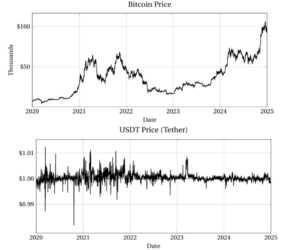
For example, one unit of a stablecoin that’s pegged to the USD should always be worth $1. Because its value is tied to a real-world asset like the USD, a stablecoin is generally less volatile than other cryptocurrencies, whose prices can fluctuate rapidly. See the chart below.

Prices of Bitcoin and USDT. These figures illustrate the fundamentally different price behavior between "traditional" cryptoassets, the largest of which is Bitcoin (top), and stablecoins, the largest of which is USDT (bottom). Source: CoinGecko via Haver.
Prices of Bitcoin and USDT. These figures illustrate the fundamentally different price behavior between “traditional” cryptoassets, the largest of which is Bitcoin (top), and stablecoins, the largest of which is USDT (bottom). Source: CoinGecko via Haver.

Here are a few factors to consider as you explore the potential value of engaging with digital assets at your institution:

  • Fee income from issuing, serving as a custodian and facilitating other related transactions.
  • Lower costs and faster processing for international transactions using stablecoin.
  • Access to new markets.
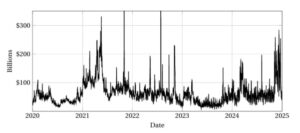
  • Consider emerging businesses that prefer to leverage stablecoins and other cryptocurrencies. Although still small compared to traditional currency, total stablecoin transaction volume continues to grow, as shown in the chart below.

Stablecoin Daily Volume. The two instances that exceed the chart’s maximum were November 3, 2021 and July 29, 2022, where the daily volume approached $1 trillion dollars (at $938 and $929 billion, respectively). The first is coincident with a then all-time-high price of Bitcoin before its years-long slump (see Figure 2), but the possible causes of the second are less clear. Source: CoinGecko via Haver.

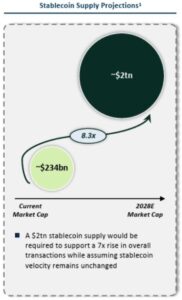
A publication from the Department of the U.S. Treasury in April 2025 lists a projection of stablecoin supply reaching $2 trillion in 2028 if velocity remains unchanged.

  • Transaction speed. Stablecoins enable 24/7/365 settlement and near-instant payments, allowing transactions outside typical community banking hours.
  • Reputation and trust. Banks are widely recognized as safe and secure because of their long history in a regulated environment and their transparent reporting practices. That trusted reputation can extend into the digital asset space as customers evaluate stablecoin issuers.

What community banks should consider

Stablecoin Supply ProjectionsOf all the factors noted above, your institution’s reputation may be the most valuable reason to explore digital assets. Community banks are already trusted as being safe and secure with customers’ deposits and loans. Why not extend that trust into the stablecoin space and be seen as the reliable provider your community turns to?

With value comes risk and there are many risks and challenges to consider when pursuing digital assets. Key areas to consider are BSA/AML, Liquidity, Operations and Technology, Evolving Regulatory Guidance, to name a few.

A recent FEDS Notes article discussed how increased stablecoin demand could affect bank deposits. The article explored the potential impact on traditional deposits and their levels, composition and concentration. The article largely focuses on the implications for deposit composition if demand for stablecoin increases substantially and stablecoin issuers continue to maintain their reserve assets as deposits. This could shift the bank concentration from insured retail deposits to uninsured wholesale deposits.

This shift has liquidity risk and funding costs implications. A change in composition would require adjustments to liquidity management and asset-liability matching due to the more volatile deposit base. Management of a new deposit mix may impact credit decisions related to loan size and duration. These challenges and consequences are highlighted to reinforce the potential impact on you and your community bank in the future, even if you choose not to pursue stablecoin. Please continue to monitor stablecoin adoption and consider how it may influence your community bank’s liquidity stress test scenarios, as they relate to deposits.

Final thoughts

As expected, some innovative community banks that are early adopters are issuing stablecoin and leveraging this currency to provide value to the communities they serve. They have a first-mover advantage, along with the implementation and ongoing management costs and risks that come with that advantage.

Ultimately, each community bank should evaluate the digital asset landscape regularly. It may not make sense to become a stablecoin issuer or custodian today — or even in the near future. However, ignoring the shift entirely is not the right move. Be curious. Ask questions of peers and partners. Stay informed.

Your competitors are learning, and so are your customers. From a relationship standpoint, there’s no better place to be than a trusted expert who understands what stablecoin is, its potential value, and how it can be leveraged to support your customers’ growing businesses. You don’t have to be a genius to see the opportunity.

How Y&A can help

With expertise in strategic planning, interest rate risk, liquidity, and capital planning, Michael helps financial institutions strengthen their financial position. Young & Associates can help your team implement proactive asset liability management strategies that not only meet regulatory expectations but also support long-term stability and growth.

How to be an effective player in the regulatory process

By William J. Showalter, CRCM; senior consultant, Young & Associates

We all noticed the increased level of regulatory changes over the years by the various banking supervisory agencies – encompassing changes from new or revised statutes, as well as changes at the regulatory agencies themselves.

Financial institutions can and, if they have not already, should become active and effective players in the regulation-making process. The bank’s role is to educate the regulatory agencies about how proposed regulations will impact the industry so that more amenable, less onerous rules may result.

Writing an effective comment

Policies GraphicBelow are a few tips on how to effectively communicate your concerns to the regulators.
Organize your comment letter/submission for easy reference. Since the agencies often face a statutory deadline for their action and must process many comment letters, the organization of yours can be crucial to its effectiveness.

Arrange your comments to match the structure of the proposed rule to make it easier for the agency to process. Use subheadings that correspond with those of the proposal and clearly identify the sections you reference. The agency will typically have a number of people working on a proposal and will distribute relevant parts of your comments to staff attorneys and others responsible for those particular sections.

One effective way to organize your comment letter is first to summarize the points you wish to make. This allows prompt identification of the part(s) of the proposal you are addressing. Then you should spell out your points clearly, with sufficient detail to have an appropriate impact, but not so much as to make your comments less forceful.

  • Be concise. Your comment letter should only be as long as it needs to be. Do not feel that you must address every item in the proposal. A tightly written, well-organized letter that focuses on the elements that most concern the commenter, as well as any you think are particularly positive, has more impact than one that rambles through all points in the proposal.
  • Provide background. Information about the type of bank or thrift you represent can provide valuable insight and perspective for the agency. Include a brief description of your bank’s size, structure, market, and any other information that may be pertinent to the proposal.
  • Concentrate on issues over which the agency has some discretion. When the underlying statute mandates a particular provision, suggesting that the agency abandon that requirement is not practical. The agency cannot simply ignore a legislative directive. Do not suggest changes that would undermine the general intent of the law implemented by the regulation. Instead, focus on how the regulators propose to implement the law.
  • Be specific. Sweeping generalizations about the impossibility of complying with a proposed regulation are not worthwhile. The agency generally is required to implement some statutory mandate and cannot disregard that responsibility. Concentrate on operational, customer-impact, and compliance management issues. Give the perspective of your bank, rather than trying to infer what impact the proposal will have on the banking industry as a whole.
  • Make constructive comments. Give examples of problems you envision that specific sections of the proposal will cause. Explain how you feel the negative result can be avoided, or at least reduced. Do not hesitate even to rewrite a section of a proposed regulation if you think it is unclear or misses a point. Suggest a reorganization of the provisions in the proposal to make it easier to read and understand, and to apply in everyday situations.
  • Follow submission criteria. Send your comment letter or e-mail to the designated agency official, not another staff member that you know. Include the reference or docket number of the proposal in your letter to ensure proper handling. Try to follow any specific requests which facilitate processing, such as type size or spacing. Of course, mail your letter or send your e-mail in time to reach the regulator by the due date specified in the proposal. Comments may be accepted also by facsimile or personal delivery, with special instructions. Many agencies also consider comments received after the due date, but they are not obligated to do so. Also, if the agency receives a great volume of comments, late comments slow the rulemaking process.
  • Back up your position. Explain why you think difficulties are likely to occur and how the proposal would produce those consequences. Be specific and provide any facts, data, or anecdotal evidence you think will prove your point. Anecdotes can be particularly effective in helping the regulators understand the practical implications of what they are proposing. If an existing regulation is being amended, provide statistics on how much it costs your bank to comply with this particular requirement. If the proposal is a new regulation, estimated cost information would be helpful to the agency.

Try to show, when appropriate, how these costs seem to outweigh the intended benefit of the regulation to your customers or the banking industry. Impact on customers is a key issue in rulemaking by the agencies. When proposed rules are likely to curtail current or new products, reduce credit availability, cause confusion, increase costs to customers, limit access to customer contact staff or services, or have other negative effects for customers, you should raise these issues in comment letters and e-mails. While the regulator may not be able to implement your suggested change, compelling, concrete details can help them adopt your suggestion in some form.

Conclusion

Too often bankers choose not to participate in the regulation-making process. They say that they don’t have the time or the communication skills or don’t think they can make a difference. However, writing comment letters is similar to voting. If you don’t exercise the power you have, you can’t complain about the outcome. When you do comment, you can positively affect the design and development of regulations.

Explore Y&A’s suite of compliance assurance services here.

Moving beyond the FFIEC cybersecurity assessment tool

By Noah Lennon, CCSP, CISA; consultant, Anthony Kniss; IT Manager, and Brian Kienzle, CISSP, OSCP; senior consultant Young & Associates

The Federal Financial Institutions Examination Council (FFIEC) retired the Cybersecurity Assessment Tool (CAT) on August 31, 2025, citing progress as the rationale for the change.

While acknowledging that the security controls within the CAT remain fundamentally sound, the Council has determined that, “Several new and updated government and industry resources are available that financial institutions can leverage to better manage cybersecurity risks.”

The tool that we are seeing most prominently to succeed the CAT is the Cyber Risk Institute’s CRI Profile. This tool is based on the National Institute of Standards and Technology’s (NIST) Cybersecurity Framework (CSF) 2.0. The CRI Profile was developed specifically with financial institutions in mind, including additional considerations such as core processing, online/mobile banking, and third-party risk management.

This decision signals a coordinated, whole-of-government effort to enhance security and resilience across all critical infrastructure sectors, including finance. This shift encourages institutions to move from a proprietary assessment tools to nationally recognized standards.

New Reference Point: NIST SF

The NIST Cybersecurity Framework is a set of cybersecurity practices for IT, prioritized for risk reduction. While the CSF if applicable across all critical infrastructure sectors, other frameworks such as the CRI Profile and the upcoming CISA CPGs for financial services have adapted it to align with the regulatory requirements of the financial sector.

For small and midsize institutions with limited resources, a prioritized baseline for cybersecurity is invaluable. The NIST CSF helps cut through complex control lists and guide leadership to focus on the most effective actions first. The outcomes in the framework form a security baseline, representing the essential practices every critical infrastructure entity should adopt. NIST based these outcomes on their demonstrated ability to reduce risk from the most significant and frequent threats.

By establishing this foundational baseline, institutions can ensure they have addressed their most pressing information security threats. The next step is to integrate this baseline into a more comprehensive program structure, a role filled by the CRI Profile.

Building a Mature Program: The CRI Profile

While CPGs offers immediate, actionable steps, the CRI Profile, based heavily on the NIST CSF 2.0, provides the full structure needed to create a sustainable, risk-based cybersecurity program that addresses both operational and strategic needs.

  • Holistic Risk Management: The CRI Profile provides guidance and a taxonomy of high-level cybersecurity outcomes applicable to any organization, regardless of its size, sector, or maturity. Organizations can leverage the CRI Profile to build a holistic risk management program.
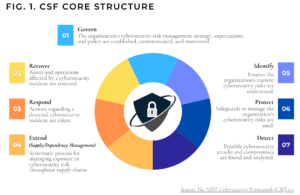
  • The Seven Functions: The CRI Profile Core is organized into seven functions, as depicted in Fig. 1.
  • Resources for Smaller Organizations: The CRI Profile includes features emphasizing governance and supply chains. Critically for CFIs, the Cyber Risk Institute provides a Guidebook that distill specific portions of the Profile into actionable “first steps” to help ensure the Profile is relevant and readily accessible by smaller organizations.
  • Mapping: Every security practice in the Profile is mapped to a corresponding subcategory in the NIST CSF. This helps to provide assurance that the practices are mature and peer-reviewed by cybersecurity professionals across all industries.

Source: The NIST Cybersecurity Framework (CSF) 2.0

Other Applicable Resources

In addition to the NIST CSF and CRI Profile, supervised financial institutions may also use industry-developed tools like the CISA CPGs or CIS Security Controls.

Community financial institutions must ensure their self-assessment tool supports an effective control environment and matches their risk. Standardized tools can help with self-assessments, but FFIEC members focus on a risk-based approach during examinations. As cyber threats evolve, examiners may review areas not covered by all tools.

Aligning with the FFIEC Audit Framework, the following table maps key FFIEC audit expectations to the specific solutions provided by this integrated framework approach.

Aligning with new frameworks proves the transition from the CAT is not a break from FFIEC principles, but a deeper commitment to them using more effective tools. This change helps build a defensible cybersecurity program grounded in the same language and standards as expected by regulators. Adopting these frameworks is a strategic step to reduce risk and improve governance across the institution.

Moving Beyond Compliance to Resilience

The withdrawal of the FFIEC CAT marks a pivotal and positive development for community financial institutions. This change empowers organizations to employ tools that are actively maintained and more aligned with the modern threat landscape.

Young & Associates offers IT audit expertise to help financial institutions navigate the transition from the FFIEC CAT. Our team supports effective control assessments and alignment with current regulatory frameworks to strengthen cybersecurity programs and governance. Reach out today to have our experts help your institution navigate this change.

Connect with a Consultant

Contact us to learn more about our consulting services and how we can add value to your financial institution

Ask a Question