
Why banks should invest in financial education for their lenders

By Ollie Sutherin, chief financial officer, Young & Associates

Ask a small business owner to name their loan officer, and you’ll usually get one of two answers: a name they remember fondly, or a shrug. The difference often comes down to what happened after the loan closed.

Too often, the relationship ends at funding. The borrower takes the money, and the loan officer goes quiet until another lending opportunity arises or the deal starts to sour. That pattern is so common in our industry that many bankers don’t even recognize it as a problem. But it is a problem, and it’s also a missed opportunity. The loan officer can be far more valuable than a point of contact for money. They can be a source of knowledge and a trusted reference for the small businesses they serve.

The knowledge gap nobody talks about

Community banks live and die by small-business lending, and small businesses are usually run by people who are exceptional at what they do. The contractor knows construction. The restaurateur knows food. The machine shop owner can tell you the tolerances on every part that leaves the floor. What they often do not know, and were never trained to know, are the nuances of bookkeeping, accounting, and tax treatment.

This isn’t a criticism of business owners. It’s simply the reality of how small businesses are built. The owner’s expertise is in their industry, not in debits and credits. Yet their ability to access capital depends almost entirely on how well their financial condition is documented and presented.

That is where the loan officer comes in. The loan officer sits at the bridge between business operations and financial condition. No one else in the borrower’s orbit occupies that position. The CPA sees the books once a year.

The bookkeeper, if there is one, may be a family member doing their best with QuickBooks on weekends. The loan officer, on the other hand, sees the financials in the context of what the business is actually trying to accomplish: growth, equipment, real estate, and working capital. With that vantage point comes not just an opportunity, but an obligation, to assist and educate.

A real-world example

Consider a borrower whose business is genuinely healthy: strong sales, good margins, loyal customers. But when their P&L comes across your desk, you notice they have expensed the principal portion of their loan payments. Their reported income is understated, their balance sheet does not tie, and now your credit department has to spend time untangling something that should have been clean from the start.

A loan officer with solid accounting fundamentals catches that immediately and, more importantly, can explain it to the borrower in plain terms: principal reduces a liability on the balance sheet; only the interest belongs on the income statement. That five-minute conversation does two things. It makes the borrower’s bookkeeping easier going forward, and it makes their true borrowing capacity clearer to the bank. Clearer financials mean faster underwriting, and faster underwriting helps businesses access capital sooner. Everybody wins.

But that conversation only happens if the loan officer knows enough accounting to have it.

The case for investing in training

This is where bank management comes in. Community banks should be making deliberate, ongoing investments in accounting and finance training for their loan officers. Not a one-time orientation, but real education that equips lenders to read, understand, and explain financial statements with confidence. The return on that investment shows up in at least three places.

  • First, better deals reach the credit department. A loan officer who truly understands financial condition knows when a deal is right and when it is not. Requests that should have been declined at the first meeting get declined at the first meeting, instead of consuming hours of analyst time before arriving at the same conclusion. Credit departments at community banks are stretched thin as it is. Lenders who can screen effectively at the point of contact take real strain off the back of the house.
  • Second, complex borrowers get represented accurately. As community banks compete for borrowers closer to the middle market, the financials get more complicated and the questions get harder. Deferred revenue, related-party transactions, owner add-backs, and percentage-of-completion accounting come up constantly with larger borrowers, and credit and loan committees will ask about them. A loan officer who can grasp the financial condition firsthand, ask the right questions of the borrower, and convey the answers clearly to committee is worth their weight in approvals. A loan officer who cannot becomes a relay station for confusion.
  • Third, smaller borrowers get the help they actually need. Many of them are not looking for a sales pitch. They’re looking for assistance, education, and good references. Often a borrower’s financial condition is fundamentally sound; it’s the presentation that’s broken. The lender who can fix that, or point the borrower to someone who can, earns a kind of loyalty that no rate sheet can buy.

Know the tools, share the preferences

Part of being a genuine resource is knowing the resources. Most people in banking can glance at a P&L and recognize which software produced it, and experienced lenders usually have preferences born from years of seeing what comes out clean and what comes out messy. Those preferences should not stay locked in anyone’s head. If a particular accounting platform consistently produces financials that are easy for the borrower to maintain and easy for credit to analyze, say so. Recommend it. Maintain a short list of reputable local bookkeepers and CPAs and hand it out freely.

This costs the bank nothing and makes everyone’s life easier, from the borrower keeping the books to the analyst spreading them.

The payoff

None of this is charity. A borrower who keeps clean books is a borrower whose loan requests move faster, whose covenants are easier to monitor, and whose problems surface earlier, while there is still time to work through them. A loan officer who is a trusted advisor rather than an occasional caller retains relationships through rate cycles and competitive pressure. And a bank known in its community as the place where lenders actually help you understand your business attracts the kind of word-of-mouth referrals that no marketing budget can replicate.

The math is simple. Invest in your loan officers’ financial education, and they will invest it right back into your borrowers. The credit department gets cleaner deals, management gets better profitability, and small businesses get the partner they have been missing. That is community banking at its best.

The “gateway” strategy: Turn a checking account into a long-term customer relationship

By Joseph Ciccolini, content marketing associate, Young & Associates

Marketing often takes a back seat at financial institutions. While many recognize its potential to drive new accounts and attract customers, institutions frequently underemphasize its role as a revenue-generating function. In many cases, the solution already exists but needs to be positioned more effectively: cross-selling, particularly through the “gateway” product that establishes a primary relationship.

For financial institutions, profitability is not just about volume growth but also depth in relationships. Checking accounts provide a natural starting point for building stronger customer engagement, increasing retention, and expanding cross-sell potential.

A 2025 Jack Henry Strategy Benchmark identified top priorities for bank and credit union CEOs, including improving efficiency, driving deposit and loan growth, acquiring new accountholders, and expanding solutions for small and medium-sized businesses. Checking account acquisition directly supports each of these priorities by establishing a primary customer relationship that enables deeper engagement, stronger retention, and increased opportunities for cross-selling.

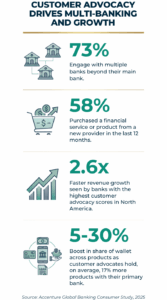
Consumers typically define their primary financial institution as the one where they hold their primary checking account. That account serves as the gateway to cross-selling opportunities and deeper customer relationships. Primary financial institution relationships are remarkably stable, with customers staying with the bank for an average of eight to 10 years and using five to six products and services per household. Without it, customers are less likely to view the institution as their primary provider. Instead, the relationship resembles the financial equivalent of a secondary streaming service — used occasionally, but not the go-to.

What strategies can institutions use to encourage customers to open a checking account and become primary accountholders? One effective approach is a drip campaign.

Checking Account Stats

What are drip campaigns?

Drip campaigns are a form of email marketing that deliver targeted messages over time to encourage engagement and keep your institution top of mind with customers and prospects. By providing relevant, valuable information, these campaigns guide customers toward action through continuous communication. This approach helps institutions nurture leads and build strong, long-term relationships.

In this context, a drip campaign supports the goal of securing the “gateway” cross-sell in the form of a checking account. Once a customer opens a checking account, the likelihood of becoming a primary accountholder increases significantly, along with opportunities to expand the relationship.

Cross-selling differs from upselling by focusing on complementary products that enhance the customer relationship and increase overall value. The checking account serves as the entry point for this strategy. Once established, institutions can introduce additional products — such as debit cards or certificates of deposit — in a way that aligns with customer needs and behaviors.

Why drip campaigns can outperform cash incentives

Some institutions may already rely on cash incentives to encourage checking account acquisition. However, a 2025 ProSight industry outlook found that only 27 percent of consumers who recently switched institutions cited a cash incentive as the primary reason. Instead, institutions should identify customer needs, understand the challenges they can solve, and promote those solutions effectively.

Drip campaigns play a key role in this strategy by delivering relevant, timely messaging directly to customers. These campaigns help move prospects from consideration to conversion while setting the stage for meaningful interactions.

Gallup’s 2021 retail banking study found that high-quality conversations significantly improve sales conversion rates. When customers initiate the conversation, conversions are 1.6 times more likely compared with low-quality interactions. When employees initiate high-quality conversations, conversions are 4.2 times more likely. Drip campaigns can help prompt these conversations by engaging customers before direct interaction occurs.

Conclusion

Financial institutions should treat checking account acquisition as a critical step in attracting and retaining customers. According to the J.D. Power 2026 U.S. Retail Banking Satisfaction Study, key engagement metrics are beginning to decline as customers increasingly open accounts with multiple institutions. This shift creates a clear opportunity to attract new customers and strengthen relationships through effective cross-selling.

All of this can start with a checking account. Financial institutions should move beyond traditional go-to-market approaches and adopt a marketing-led strategy that prioritizes engagement, not just acquisition. By using tools like drip campaigns to convert and deepen relationships, institutions can turn checking accounts into a foundation for long-term growth and differentiation.

Is your marketing engine a well-oiled machine? Or just a collection of shiny parts?

By Nicole Conrad, director of marketing, Young & Associates

In the current landscape of financial services, community bank marketing leaders are often distracted by the latest “shiny new toys.” From generative AI and complex CRM suites to automated social media engines, the promise of a technological silver bullet is everywhere. Yet, despite these investments, many community institutions still struggle to compete with national banks.

The success of AI tools and digital marketing depends on the strength of the strategy behind them. To compete effectively, you must focus on the fundamentals before layering on advanced technology. Technology can only accelerate the direction you are already headed; if your foundation is weak, technology can exacerbate existing issues and contribute to more severe organizational failures.

A high-performing marketing engine is not a collection of disconnected parts. It is a unified system built to achieve the only goal that matters: long-term, profitable customer loyalty.

Revisiting your institution’s marketing basics

Digital marketing and AI implementation depend on the strength of your underlying strategy. Investing in marketing software without a clear plan can waste capital and human resources. To diagnose the health of your marketing engine, you should audit your marketing foundation against three questions:

  • Who is our target? Have we identified the specific segments that view us as a primary partner, or are we casting a net so wide it catches nothing?
  • What is our value? Is our value proposition strong enough to overcome the inertia of switching, or are our products too complex for our own staff to explain?
  • Where is the trust? Are we deploying our message through channels the consumer actually engages with and trusts?

Without these answers, technology cannot bridge the gap between a bank and its customers. Marketing only generates ROI when the right message reaches the right person at the right time.

The right person: Humanizing your brand through buyer personas

Understanding your target audience requires stepping outside your role as a banker and seeing the experience from their perspective. Today’s consumer is not just looking for a transaction; they want to feel an authentic human connection and see their own identity reflected in the brands they choose.

This is where buyer personas come in. A buyer persona is a fictionalized version of your ideal account holders based on demographic data and qualitative research into their goals and concerns.

Buyer personas may include:

  • Demographics, such as age and gender, location, economic status, and marital or family status.
  • Qualitative drivers, such as goals, pain points, concerns, and desired outcomes.
  • Behavioral habits and preferences, such as media consumption, banking habits, and technical expectations.

Your buyer personas should evolve with consumer preferences and the digital landscape. When you know exactly who the customer is, you can stop the “shotgun approach” and meet them at the right time with a message that resonates. This allows you to tap into a “consciousness of kind” — that intrinsic understanding that your bank and its customers belong to the same community and share the same values.

For the community bank, humanizing the brand is a competitive advantage. National banks have three times as many customers per branch compared to the average community institution. This density forces them into cold, numbers-driven business models. You have the capacity to treat customers as people, and this is nonnegotiable in today’s market.

According to Salesforce’s State of the Connected Customer report, 84% of customers say being treated like a person, not a number, is very important to winning their business.

By deeply understanding who your customer is, you move from being a commodity to being a neighbor. Knowing the persona helps you predict the right time to connect, meeting the customer where they are in their decision-making journey. If you don’t know who you are talking to, don’t be surprised when no one listens.

The right time: Understanding the buyer’s journey

We are seeing a fundamental shift from outbound, interruptive marketing to inbound, helpful marketing. Inbound marketing focuses on being where the consumer is with the answers they need. The buyer’s journey supports this approach by nurturing the relationship, so the message evolves as the customer moves through each touchpoint.

The buyer’s journey is the process a person goes through before they open an account or sign a loan. It typically consists of three core stages:

  • Awareness: The individual recognizes a financial problem or need.
  • Consideration: The individual researches various solutions and providers.
  • Decision: The individual selects a specific institution.

Mapping this journey is vital because banking is not an impulse purchase. Market data confirms that most banking shoppers begin their research two to three months before they switch institutions. This “invisible” phase is where banks may lose prospects by trying to close the sale too early.

To be successful, you must nurture them through various touchpoints, from helpful blog posts and social media tips to personalized emails and direct mail. The right message will change depending on where they are in this journey; you wouldn’t offer current car loan rates to someone who is just starting to save for their first vehicle.

The right message: Building your messaging matrix

Once you have your personas and their journeys mapped, you can build a strong messaging matrix. This combines your unique value propositions (UVPs) with the specific needs of each persona at each stage of the journey. The primary goal of a messaging matrix is to solve the difficult challenge of getting the right message to the right person at the right time.

Start with a basic messaging guide. Create a grid that crosses your personas with the stages of their journey. For each intersection, determine which UVP best solves that persona’s problem at that specific time.

Example: An “Awareness” message for a first-time homebuyer might focus on “Can I afford a house?” whereas a “Decision” message would focus on your specific loan application tips and competitive rates.

By mapping messages to specific audience needs, the bank provides content that is meaningful to the consumer’s current situation and avoids burdening people with irrelevant content.

Documented messaging provides staff and brand advocates with a custom-made set of points that capture the heart of the brand. This prevents the brand voice from becoming diluted or fragmented across different channels. This guide offers a straightforward approach to educating employees and reinforcing consistent marketing messaging throughout your organization, transforming your workforce into brand advocates.

A high-performing marketing engine is not a marketing task; it is a core organizational strategy. It requires executive buy-in, strong execution in the branches, and a marketing team that knows how to drive traffic to both digital and physical locations.

AI and digital tools have changed the speed of the race, but not the rules. These tools amplify what already exists: a strong strategy becomes stronger, and a fragmented strategy becomes weaker. If your foundation is built on the right message, the right person, and the right time, technology can help you take you to the finish line. If not, no amount of shiny parts will save you.

We would welcome a conversation to discuss your institution’s business and marketing strategy and be happy to help build out your strategy. Learn more about our strategic planning services here. 

The benefits of asset-based lines of credit for contractors and lenders

By Patrick Lilly; senior consultant, Young & Associates

Asset-Based Loans (ABL)

Asset-Based Loans (ABLs) are usually structured as revolving lines of credit that are secured by the borrower’s current assets. The amount of credit made available is determined by the quality and value of the collateral. Usually accounts receivable, inventory and sometimes equipment and real estate, depending on industry risk.

In this article, we will focus on General Building and Engineering Contractors, Trades Sub-Contractors, and construction-related services providers having current asset concentrations in accounts receivable. These types of businesses typically experience large swings in cash flow while awaiting progress payments or final payments on contracts, goods supplied, and services rendered. The ABL line of credit provides interim working capital to these companies. This helps to smooth out the peaks and valleys of payments received from their customers.

How it Works

Working with a pre-determined loan limit based on actual and projected needs, borrowers can access a percentage of the value of their pledged assets, depending on the current certified value of those pledged assets.

These loans require a close level of monitoring. The frequency is determined by the size of the loan and industry risk. This usually entails monthly or quarterly reporting requirements on the company’s financial status. This usually consists of a financial statement, accounts receivable, and accounts payable agings of even date, a certification from the company’s responsible financial officer and a borrowing base certificate (BBC), which sums up the amount of credit available based on the asset values.

Prudent Underwriting Guidelines

Loan Amount:

  • Starting with the requested amount of loan, a thorough analysis of the projected cash flow needs of the borrower should be undertaken. An improper loan limit can spell problems for both the contractor and the financial institution. If too little of a limit is approved, the contractor can run short of necessary working capital. This can create a negative effect on performance. Too much of a limit approved invites spending on fixed assets due to the relative ease in access to the loan proceeds and a sizable unused commitment impairs the financial institution’s overall lending and earnings capacity.
  • Accounts receivable aging reports are an absolute necessity for this type of financing. Carve-outs based on the age and/or nature of a receivable are predetermined as conditions of the eligibility of any particular account receivable. Typical carveouts are the exclusion of any AR over 90 days aged, the elimination of any intra-company or employee receivable and the elimination of receivables that are concentrated with one customer which total more than 15-20 percent of the total amount of receivables.

Reporting Requirements:

  • The borrower is typically required to report on a monthly or quarterly basis. The nature of the reporting should consist of:
    • A current (less than 30 days aged) monthly or quarterly financial statement
    • Accounts receivable detailed aging of even date and balance as indicated on the financial statement.
    • Accounts payable detailed aging of even date and balance as indicated on the financial statement.
    • A BBC supplied on a form approved by the lender that mirrors the information on the agings, subtracts ineligible ARs and taxing authority payables, states the balance on the loan and the amount available to draw on the loan. This form should be completed, signed and dated by the authorized borrower representative.

Audit requirements:

  • On larger and more complex borrowings, the lender needs to impose strict reporting requirements to protect the interests of the lender. This usually consists of:
    • Reviewed quality or better financial statements from the borrower due bank on an annual basis. (Usually no more than 90 days after the prior YE period)
    • Internally prepared and attested financial statement from the borrower on a monthly or quarterly basis. (Due lender no more than 30 days from the prior month or quarter ending period)
    • Depending upon the size, complexity and nature of the borrower, the lender may require a periodic field audit conducted by a qualified third party inspection firm as outlined in the Asset Based Loan Agreement. This audit reconciles the financial statement with the schedule of accounts receivable and payable, inventory activities and the most recent BBC. Such audits are integral to maintaining the integrity of the borrower relationship. They also protect the bank’s investment in the credit and its collateral position.

Other conditions:

  • The lender should consider CAPEX usage restrictions on proceeds of the line.
  • While ABL RLOCs rely on the cash conversion cycle for repayment, minimum pre and post distribution EBITDA DSCR covenants in combination with other standard C&I lending covenants such as minimum working capital or current ratio are prudent.
  • The borrower’s key suppliers should be contacted for credit reference.
  • Governmental contracting can result in extended terms. That may impair the bank’s ability to exercise assignment rights to receive direct payment in a collection action.

ABL financing can lead to a fuller relationship with a borrower. This can be beneficial to both the borrower and the lender. If managed and monitored properly, these types of loans can be valuable and profitable assets to the lender. It can then result in long term and expanding relationships.


Do I have to be a GENIUS to understand Stablecoin?

By Michael Gerbick; president, Young & Associates

In July 2025, the GENIUS Act was signed into law. With it came comprehensive regulatory guardrails for stablecoins and stablecoin providers. The law’s passage drew widespread attention from financial institutions. If you find yourself asking, ‘How does stablecoin apply to my community bank?’ You are not alone. Many of our customers are learning how stablecoin might apply to them, while others have already become issuers.

Additional questions being asked include:

  • How does it impact me and my bank?
  • Where is the value for us to enter this space?
  • My customers aren’t transacting internationally. Is this still something I should consider?

Demystifying stablecoin

Cryptocurrency has been around for several years, but it’s still a new concept for many community banks. Institutions are continuing to learn how it fits within their operations and where it might create value for their customers. The goal of a stablecoin is to provide a means of payment within the digital asset ecosystem.

So what exactly is a stablecoin? It is a type of cryptocurrency that pegs its value to a real-world asset, often a traditional fiat currency like the U.S. dollar¹ (USD).

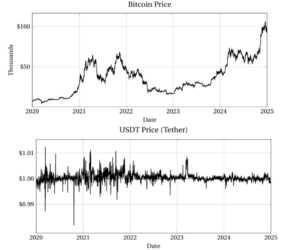
For example, one unit of a stablecoin that’s pegged to the USD should always be worth $1. Because its value is tied to a real-world asset like the USD, a stablecoin is generally less volatile than other cryptocurrencies, whose prices can fluctuate rapidly. See the chart below.

Prices of Bitcoin and USDT. These figures illustrate the fundamentally different price behavior between "traditional" cryptoassets, the largest of which is Bitcoin (top), and stablecoins, the largest of which is USDT (bottom). Source: CoinGecko via Haver.
Prices of Bitcoin and USDT. These figures illustrate the fundamentally different price behavior between “traditional” cryptoassets, the largest of which is Bitcoin (top), and stablecoins, the largest of which is USDT (bottom). Source: CoinGecko via Haver.

Here are a few factors to consider as you explore the potential value of engaging with digital assets at your institution:

  • Fee income from issuing, serving as a custodian and facilitating other related transactions.
  • Lower costs and faster processing for international transactions using stablecoin.
  • Access to new markets.
  • Consider emerging businesses that prefer to leverage stablecoins and other cryptocurrencies. Although still small compared to traditional currency, total stablecoin transaction volume continues to grow, as shown in the chart below.

Stablecoin Daily Volume. The two instances that exceed the chart’s maximum were November 3, 2021 and July 29, 2022, where the daily volume approached $1 trillion dollars (at $938 and $929 billion, respectively). The first is coincident with a then all-time-high price of Bitcoin before its years-long slump (see Figure 2), but the possible causes of the second are less clear. Source: CoinGecko via Haver.

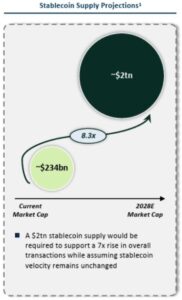
A publication from the Department of the U.S. Treasury in April 2025 lists a projection of stablecoin supply reaching $2 trillion in 2028 if velocity remains unchanged.

  • Transaction speed. Stablecoins enable 24/7/365 settlement and near-instant payments, allowing transactions outside typical community banking hours.
  • Reputation and trust. Banks are widely recognized as safe and secure because of their long history in a regulated environment and their transparent reporting practices. That trusted reputation can extend into the digital asset space as customers evaluate stablecoin issuers.

What community banks should consider

Stablecoin Supply ProjectionsOf all the factors noted above, your institution’s reputation may be the most valuable reason to explore digital assets. Community banks are already trusted as being safe and secure with customers’ deposits and loans. Why not extend that trust into the stablecoin space and be seen as the reliable provider your community turns to?

With value comes risk and there are many risks and challenges to consider when pursuing digital assets. Key areas to consider are BSA/AML, Liquidity, Operations and Technology, Evolving Regulatory Guidance, to name a few.

A recent FEDS Notes article discussed how increased stablecoin demand could affect bank deposits. The article explored the potential impact on traditional deposits and their levels, composition and concentration. The article largely focuses on the implications for deposit composition if demand for stablecoin increases substantially and stablecoin issuers continue to maintain their reserve assets as deposits. This could shift the bank concentration from insured retail deposits to uninsured wholesale deposits.

This shift has liquidity risk and funding costs implications. A change in composition would require adjustments to liquidity management and asset-liability matching due to the more volatile deposit base. Management of a new deposit mix may impact credit decisions related to loan size and duration. These challenges and consequences are highlighted to reinforce the potential impact on you and your community bank in the future, even if you choose not to pursue stablecoin. Please continue to monitor stablecoin adoption and consider how it may influence your community bank’s liquidity stress test scenarios, as they relate to deposits.

Final thoughts

As expected, some innovative community banks that are early adopters are issuing stablecoin and leveraging this currency to provide value to the communities they serve. They have a first-mover advantage, along with the implementation and ongoing management costs and risks that come with that advantage.

Ultimately, each community bank should evaluate the digital asset landscape regularly. It may not make sense to become a stablecoin issuer or custodian today — or even in the near future. However, ignoring the shift entirely is not the right move. Be curious. Ask questions of peers and partners. Stay informed.

Your competitors are learning, and so are your customers. From a relationship standpoint, there’s no better place to be than a trusted expert who understands what stablecoin is, its potential value, and how it can be leveraged to support your customers’ growing businesses. You don’t have to be a genius to see the opportunity.

How Y&A can help

With expertise in strategic planning, interest rate risk, liquidity, and capital planning, Michael helps financial institutions strengthen their financial position. Young & Associates can help your team implement proactive asset liability management strategies that not only meet regulatory expectations but also support long-term stability and growth.

2026 Rescission Calendar – Free download now available

The right of rescission, governed by Regulation Z under the Truth in Lending Act (TILA), remains a cornerstone of consumer protection in the lending industry. For financial institutions, ensuring compliance with rescission rules is not only a regulatory requirement but also a reflection of their commitment to protecting borrowers’ rights. However, the intricacies of rescission — covering timing, disclosure requirements and exceptions — can make this area of compliance challenging for many lenders.

To support your institution in navigating these complexities, Young & Associates offers a free downloadable Rescission Reference Chart. The chart is designed to simplify compliance with rescission rules.


What is the 3 Day Right of Rescission?

The right of rescission provides consumers with the ability to cancel certain credit transactions that involve a lien on their principal dwelling. This cooling-off period, typically three business days, is intended to allow borrowers time to evaluate the terms of their transaction without pressure. While the concept is straightforward, compliance involves navigating strict rules related to timing, notification and disclosure.

Common challenges in rescission compliance

Despite its importance, rescission often presents challenges for financial institutions. Here are some common issues:

  1. Identifying covered transactions
    Not all transactions are subject to rescission. Determining whether a loan qualifies—such as refinances or home equity lines of credit—requires careful evaluation of loan terms and lien positions.
  2. Proper timing of the rescission period
    The rescission period must be calculated accurately, taking into account business days and excluding holidays. Miscalculations can result in compliance violations.
  3. Providing accurate and timely disclosures
    Borrowers must receive clear and complete rescission notices and required disclosures at the time of closing. Any inaccuracies can extend the rescission period or expose the lender to liability.
  4. Handling rescission notices
    If a borrower exercises their right to rescind, lenders must act swiftly to return funds and terminate the lien within 20 calendar days. Delays or errors in this process can lead to penalties.

How do you calculate a 3 day rescission period?

The rescission period typically begins the business day following the signing of loan documents and ends at midnight on the third business day.

How the calendar can help

Young & Associates’ Rescission Reference Chart is a comprehensive tool that simplifies the complexities of rescission compliance. This chart provides:

  • A clear breakdown of covered and exempt transactions.
  • Guidelines for accurately calculating the rescission period.
  • Tips for ensuring proper disclosure and handling rescission notices.

This chart offers a practical and easy-to-use resource to enhance your compliance program. It can assist in training new staff or refreshing your understanding of rescission rules.

Why rescission matters

Non-compliance with rescission rules can result in extended rescission periods, regulatory scrutiny or even legal action. Ensure your institution has a solid grasp of rescission requirements. Not only to avoid potential risks but also to reinforce your reputation as a trusted and reliable lender.

Download free today

Young & Associates is dedicated to helping financial institutions like yours maintain compliance while streamlining operations. Our Rescission Reference Chart is just one of the many tools we offer to support your success. Equip your team with the knowledge and tools they need to navigate rescission with confidence. With Y&A by your side, you can focus on serving your customers while staying compliant with ease.

Federal Crop and Livestock Insurance programs and what’s changing in 2025

By Craig Horsch, Consultant, Young & Associates

Overview of Federal Crop and Livestock Insurance programs

Federal Crop Insurance and Federal Livestock Insurance are supplemental insurances that cover losses which are unavoidable and caused by naturally occurring events. They do not cover losses resulting from negligence or failure to follow good farming practices related to crops and/or livestock.

Federal Crop Insurance Programs include three main programs—Price Loss Coverage (PLC), Agriculture Risk Coverage (ARC), and the Marketing Assistance Loan Program (MALP)—as well as the Whole-Farm Revenue Protection Plan 2025 (WFRP), per the USDA Risk Management Agency.

  • PLC overview:

    PLC program payments are issued when the effective price of a covered commodity is less than the effective reference price for that commodity. The effective price is defined as the higher of the market year average price (MYA) or the national average loan rate for the covered commodity. PLC payments are made to owners of historical base acres and are not tied to the current production of covered commodities. Covered commodities include wheat, corn, sorghum, barley, oats, seed cotton, long- and medium-grain rice, certain pulses, soybeans/other oilseeds, and peanuts.

  • ARC overview:

    There are two types of Agriculture Risk Coverage: Agriculture Risk Coverage–County (ARC-CO) and Agriculture Risk Coverage–Individual (ARC-IC).

    • The ARC-CO program provides income support tied to the same historical base acres—not current production—of covered commodities. ARC-CO payments are issued when the actual county crop revenue of a covered commodity is less than the county ARC-CO guarantee for that commodity.
    • ARC-IC provides income support based on a farm’s revenue from current production of covered commodities, compared with a benchmark average of that farm’s production of those commodities. However, payments are limited to a portion of the farm’s historical base acres. This page focuses on ARC-CO; the ARC-IC program has not been widely adopted.
  • MALP overview:

    The MALP allows producers to use eligible commodities they have produced as collateral for government-issued loans. Eligible commodities include wheat, corn, sorghum, barley, oats, upland and extra-long-staple cotton, long- and medium-grain rice, soybeans and other oilseeds, certain pulses, peanuts, sugar, honey, wool, and mohair.

  • WFRP overview:

    WFRP insurance provides coverage against the loss of revenue that you expect to earn or obtain from commodities you produce or purchase for resale during the insurance period, all under a single insurance policy. WFRP offers benefits such as:

    • A range of coverage levels from 50% to 85% to fit the needs of more farming and ranching operations;
    • Replant coverage for annual crops, except Industrial Hemp;
    • The ability to consider market readiness costs as part of the insured revenue;
    • Provisions to adjust the insurance guarantee to better fit expanding operations;
    • An improved timeline for farming operations that operate as fiscal year filers; and
    • Streamlined underwriting procedures based on the forms used for WFRP.WFRP is designed to meet the needs of highly diverse farms that grow a wide range of commodities and sell to wholesale markets. The WFRP policy was specifically developed for farms that market directly to local or regional buyers, sell through identity-preserved channels, and produce specialty crops, animals, and animal products. The amount of farm revenue you can protect with WFRP insurance is the lower of the revenue expected on your current year’s farm plan or your five-year average historic income, adjusted for growth. This represents an insurable revenue amount that can reasonably be expected to be produced on your farm during the insurance period. All commodities produced by the farm are covered under WFRP, except timber, forest and forest products, and animals used for sport, show, or as pets.It is important to understand that WFRP covers revenue produced during the insurance period. For example, if a calf weighs 800 pounds at the beginning of the insurance period and is sold at 1,200 pounds during the insurance period, the value of production will be the additional 400 pounds gained. Inventory adjustments are used to remove production from previous years and to add revenue for production that has not yet been harvested or sold.

Understanding USDA Livestock Insurance programs

Per the USDA Risk Management Agency website, the Federal Livestock Insurance Programs are as follows:

  • Livestock gross margin – Cattle:

    The LGM for Cattle Insurance Policy provides protection against the loss of gross margin (market value of livestock minus feeder cattle and feed costs) on cattle. The indemnity at the end of the 11-month insurance period is the difference, if positive, between the gross margin guarantee and the actual gross margin. The LGM for Cattle Insurance Policy uses futures prices to determine both the expected and actual gross margins. Adjustments to futures prices are based on state- and month-specific basis levels. The price the producer receives at the local market is not used in these calculations.

    Eligible producers are those who own cattle in the states of Colorado, Illinois, Indiana, Iowa, Kansas, Michigan, Minnesota, Missouri, Montana, Nebraska, Nevada, North Dakota, Ohio, Oklahoma, South Dakota, Texas, Utah, West Virginia, Wisconsin, and Wyoming. Only cattle sold for commercial or private slaughter — primarily intended for human consumption—and fed in one of the eligible states are covered under the LGM for Cattle Insurance Policy.

  • Livestock gross margin – Dairy Cattle:

    The LGM for Dairy Cattle Insurance Policy provides protection against the loss of gross margin (market value of milk minus feed costs) on milk produced from dairy cows. The indemnity at the end of the eleven-month insurance period is the difference, if positive, between the gross margin guarantee and the actual gross margin. The LGM for Dairy Cattle Insurance Policy uses futures prices for corn, soybean meal, and milk to determine the expected and actual gross margins. The price the producer receives at the local market is not used in these calculations.

    Any producer who owns dairy cattle in the contiguous 48 states is eligible for LGM for Dairy Cattle Insurance Policy coverage. Only milk sold for commercial or private sale—primarily intended for final human consumption—from dairy cattle fed in any of the eligible states is covered under this policy.

  • Livestock gross margin – Swine:

    The LGM for Swine Insurance Policy provides protection against the loss of gross margin (market value of livestock minus feed costs) on swine. The indemnity at the end of the 6-month insurance period is the difference, if positive, between the gross margin guarantee and the actual gross margin. The LGM for Swine Insurance Policy uses futures prices to determine both the expected and actual gross margins. The price the producer receives at the local market is not used in these calculations.

    Any producer who owns swine in the 48 contiguous states is eligible for LGM for Swine insurance coverage. Only swine sold for commercial or private slaughter—primarily intended for human consumption—and fed in the 48 contiguous states are eligible for coverage under the LGM for Swine Insurance Policy.


Policy outlook: Projected spending impacts of proposed PLC and ARC-CO changes

In light of potential 2025 farm policy changes, the article “Spending Impacts of PLC and ARC-CO in the House Agriculture Reconciliation Bill” by Schnitkey, Paulson, Coppess (University of Illinois), and Zulauf (Ohio State University), published in farmdoc daily, offers valuable insight into the budgetary and structural implications of proposed revisions to two cornerstone commodity programs: Price Loss Coverage (PLC) and Agricultural Risk Coverage at the County Level (ARC-CO).

Key proposed changes

Under the House Agriculture Reconciliation Bill, four primary changes to PLC and ARC-CO are proposed:

1. Statutory reference price increases:

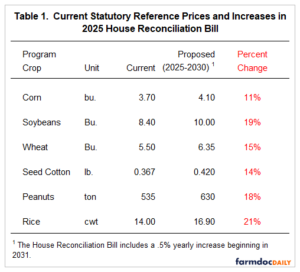
From 2025 to 2030, statutory reference prices for major program crops would increase—for example, from $3.70 to $4.10 per bushel for corn (an 11% increase), from $8.40 to $10.00 for soybeans (19%), and from $5.50 to $6.35 for wheat (15%). Similar increases are also proposed for seed cotton, rice, and peanuts (Schnitkey et al., 2025, Table 1).
2. PLC payment floor adjustments:

The bill proposes new price floors for PLC payments—$3.30 for corn and $0.30 per pound for seed cotton—to limit downside price risk. These new thresholds would reduce outlays in low-price environments by capping PLC payment escalation.

3. ARC-CO enhancements:

Changes to ARC-CO include increasing the coverage level from 86% to 90% and the maximum payment rate from 10% to 12.5% of benchmark revenue, making the program more responsive during periods of reduced revenue.

4. Loan rate increases:

The bill also proposes a 10% increase in the loan rates for the six largest program crops, further enhancing the income safety net (Schnitkey et al., 2025).

Budgetary and distributional impacts

The authors estimate that these program changes would raise federal outlays for PLC, ARC-CO, and marketing loan programs from $46.5 billion to $76.4 billion between 2025 and 2035—a 64% increase (Schnitkey et al., 2025, Table 2). However, this increase is not evenly distributed across commodities or regions:
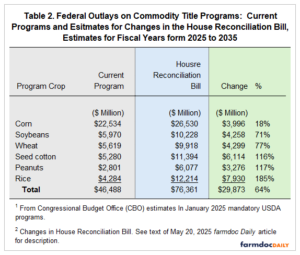
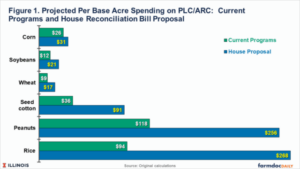
  • Southern crops—notably peanuts, rice, and seed cotton—would see the largest increases in payments per base acre. In contrast, traditional Midwestern crops such as corn and soybeans would receive more modest increases.
  • For farms with 500 base acres, estimated average annual payments under the proposed changes would be:

This disparity stems from differences in statutory reference prices across crops. Southern crops historically have higher relative reference prices, leading to larger government payments — an imbalance that would be widened under the proposed bill (Schnitkey et al., 2025).

Political and policy implications

To fund these increased outlays, the House Agriculture Committee is proposing spending reductions from the Nutrition Title, particularly the Supplemental Nutrition Assistance Program (SNAP). This cost-shifting pits agricultural and nutrition interests against each other and introduces politically sensitive trade-offs that could impact the outcome of future Farm Bill negotiations (Schnitkey et al., 2025).

Why this matters

For agricultural lenders and risk managers, particularly those serving Midwestern crop producers, the proposed updates could affect the farm income landscape, collateral valuations, and overall credit risk. Although support increases are significant for crops like rice and peanuts, the more moderate gains for corn and soybeans mean Midwest producers may see less benefit from the bill in its current form. Understanding the potential outcomes of these policy shifts can help financial institutions refine their risk assessments and prepare clients for what lies ahead.

Staying ahead in a changing agricultural risk landscape

As federal crop and livestock insurance programs evolve — and legislative proposals like those in the 2025 House Agriculture Reconciliation Bill signal substantial shifts in farm subsidy distribution — lenders must be prepared to navigate increased complexity in agricultural credit risk. From changes in PLC and ARC to adjustments in federal loan programs and WFRP, these developments have direct implications for borrower cash flow, collateral valuation, and overall lending strategy.

For financial institutions serving agricultural clients, now is the time to reassess risk management frameworks, update lending practices, and evaluate credit exposures in light of these changes.

Young & Associates has deep expertise in agricultural lending and credit risk analysis. Our team can help your institution proactively adapt, with services that include portfolio review, credit risk management consulting, and tailored support for ag-specific lending challenges. Whether you’re seeking to strengthen underwriting processes or prepare for policy-driven shifts in borrower performance, we’re here to help you respond with confidence.

Explore our lending and credit risk consulting services to learn how we can support your institution’s success in this evolving environment.

References

Coppess, J., C. Zulauf, G. Schnitkey, N. Paulson and B. Sherrick. “Reviewing the House Agriculture Committee’s Reconciliation Bill.” farmdoc daily (15):89, Department of Agricultural and Consumer Economics, University of Illinois at Urbana-Champaign, May 14, 2025. Permalink

Kalaitzandonakes, M., B. Ellison, T. Malone and J. Coppess. “Consumers’ Expectations about GLP-1 Drugs Economic Impact on Food System Players.” farmdoc daily (15):49, Department of Agricultural and Consumer Economics, University of Illinois at Urbana-Champaign, March 14, 2025. Permalink

Schnitkey, G., N. Paulson, C. Zulauf and J. Coppess. “Price Loss Coverage: Evaluation of Proportional Increase in Statutory Reference Price and a Proposal.” farmdoc daily (13):203, Department of Agricultural and Consumer Economics, University of Illinois at Urbana-Champaign, November 7, 2023. Permalink

Schnitkey, G., C. Zulauf, K. Swanson, J. Coppess and N. Paulson. “The Price Loss Coverage (PLC) Option in the 2018 Farm Bill.” farmdoc daily (9):178, Department of Agricultural and Consumer Economics, University of Illinois at Urbana-Champaign, September 24, 2019. Permalink

Schnitkey, G., N. Paulson, C. Zulauf and J. Coppess. “Spending Impacts of PLC and ARC-CO in House Agriculture Reconciliation Bill.” farmdoc daily (15):93, Department of Agricultural and Consumer Economics, University of Illinois at Urbana-Champaign, May 20, 2025. Permalink

The importance of field examinations in asset-based lending

By Ollie Sutherin, chief financial officer, Young & Associates

Asset-based lending is a creative financing alternative that will unlock additional working capital for businesses. While it appears more complex than traditional commercial real estate transactions, the appropriate training and education eliminate intimidation. Many community financial institutions tend to avoid asset-based lending opportunities due to the perceived burden of ongoing monitoring. However, with the appropriate due diligence at the outset of a lending relationship, the process becomes significantly more manageable and efficient.

The reality of ongoing monitoring in asset-based lending

Having worked at a small regional bank, I experienced firsthand the detail-oriented process of handling asset-based lending monitoring. Line of credit renewals often relied heavily on borrowing base certificates (BBCs) — many of which lacked accuracy and detail. Field examinations were seldom part of the equation, and decisions were often based on whether the BBC appeared “sufficient” to support the requested loan amount, whether payments were current, and whether principal was being retired in a frequent manner. What was consistently overlooked were several critical elements:

  • Early detection of fraud or irregularities.
  • Evaluation of internal operational controls.
  • Comprehensive and consistent collateral eligibility testing.
  • Longitudinal trend analysis and risk monitoring.

Field exams: A vital tool for risk mitigation

In today’s competitive lending environment, speed and efficiency are crucial. However, it’s imperative not to sacrifice thorough due diligence for the sake of expediency. Relying solely on BBCs without incorporating periodic field examinations introduces significant risk — risk that could far outweigh the relatively modest cost of performing a field exam. The reality is clear: a field exam provides the lender with a deeper understanding of the borrower’s financial health, operational integrity, and collateral quality. The field exam also provides information that can be used to set appropriate advance rates for the various collateral types.

You don’t know what you don’t know

One illustrative example comes from a colleague who shared her first field examination experience shortly after completing her training and certification. She was tasked with examining receivables for a large borrower. Drawing on the tools and methodology she had just mastered, she uncovered a serious case of fraud whereby the borrower was systematically crediting and rebilling invoices once they aged past 90 days. This practice inflated the eligible receivables reported in the BBC and granted the borrower significantly more borrowing availability than permitted… Without the field exam, this fraud would likely have continued undetected — exposing the financial institution to considerable, non-avoidable risk.

While instances like these may not occur every day, they underscore an essential truth: you don’t know what you don’t know. Field examinations offer lenders a proactive mechanism to confirm the integrity of a borrower’s financial reporting and ensure continued creditworthiness. In asset-based lending, that peace of mind over your relationships far outweighs the small investment.

How Y&A can support your lending program

Asset-based lending can open new avenues for community financial institutions, but it also introduces unique risks that require careful, ongoing oversight — particularly through field exams and detailed collateral monitoring. As illustrated, relying solely on surface-level reporting leaves institutions vulnerable to inaccuracies and potential fraud.

Our Y&A Credit Services team provides a wide range of solutions that support strong credit risk management, including credit underwriting, underwriting reviews and credit administration. These services can help your institution build a solid foundation for managing more complex lending relationships like asset-based lending.

If your team is looking to enhance credit processes, improve documentation quality or strengthen internal controls, Young & Associates is here to help you prepare — strategically and confidently — for what’s ahead. Reach out to us today for a free consultation.

OFAC extends record retention requirements

By Veronica Madsen; Consultant, Young & Associates

On March 21, 2025, the Department of the Treasury’s Office of Foreign Assets Control (OFAC) published its final rule to adopt the interim final rule extending certain recordkeeping requirements from five to 10 years. This extension is consistent with the statute of limitations for violations of certain sanctions administered by OFAC and became effective on the date of publication in the Federal Register.

The final rule also extended the period during which civil monetary penalties may accrue for late filing of reports required to be submitted to OFAC (e.g., blocked property and reject reports or reporting required under specific licenses), from five years to 10 years. The potential penalty amounts did not change.

The changes stemmed from the 21st Century Peace through Strength Act (Public Law 118-50), signed into law on April 24, 2024, which extended the statute of limitations for civil and criminal violations of the International Emergency Economic Powers Act (50 U.S.C. 1701), and the Trading with the Enemy Act (50 U.S.C. 4301), from five years to 10 years.

OFAC published an interim final rule on September 13, 2024, and requested public comment. Despite the concern financial institutions needed more time to acquire additional resources and storage capacity, and to adjust their current recordkeeping practices to conform to the new recordkeeping requirements, OFAC finalized the rule as written due to the length of time provided since the law was passed.

What records must be retained longer?

Under the Federal Financial Institutions Examination Council (FFIEC) BSA/AML Examination Manual, transactions subject to the extended record retention requirement relate to the full and accurate record of each rejected transaction, including all reports submitted to OFAC. For blocked property (including blocked transactions), records must be maintained for the period the property is blocked and for 10 years after the date the property is unblocked.

How should banks prepare for this OFAC change?

Because the rule became effective upon publication, banks that have not already prepared for this change should ensure their systems are updated to retain these documents longer; policies, procedures and the OFAC risk assessment are amended to reflect the new retention requirement and extended risk of penalties associated with late filings; prepare or amend training content; and prepare for potentially increased compliance costs.

Conclusion

Navigating this kind of regulatory shift can feel overwhelming, especially when it demands swift operational changes and long-term strategic planning. That’s where Young & Associates can help. Our compliance experts are ready to assist with updating your OFAC programs, reviewing risk assessments, and supporting your team in building a sustainable, compliant approach to record retention. Contact us today to ensure your institution is fully prepared for this new 10-year horizon.

Credit Unions: Prepare for increased cybersecurity exam scrutiny in 2025

By Mike Detrow, CISSP; Director of IT & IT Audit, Young & Associates

Is your credit union ready for stricter NCUA cybersecurity examinations?

There have been some signals over the past few years that the NCUA is focusing more attention on cybersecurity and may be increasing scrutiny in this area during upcoming exams. In this article, I will identify these signals and also provide steps that credit unions can take to prepare for this potential in their next exam.

Looking back at the NCUA’s Letters to Credit Unions from January 2022 through present, we see the following regarding cybersecurity:

  • January 2022: The NCUA continues to develop updated information security examination procedures
  • January 2023: The NCUA will continue to have cybersecurity as an examination priority
  • January 2024: The NCUA will continue to prioritize cybersecurity as a key examination focus
  • October 2024: The NCUA provided the following reporting statistics regarding the cyber incident response notification rule: “From September 1, 2023, the effective date of the NCUA’s cyber incident notification rule, through August 31, 2024, federally insured credit unions reported 1,072 cyber incidents. Seven out of ten of these cyber incident reports were related to the use or involvement of a third-party vendor.”
    • This letter also identifies the following four key focus areas for boards of directors:
      • Ongoing cybersecurity education for the board of directors and credit union employees
      • Approval of a comprehensive information security program that includes risk assessments, security controls and incident response plans and is reviewed and updated at least annually
      • Oversight of operational management
      • Ensuring that an effective incident response plan is in place and includes specific requirements
  • January 2025: Cybersecurity remains a top supervisory priority and the NCUA urges each credit union’s board of directors to prioritize cybersecurity as a top oversight and governance responsibility

What do these cybersecurity trends mean for credit unions?

While the NCUA has identified cybersecurity as an examination focus area or priority in their supervisory priority statements for 2023, 2024, and yet again for 2025, the key information that identifies the potential for a more significant regulatory change is identified in the October 2024 letter. This letter states that 1,072 cyber incidents were reported over a one-year period and that seven out of ten of these incidents were related to the use or involvement of a third-party vendor.

While the information provided does not include any details about the severity of these incidents or how many may be attributed to a single vendor or single credit union, it would be hard for this number of reported cyber incidents not to get the attention of examiners and credit union management when it averages out to nearly three incidents per day. At a minimum, these statistics identify the need for better oversight of vendors by credit unions and potentially regulators. It also indicates that approximately 320 of the reported cyber incidents were not specifically attributable to the use or involvement of a vendor, which points to potential deficiencies in cybersecurity controls at the affected credit unions.

How credit unions can prepare for 2025 cybersecurity exams

The identification of key focus areas for boards of directors in the October 2024 letter is also noteworthy. This spells out specific recommendations for a credit union’s training program, information security program, oversight of operational management, and the incident response plan.

The recommendations for the oversight of operational management are very specific and include the following:

  • Set clear expectations regarding the due diligence of third-party vendors with respect to information security.
  • Ensure that cybersecurity is a core value within the credit union and influences decision-making.
  • Provide access to cybersecurity expertise and an adequate budget for the appropriate cybersecurity technologies and tools.
  • Place an emphasis on vulnerability management, patch management, application and website whitelisting and blacklisting and threat intelligence.
  • Engage external parties with appropriate expertise to conduct audits of the cybersecurity program.
  • Establish a framework for ongoing reporting of the status of the cybersecurity program including risk assessments, risk management and control decisions, service provider arrangements, results of testing and any recommended changes to the program.
  • Protection of data backups including secure storage and other controls to protect from ransomware as well as periodic testing to verify the recoverability of data.
  • Ongoing training for members to promote sound cybersecurity practices.

This is a potential indication that there will be more regulatory focus on evaluating the effectiveness of the board’s cybersecurity oversight and additional efforts to hold the board accountable if it does not take steps to promote cybersecurity as a core value within the credit union to mitigate potential cybersecurity threats.

How should credit union leaders prepare?

The board of directors and senior management should ensure that the credit union puts each of the recommendations identified in the October 2024 Board of Director Engagement in Cybersecurity Oversight (24-CU-02) letter into practice. While some credit unions may have internal resources to help with this process, many credit unions will benefit from having an independent consultant review their information security program, policies and procedures, incident response plan, vendor management practices, and technical security controls to identify areas for improvement to comply with the NCUA’s recommendations. The consultant can provide templates and other resources for management to use to implement the recommended improvements. The consultant can also be engaged to assist the credit union with the implementation of the recommended improvements.

How can Young & Associates help?

Young & Associates offers the following services to both evaluate and improve your cybersecurity program and security controls by identifying weaknesses and assisting with corrective actions to help you better protect your credit union from current cybersecurity threats.

  • IT Audits
  • Internal and External Vulnerability Assessments
  • Internal and External Network Penetration Testing
  • Social Engineering Tests
  • Policy templates, including an Incident Response Plan designed specifically for credit unions
  • Cybersecurity Program Development

For more information about our cybersecurity consulting services, contact us today.

Incorporating core competencies into performance reviews

A strategic approach for organizational success

By Clarissa Sinchak, PHR; director of HR, Young & Associates

It is widely known that performance reviews are key to how your organization can measure individual and, ultimately, company-wide growth and success. Performance reviews are not just about measuring what employees have accomplished throughout the year but are also created to identify opportunities to grow, develop and achieve their full potential through meaningful and intentional conversations with their managers. Additionally, they offer a chance to recognize achievements, identify areas for improvement, and set future goals and objectives. However, the real power of performance reviews is evident when core competencies are strategically aligned with your company’s goals. In doing so, it ensures that individual employee contributions are recognized and directly tied to the mission and vision of the organization, ultimately fostering a purpose-driven workforce.

What are core competencies?

In today’s competitive business world, organizations must possess specific strengths to separate themselves from the competition to guarantee long-term success. These strengths, also known as core competencies, establish the organization’s foundational knowledge, skills, defining products, services and capabilities that give a business an advantage over its competitors and ultimately drive its growth. These are behaviors and skills that employees in your company often either inherently possess or aim to develop over time to achieve their personal goals and perform well in their roles.

When leaders clearly define and communicate these strengths, they help ensure that all employees see a direct connection to the organization’s mission, which promotes more significant commitment and greater individual contributions. By aligning them with organizational goals, business leaders can ensure that employees prioritize the desired behaviors and work habits that contribute to them.

Some common examples of core competencies might include, but are not limited to:

  • Initiative
  • Decision-Making
  • Teamwork
  • Communication
  • Adaptability
  • Client Service
  • Technical Job Knowledge
  • Interpersonal Skills
  • Integrity

How to develop your organization’s core competencies

Developing core competencies within your organization requires deliberate thought, strategic alignment with the company’s long-term goals and a commitment to continuously improving. Business leaders should take a systematic approach when incorporating them into the performance review processes.

Defining the organization’s mission & goals

First, developing core competencies begins with understanding the organization’s purpose and aspirations, so business leaders should clearly define this in addition to their goals. Once they achieve this, leaders should openly communicate their strategy to employees to create buy-in and to build an overall understanding. A clearly articulated company vision is the basis for identifying the areas where the organization must excel. Leaders ensure transparency in communication by focusing the core competencies on capabilities that directly contribute to the company’s competitive positioning.

Identifying strengths & gaps in current capabilities

A second essential step in creating core competencies is identifying your company’s strengths and gaps. Leaders can evaluate and analyze current skills, resources, and processes by working with human resources to conduct an internal assessment. This analysis highlights areas of expertise within the organization and exposes any opportunities for improvement. Understanding your organization’s current state makes it easier to create development initiatives in the areas that guarantee the most significant value.

Fostering a culture of learning & development

A third key step in developing core competencies is promoting a workplace culture that prioritizes learning and development for employees at all levels of the organization. Investing in their growth is imperative because employees are fundamental to any company’s success. When leaders offer training programs, mentoring, and knowledge-sharing programs, employees build expertise in the company’s defined core competencies. Promoting open and ongoing communication, recognizing achievements, and encouraging accountability ensures employees work towards the same objectives.

Continuously evaluating & adapting competencies

Lastly, it is essential to note that core competencies require continuous modification and evaluation as your company’s goals progress over time. For example, the market might change, client expectations might evolve, and competitors undoubtedly will vary over time. Therefore, evaluating and monitoring your core competencies and considering these potential changes is critical. Continuously assessing the effectiveness of these core competencies within performance reviews while simultaneously benchmarking against your industry’s standards is essential to guarantee that they remain relevant and have a desired impact. This creates a consistent and ongoing framework for evaluating employee contributions, making reviews transparent and predictable while reinforcing the organization’s core values and priorities.

In summary, establishing core competencies within your organization is a significant undertaking that combines internal strategy and alignment while focusing on developing your employees to set them up for success. Companies that can build and maintain these core competencies position themselves to grow and thrive. By incorporating core competencies into performance reviews, companies will see an uptick in employee engagement and the desire to increase their productivity to enable the organization to propel forward.

2025 begins with a normal yield curve – but where is the risk?

By Michael Gerbick; president, Young & Associates

On Wednesday, Jan. 29, 2025, Jerome Powell and the Federal Open Market Committee (FOMC) decided to maintain the target range for the federal funds rate at 4.25 – 4.50 percent after three successive cuts totaling 100 bps in September, November and December. Heightened attention and focus continue on the yield curve, as the curve’s shift has been dramatic in recent years.

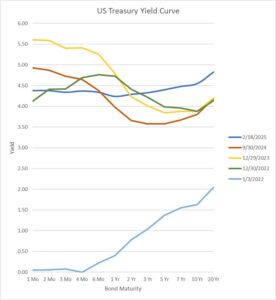
Yield curve over the years

The chart below shows the yield curve at five different points in time from Jan. 2022 to Tuesday, Feb. 18, 2025. The shape of the curve has gone from normal to inverted and now back to normal. Looking at a few different US Treasury Bond maturities over the last 14 months, you can see the one month yield has decreased over 120 bps and the 20 year has increased over 60 bps! Each rate curve shape and elevation imply different opportunities for your balance sheet. A more asset-sensitive and positive gap on a balance sheet may be more attractive for earnings in the short term and helpful when the Fed was raising rates in 2022 and 2023.  A more liability-sensitive and negative gap on a balance sheet may be more attractive for earnings in the short term as the Fed reduces rates. Your ALCO likely understands these shifts well and has managed these drastic movements and their impact on overall strategy.

The normal yield curve indicates improved expectations for economic growth in the years ahead. That said, there is also caution for inflation. When the Fed began rate reductions, there were discussions regarding more cuts totaling 100 bps by year end 2025. Then these ambitious views have shortened to perhaps two cuts of 25 bps each. The yield curve still stands above its level from several years ago, and the Fed Funds rate exceeds the previous cycle’s peak of 2.25–2.50 percent in 2018–2019. The consumer is savvier than they were at that time as well.

At the end of 2024, we spent time interviewing some of our community banker colleagues to gain a pulse on what they are talking internally about in their ALCO meetings concerning interest rate risk. As expected, there is relief to have a normal yield curve instead of managing the inverted one of recent years. Many reasons still create an overall sense of caution heading into 2025, with two key factors briefly discussed in the following sections.

Cost of deposits

Community banks may not realize the full impact of the Fed’s rate reduction in their cost of deposits. Given the continued elevated competition for deposits and the more savvy consumer, community banks may find their deposit rate offering slower to adjust than the Fed’s rate movements and some may see their interest expense actually increase in 2025. There may also be migration to more longer term duration CDs. (movement from less than 6 months to 1 year or more). Yes, longer term CDs will keep the deposit costs higher than non-maturity but will create welcomed funding stability. Continued focus on the bank’s deposit makeup and shifts are necessary. Staggering the CD maturities will be critical for community banks to manage this new environment so as to maintain adequate liquidity levels as CDs mature and consumers make a choice to reinvest, migrate to shorter term or perhaps withdraw their funds.

Investments

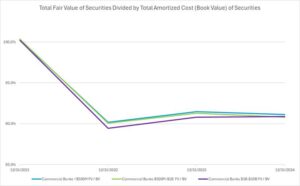
Community banks made many investments with PPP funds and other excess liquidity in a low-rate environment back in 2021. The Fed raised rates 550 bps and many of those investments contributed to a significant amount of unrealized loss. The Fed cut rates 100 bps, and the yield curve no longer shows an inversion. Rates remain elevated, and community banks still hold a significant amount of investments on their balance sheets with unrealized losses. The chart below shows the fair value of investment portfolio expressed as a percent of the amortized cost of the investment portfolio over the last four years for commercial banks.

You can see all three asset sizes over the last four years have a similar trend line. Consider a bank having $100MM in their security portfolio, it is likely its portfolio is currently $7-$10MM underwater. This changes each day as these investments continue to reprice and mature over time.  As they do, bank management is faced with how best to serve its bank. Either by in reinvesting short-term or long-term within their investment portfolio or funding higher yielding loan growth opportunities. Each has liquidity and capital implications that must be considered.

Conclusion

Community banking is resilient. The conversations with community bankers reveal their drive to prepare and plans for managing risk in 2025 and beyond. ALCO and Boards of Directors should continue their sharp focus on managing interest rate risk.  If the deposit competition is fierce for your bank and interest expense in 2025 is expected to be elevated, then focus on what is within your bank’s control. On the asset side of the balance sheet, consider paying attention to the loan and investment portfolios and when they are repricing, what additional loan fee income can be generated, revisiting discussions and confirming the types of loans the bank is comfortable making.

When considering interest rate risk, confirm your bank’s risk profile and remember to stay within the board approved risk parameters. Your bank’s balance sheet may have experienced significant change away from a neutral risk position given the economic environment recently. If you have found your bank is outside the risk parameters, discuss strategies with your board that are designed to get the bank back within acceptable risk thresholds.  Always be clear with the board on expectations and inform them we may not be able to fix this overnight.  One banker said it best when providing advice for community bankers trying manage the interest rate risk of the bank, “Always manage the bank’s IRR to a better position, even if getting to that position takes years… don’t get ahead of your skis and try to do it all in one day.”

Thanks to community bankers that spent time discussing IRR and sharing insights in the interest of helping others.

If you’d like to hear more about our ALM services, reach out as we’d be happy to discuss and assist.

Connect with a Consultant

Contact us to learn more about our consulting services and how we can add value to your financial institution

Ask a Question