Internal audit: Your third line of defense in third-party risk management

By Jeanette McKeever, CCBIA, director of internal audit, Young & Associates

In today’s financial landscape, banks and credit unions increasingly rely on third-party vendors to meet regulatory demands, leverage technological advancements and maintain competitive edges. However, these relationships introduce various types of risks in internal audit, from compliance and operational risks to reputational and strategic risks. Amidst economic uncertainty, increased digitalization and growing supervisory attention, many financial institutions are reviewing their third-party risk management (TPRM) frameworks to ensure they are robust and comprehensive.

Here, the role of internal audit becomes indispensable. Internal audit’s role in TPRM goes beyond mere compliance. By leveraging their unique skills and perspectives, internal auditors can help institutions identify, monitor and control risks while achieving strategic goals.

Understanding third-party risk in banking

Third-party relationships and their associated risks require careful management. Ineffective oversight of the complex operational, financial, technological, and legal agreements governing these extended business relationships can lead to brand or reputation damage, data security breaches, and significant financial losses. Additionally, such oversight failures can result in errors in financial reporting, compounding the challenges and potential impacts on the institution.

Financial institutions are entrusting an increasing percentage of their operations to third parties, prompting regulators to scrutinize these relationships more closely. The updated interagency guidance from the Federal Deposit Insurance Corporation (FDIC), the Federal Reserve Board (FRB) and the Office of the Comptroller of the Currency (OCC) outlines the regulatory expectations for managing third-party risks throughout the relationship lifecycle: planning, due diligence, selection, contract negotiation, ongoing monitoring and termination.

Monitoring vendor performance is also a regulatory requirement for credit unions. The National Credit Union Administration (NCUA) specifies the criteria for assessing vendor performance in their 2007 supervisory letter SL No. 07-01, “Evaluating Third-Party Relationships.” This guidance emphasizes key areas for third-party relationship management, including risk assessment and planning, due diligence, risk management, monitoring, and control.

The role of internal audit in third-party risk management

Though Chief Risk Officers are typically responsible for managing third-party risks, internal audit plays a crucial role as the third line of defense. Internal auditors bring essential skills, capabilities, and perspectives to thoroughly examine TPRM programs, identifying gaps or areas for improvement that might have been missed by the second line of defense. The board relies on internal auditors as an extra layer of security to ensure that third-party risks are properly identified and assessed, appropriate internal controls are in place, and timely risk intelligence is generated to inform decision-making.

Leveraging internal audit to improve third-party risk controls

Internal audit can contribute significantly to managing third-party risks through various areas:

  • Pinpointing critical contracts: Internal auditors can assist in identifying high-risk third parties and ensure they receive more frequent scrutiny. This can help with prioritizing risk management efforts.
  • Assessing risk management programs: They can evaluate the effectiveness of third-party due diligence processes and controls, conducting research to gauge the risk level and reputation of third parties.
  • Reviewing compliance with governance standards: Internal auditors can verify if the financial institution’s processes for selecting and managing third parties adhere to governance requirements and include necessary risk and compliance clauses in contracts.
  • Evaluating and improving risk controls: They can assess the effectiveness of risk management controls, ensure regulatory compliance, and check for “right to audit” clauses in third-party agreements.
  • Facilitating informed decision-making: Auditors offer valuable insights into third-party risks. They also evaluate decision-making and contract management processes. This ensures that these processes align with the bank or credit union’s strategic objectives. Additionally, auditors verify that the processes provide sufficient risk protection.
  • Assessing performance and identifying opportunities: They review global third-party performance, detect inconsistencies, and recommend best practices for effective risk and performance management.

Integrating internal audit into third-party risk management strategies

1. Independent vendor risk assessment and identification

Conducting a risk assessment is essential for the initial decision-making process regarding whether to establish a third-party relationship. Internal auditors bring an independent perspective to the assessment and identification of third-party risks. They can perform thorough risk assessments to identify all third-party relationships and associated risks. This independent evaluation helps ensure no significant risk is overlooked, and it provides a holistic view of the financial institution’s third-party risk landscape.

2. Vendor due diligence and selection oversight

The due diligence process equips management with the necessary information to evaluate both the qualitative and quantitative aspects of potential third parties, determining whether a relationship will support the financial institution’s strategic and financial goals while mitigating identified risks.

If your financial institution has its own internal audit team, involving them in the due diligence process for vetting potential third-party relationships can be highly beneficial. Though not prevalent practice in community banks and credit unions yet, leveraging your institution’s third line of defense can enhance third-party risk management processes and provide an extra layer of protection.

Internal audit teams can provide oversight during the due diligence and selection phases of third-party relationships. They can assess the processes used for selecting third parties to confirm that the institution has effective policies and procedures in place. By ensuring thorough due diligence, internal auditors help identify potential risks early on. Their oversight includes evaluating the third party’s operational quality, compliance capabilities, risk profile, and long-term viability.

3. Contract management and compliance

Financial institution management should ensure that the specific expectations and obligations of both the financial institution and the third party are clearly defined in a written contract before finalizing the arrangement. Board or committee approval is required for many material third-party relationships, and significant contracts should be reviewed by appropriate legal counsel before finalization. The level of detail in contract provisions will depend on the scope and risks associated with the third-party relationship. Effective contract management is crucial for mitigating third-party risks. This involves not just due diligence but also thorough processes in agreement formation, publication, activation, compliance with service delivery, analysis, optimization, and offboarding.

The internal audit function can engage in contract management in two key areas:

  1. Auditing the overall contract management process.
  2. Reviewing active contracts with critical vendors.

Auditing the contract management process

An effective contract management process is crucial for maintaining strong performance across your institution. Even minor inefficiencies can lead to significant issues, particularly when your financial institution aims to grow and scale. A robust contract management system contributes to a thriving institution.

Regular audits of your contract management lifecycle can reveal hidden costs and growth opportunities. These audits should assess process deficiencies, compliance issues, and historical management practices. Start by identifying key stages in your process and setting benchmarks for measurement. Key stages often include planning, due diligence, selection, contract negotiation, ongoing monitoring, and termination, as outlined in regulatory guidance.

Evaluate your management practices within each stage. Is the contract management process clearly defined? Are roles and responsibilities assigned? Who ensures compliance with service-level agreements (SLAs)? Addressing these questions through a contract management audit can help identify risks and gaps, ensuring a more effective and efficient process.

Reviewing active contracts with critical vendors

Begin by inventorying and segmenting critical vendors based on risk levels to identify those most critical to audit. Incorporate audits of high-risk and important service provider contracts into your annual audit plan. Gain an understanding of the key risks associated with each service provider and thoroughly review their contracts.

Internal auditors can review critical third-party contracts to ensure they include comprehensive risk and compliance clauses. This includes verifying that contracts have “right to audit” provisions, which allow the institution to monitor third-party compliance continuously. Once you’ve established your audit rights, you can start the contract audit by assessing key legal and business risks. Look for deficiencies and compliance issues in the contract, and consider conducting on-site reviews if your audit rights permit. An efficiency audit may also be warranted to ensure services are delivered as per the contract and service level agreements.

After completing the audit, validate the results, identify root causes, and propose solutions. Finally, communicate the results to the contract owner and key stakeholders, ensuring they are informed of the findings and recommended actions.

4. Ongoing monitoring and reporting

Once a third-party relationship is established, continuous monitoring is essential to manage evolving risks. Internal audit can play a vital role in developing and implementing monitoring frameworks that track third-party performance, compliance and risk exposure. Regular audits and reviews can provide senior management with timely risk intelligence. This enables informed decision-making and ensures that effective internal controls are in place.

5. Internal audit collaboration with risk management functions

Internal audit of third-party risk management becomes more effective when auditors and risk managers collaborate and share information. This allows both to leverage each other’s abilities and tools. By working closely with risk, compliance and other departments, internal auditors can ensure that third-party governance policies and procedures are consistently applied across the bank or credit union.

By integrating third-party risk assessments with audit plans, both auditors and risk management teams can eliminate redundancies in the risk evaluation processes. This approach also helps standardize the risk language used. It offers management teams and boards a comprehensive view of the financial institution’s third-party risk profile. This collaboration integrates TPRM into the overall risk management strategy, enhancing the institution’s ability to manage third-party risks.

Building a robust third-party risk management framework

To effectively manage third-party risks, financial institutions should establish a comprehensive TPRM framework. TPRM necessitates a framework that holds the board of directors and senior management accountable. It requires them to adjust the principles based on the size, scope and criticality of the products or services provided by third parties. This framework should be consistently applied across the institution and integrated into its operational, risk, and compliance management activities. As discussed, key components of a robust TPRM framework include:

  • Defining and Inventorying Third-Party Vendors: Internal audit can assist in identifying and inventorying all third-party relationships, categorizing them by risk level and criticality.
  • Risk Appetite Assessment: Assessing the bank or credit union’s risk appetite concerning third-party relationships, particularly those in high-risk locations or industries.
  • Enhanced Vendor Due Diligence: Conducting enhanced due diligence for critical third-party relationships, ensuring alignment with the institution’s risk profile and regulatory requirements.
  • Ongoing Monitoring and Performance Standards: Establishing and maintaining rigorous monitoring and performance standards for third-party relationships, ensuring continuous compliance and risk management.
  • Training and Awareness: Providing training for stakeholders on TPRM processes and the importance of effective third-party risk management.

Risk-based internal audit for financial institutions

With regulatory bodies calling for enhanced third-party oversight, the imperative for thorough risk and assurance functions has never been greater. These functions must delve deeply into the third-party network. This helps to ensure that critical risks and compliance requirements are diligently managed and monitored. Internal auditors are pivotal in this endeavor and should seek to broaden their role in fortifying third-party risk management.

At Young & Associates, we understand the critical importance of robust TPRM processes. We offer expert consulting services to help banks and credit unions strengthen their internal audit functions, risk management, and more. By leveraging our expertise, financial institutions can enhance their third-party risk management frameworks, ensuring compliance, mitigating risks and achieving strategic objectives. Ultimately, effective TPRM is not just about regulatory compliance; it’s about creating a resilient and thriving financial institution.

For more information on how Young & Associates can support your internal audit needs, click here.

CDs maturing in Q2: Impact on interest rate risk management

By: Michael Gerbick, President at Young & Associates

Interest rate risk (IRR) is the exposure of a bank or credit union’s current or future earnings and capital to adverse changes in market rates. Management of that risk is critical to community financial institutions and since the pandemic and rates went to zero, due to the rapid pace of change, effective management of that risk has been difficult due to the rapid increase in interest rates.

Navigating market volatility: The role of ALM models 

Most banks and credit unions utilize asset liability management (ALM) models to assist in the modeling of interest rate increases and decreases, typically +/- 400 bp shock scenarios. Similar to the parallel rate shock scenarios of the ALM models designed to identify risk exposure in a rapidly changing rate environment, the Fed raised rates between March 2022 and July 2023 from 0 percent to 5.25–5.50 percent.  

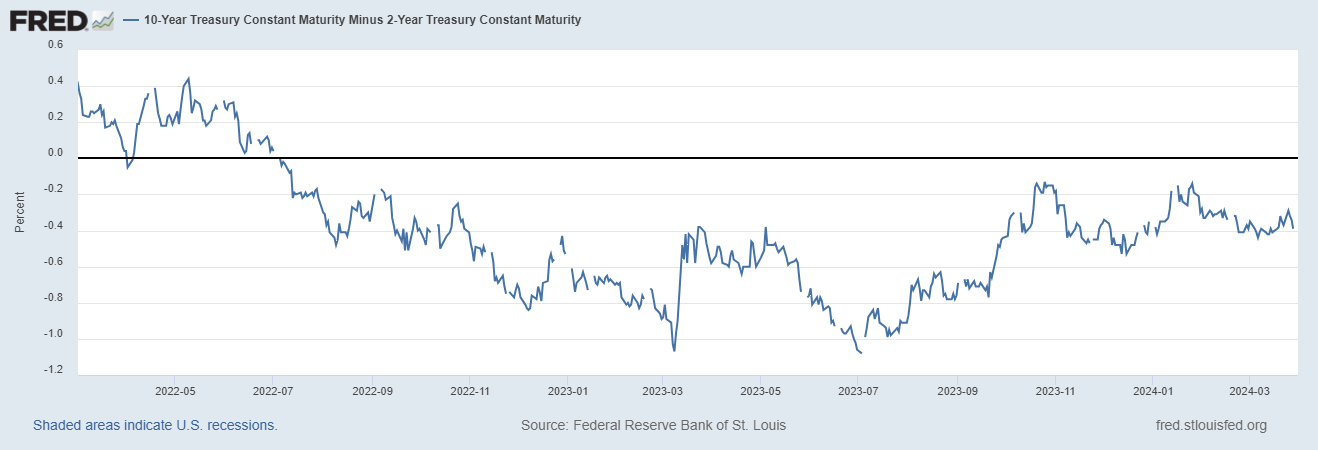
The yield curve shape changed significantly, putting additional stress on the Asset Liability Committees (ALCO) responsible for managing the ALM function of financial institutions, and has not let up. Yes, the inverted yield curve has flattened from 12 months ago, however in March this year, the Treasury yield curve for the two-year and ten-year yields hit a consecutive day record for being inverted 625 days, besting the previous record set in 1978.  

The chart shown below1 illustrates the difference between the higher yield 2-year and the lower yield 10-year. 

Strategies amidst rising rates: Insights for community Banks and credit unions 

Amongst many of the strategies employed during the rising rate environment of 2022 and 2023 was offering certificates of deposit (CDs) to maintain and grow deposits on the balance sheet. However, the funding mix began to shift as consumers migrated towards the higher interest-bearing accounts or the Bank increased Federal Home Loan borrowing which caused the cost of funds to increase.  

Industry research for the last two years shows interest-bearing deposits up 5.1 percent and non-interest-bearing deposits down 28 percent2. Rates have not risen since July 2023, however many of the CDs offered in 2023 are due to mature in 2024 in a different rate environment than when they were issued. Financial institutions are monitoring this closely.  

Strategic considerations for ALCOs: Addressing interest rate risk 

ALCOs are tasked with predicting the interest rate exposure in the elevated rate environment. Currently, we are in a unique environment and banks and credit unions should be cautious about using historical data only to predict future activity. In addition to non-bank competitors competing for deposits, community financial institutions need to continue improving their approach to cost of funds, net interest margin compression and how the institution will effectively manage their exposure to interest rate risk. A few strategies and actions financial institutions can employ related to deposits are: 

Optimizing interest rate exposure

Increase the frequency in which ALCO meets to review the interest rate environment. This may currently be semi-annual or quarterly at your institution. Additionally, the financial institution may consider meeting monthly to stay abreast of any changes in the environment or new products the Bank is releasing. 

Policy revision

Review your policy limits approved by the Board. Your policy may only have -100 bp or -200 bp scenarios listed given the previous low-rate environment. Not only review the existing policy limits with the Board but increase the stress range to account for -300 bp and -400 bp. 

Trigger points

In addition to the policy limits, consider thresholds for the rate of change of the risk measures that consider risks associated with liquidity, interest rate risk and capital. Also, these rate of change thresholds are designed to commence action or additional investigation into the source of the significant movement ahead of falling outside of policy limits. 

Stress your assumptions

ALM models have built-in assumptions and are likely based on historical industry averages supplemented by data supplied by your institution. Common key assumptions outlined by the FDIC3: 

  • Asset prepayment – represents the change in cash flows from an asset’s contractual repayment schedule. The severity of prepayments fluctuates with various interest rate scenarios. Mortgage loans are a prime example of assets subject to prepayment fluctuations.
  • Non-maturity deposits
    • Sensitivity or Beta Factor – describes the magnitude of change in deposit rates compared to a driver rate.
    • Decay Rate – estimates the amount of existing non-maturity deposits that will run off over time.
    • Weighted Average Life – estimates the average effective maturity of the deposits.
  • Driver rate – represents the rate, or rates, which drive the re-pricing characteristics of assets and liabilities. Examples include Fed funds rate, LIBOR, U.S. Treasury yields, and the WSJ Prime rate.

Have discussions with your team and understand what is going on broadly in the economic environment as well as items specific to your bank or credit union. Also, address changes or concerns in your modeling assumptions or at the very least, be aware of their potential impact. Spend time to learn the assumptions. Do not accept the defaults as correct, make sure your team understands them.

In addition to your base case, stress the assumptions – double or triple the decay rates, assume a high sensitivity to driver rates in the change in deposit rates and cut the prepayment speeds in half. The alternate scenarios with severe assumptions will assist ALCO in understanding potential value creation and risks.  

Interest rate risk review

Regulatory guidance indicates that every bank should have an annual third-party assessment of the interest rate risk system. Similar to other audits, this review should be delivered to the Board of Directors or the Board’s audit committee. It is a critical component of the Board’s responsibility for bank oversight. 

Educate the board on interest rate risk

There are educational videos available through the FDIC website. In addition, there are IRR modeling vendors that will attend meetings to provide perspective to your institution on the current economic environment and your modeling results. Leverage them. 

Managing interest rate risk in 2024 and beyond 

There is always an opportunity for significant value creation in any environment. The rapidly increasing rate environment experienced in 2022-2023 brought forth significant risks and opportunities. The 2024 environment possesses new challenges. I am excited to see our community banks and credit unions adjust their balance sheets, act on the highest value opportunities and limit their interest rate exposure.  

Assess your interest rate risk 

Ready to proactively manage your institution’s interest rate risk? Young & Associates offers comprehensive interest rate risk reviews tailored to your needs. Ensure your bank or credit union is prepared to navigate market volatility with confidence. Reach out to us now to schedule your consultation!


1Federal Reserve Economic Data (FRED) 10-Year Treasury Constant Maturity Minus 2-Year Treasury Constant Maturity
2S&P Global US Bank Market Report 2024
3FDIC Developing Key Assumptions for Analysis of Interest Rate Risk

Managing commercial real estate credit risk amid market shifts

By: Jerry Sutherin, President & CEO of Young & Associates

The landscape of commercial real estate (CRE) lending is shifting due to current economic events, presenting both challenges and opportunities for community financial institutions deeply entrenched in this sector. The challenges range from the profound impact of remote work trends and the uncertain future of office spaces to growing concerns about inflation and higher interest rates bringing CRE risk into the spotlight. This volatility has garnered increased attention from internal and external stakeholders, as well as regulatory authorities. Consequently, identifying the most pressing threats among these challenges and proactively mitigating risk has become a top priority for financial institutions with CRE exposure.

In the face of rising interest rates and delinquencies, many financial institutions are preparing to confront these economic stressors. In fact, some were already scaling back lending before the recent collapses of Silicon Valley Bank and Signature Bank. We have all witnessed the tightening of lending standards resulting from that event, and many analysts anticipate further tightening among all community financial institutions. This constriction is also impacted by limited deposits and liquidity forcing financial institutions to be selective in how they deploy their capital. These facts leave many analysts predicting when credit problems will emerge in the CRE sector.

Current CRE landscape at a glance

The evidence speaks for itself. According to S&P Global Market Intelligence, the delinquency rate for all CRE loans held in U.S. banks has increased by five basis points year over year. Moreover, within a single quarter earlier this year, the delinquency rate for nonowner-occupied nonresidential property loans spiked by a significant 24 basis points. This has led to tighter lending standards at origination, reflecting the concerns of institutions. Further, financial institutions are taking proactive measures to mitigate CRE risk after origination. Some have set aside high-single-digit percentage allowances for office loans. Others have reduced exposure through portfolio sales. Overall, loan originations have fallen, CRE sales have slumped, and forecasts indicate a drop in CRE prices.

The tightening of lending standards, the slowdown in the growth of CRE loans, and the impact on loan originations have emerged as central concerns in the financial sector. What unifies these factors is their inherent risk and whether they act as warning signals or responses. Managing CRE credit risk is undeniably intricate, but leveraging available strategies and tools empowers community banks, credit unions, and financial institutions to effectively navigate the ever-changing CRE lending sector. This enables them to proactively assess and plan for risk mitigation, rather than merely react to these changes.

Understanding commercial real estate risk

As CRE loans represent a substantial part of many banks’ loan portfolios and higher yielding assets, especially within community financial institutions, understanding the significance of CRE credit risk is paramount. Community banks and credit unions often operate in areas experiencing job and population growth, leading to a high demand for CRE lending and, in turn, a high concentration of CRE loans. This growth and its corresponding effects on loan portfolio concentration pose new challenges for banks in terms of risk monitoring and control.

While larger financial institutions commonly maintain experienced staff and even entire departments to manage these risks, it is generally not cost effective for smaller financial institutions to hire and maintain qualified resources to help mitigate the inherent risks. In the absence of an internal CRE risk management team, it is imperative for financial institutions to rely on independent third-party resources to assist in this crucial process.

Historical context and lessons from past experiences

A retrospective examination underscores the importance of proactive risk management. Many significant historical banking failures were largely attributed to overinvestment in CRE loans and the lack of an effective risk management process. Weak underwriting standards and poor portfolio management led to an oversupply of CRE properties and borrower defaults. Over time, regulatory improvements, such as stricter underwriting and risk management requirements, have been implemented. Nevertheless, predicting the future remains uncertain. We can only analyze past patterns and the shortcomings to properly assess future risks.

In 2023, community and regional financial institutions comprise approximately 72% of the CRE loan market, taking on an above-average amount of CRE credit exposure. Recognizing such circumstances is vital, as you should be alert to potential red flags. Identifying and managing CRE credit risk is critical.

Identifying emerging commercial real estate risk

A comprehensive understanding of CRE credit risk highlights the increasing complexity of its landscape. CRE credit risk is multifaceted, with numerous risk categories affecting CRE lending, including market risk, asset risk, liquidity risk, and credit risk, among others. To construct a robust risk management strategy, all these variables must be explored and considered.

To assess your financial institution’s CRE loan segment’s health, a systematic approach is needed. When determining if your CRE portfolio exceeds your institution’s risk appetite and how to quantify that risk and respond effectively, the answers lie in developing a comprehensive, tailored framework for assessing and analyzing your CRE loan market. The most recent regulatory interagency Statement on Prudent Risk Management for Commercial Real Estate Lending notes that institutions that successfully monitored risk have:

  • Established appropriate loan policies, underwriting standards, and concentration limits.
  • Conducted cash flow analyses based on realistic rates and expenses to ensure repayment ability and assessed borrowers’ ability to repay during interest rate fluctuations and loan structure changes.
  • Analyzed the impact of economic changes on the loan portfolio’s quality, earnings, and capital.
  • Provided boards and management with information to adapt lending strategies in changing market conditions.
  • Maintained information systems to manage concentration risk effectively.
  • Implemented appropriate appraisal review and collateral valuation processes.

With the many challenges faced by community financial institutions, the need to effectively identify, measure, and manage these risks has become paramount. While established best practices exist to address these risks, financial institutions must transition from assessing each risk in isolation to recognizing the interconnectedness and synergy between them. A more holistic approach to risk management is required, allowing institutions to confidently inform their capital planning, risk tolerance, and overarching strategy.

Strengthening commercial real estate risk management in community financial institutions

A comprehensive risk management strategy empowers financial institutions to adapt to market dynamics, instilling confidence among stakeholders and regulators. Alongside the factors discussed in the previous section, regulatory guidelines highlight two critical facets of CRE risk management: stress testing and portfolio reviews. While community financial institutions can execute these internally, outsourcing can offer efficiency and effectiveness.

Commercial real estate portfolio stress testing

Stress testing and sensitivity analyses are indispensable tools for evaluating CRE risk and gauging the impact of economic fluctuations on asset quality, earnings, and capital. These assessments should align with the portfolio’s size and risk profile. CRE stress tests inform strategic and capital planning, credit concentration limits, policy, and underwriting. Integrating stress testing into risk management and strategic planning is essential to anticipate and mitigate risks, especially given current market uncertainties.

Although loan-level stress testing serves a purpose on a transactional level at origination, financial institutions should also regularly perform portfolio-level stress testing that encompasses a bottoms-up and a top-down approach. The bottom-up approach allows financial institutions to gauge the risks of individual, seasoned loans by stressing each transaction through interest rate changes, collateral values, and other market factors. Implying moderate and high stress scenarios to each transaction allows for early identification of potential losses and their impact on the capital of your organization. The top-down approach takes the remaining portfolio not identified on a loan-level analysis and uses the same stressors to further identify any possible impact to capital.

Independent loan reviews for commercial real estate risk mitigation

Thorough loan reviews are pivotal for identifying and mitigating potential CRE portfolio risks. They enable banks to assess loan quality, maintain compliance with regulations, and make necessary adjustments on a loan and portfolio level. An effective loan review function is crucial for assessing asset quality, evaluating underwriting and ongoing monitoring, and identifying exceptions to policies. Proactive issue resolution ensures risk mitigation before regulatory scrutiny or asset quality deterioration.

To further safeguard against future losses, it is critical that a loan review be independent. If maintained internally at the organization, it should report directly to the audit committee of the board of directors or the full board of directors. If a third-party firm is contracted to perform this work, it too should report all findings to the board of directors or a committee thereof.

Tactical approaches to limit commercial real estate risk in an unpredictable market

To minimize exposure to CRE credit risk, institutions should enhance communication with borrowers, allocate additional resources for portfolio management, understand collateral, and manage interest rate risk. Effective market area monitoring, adaptable to the institution’s unique risk exposure and appetite, is essential. Clear communication of risk tolerance from the board down to lending staff fosters alignment and clarity.

Community financial institutions must not become complacent in their approach to risk management. It is critical to remain agile and continually adapt to changing environments and emerging risks, especially in the currently volatile realm of CRE lending. By staying proactive and employing a comprehensive risk assessment and management approach, banks and credit unions can successfully address CRE credit risk, safeguard their portfolios, and maintain their success.

Optimize your risk management strategies with Young & Associates

With over four decades of experience, Y&A specializes in helping community financial institutions manage risk. Our enduring presence in the industry reflects our ability to adapt to evolving financial landscapes. Our seasoned consultants, who have backgrounds in banking, bring firsthand experience of market fluctuations.

Outsourcing commercial real estate risk stress testing

Young & Associates offers a CRE portfolio stress testing service that efficiently and insightfully assesses your portfolio. Using data specific to your bank, we stress your CRE portfolio across various factors. Our report quantifies potential impacts on earnings and capital resulting from collateral value decreases, changes in property net operating incomes, or increases in interest rates. What sets us apart is our ability to handle the stress testing process efficiently, allowing your institution’s management to focus on other important initiatives.

Outsourcing loan review

For most community financial institutions, outsourced loan review is the best choice due to size and the need for an independent party. Our loan review service, applied to your CRE portfolio, uncovers individual credit assessments. It also evaluates the alignment of your credit standards, analysis, and continuous credit monitoring with the specific characteristics of your CRE portfolio. Our findings not only inform you about existing portfolio risks but also provide recommendations for effective risk management.

Contact us to explore how we can support your journey in addressing CRE credit risk effectively.

How strategic planning drives effective change management

By: Michael Gerbick, COO 

Change is an undeniable aspect of the modern financial world. To stay competitive, thrive in a dynamic marketplace, and satisfy the demands of both customers and regulators, banks and credit unions must embrace change management as an integral part of their strategic planning process. But how can financial institutions seamlessly integrate change management into their strategies while ensuring their governance processes remain robust enough to meet regulatory requirements? Understanding this symbiotic relationship and how to strategize for achievement is vital.

The unavoidable reality: Change in the financial sector

The significance of change management in the bank and credit union industry has gained even more prominence in recent times. In the Fiscal Year 2024 Bank Supervision Operating Plan released by the Office of the Comptroller of the Currency Committee on Bank Supervision, change management takes center stage. The plan underscores the importance of banks implementing significant changes in various aspects of their operations, from leadership to risk management frameworks, and even in their use of third-party service providers that support critical activities.

The operating plan emphasizes the role of examiners in identifying these financial institutions and evaluating the suitability of their governance processes. This includes assessing whether the acquisition or retention of qualified staff aligns with the changes undertaken by the board or management. These changes can arise from a variety of factors, including mergers and acquisitions, system conversions, regulatory requirements, and the implementation of new, modified, or expanded products and services, such as cutting-edge technological innovations.

This regulatory focus underscores the critical nature of integrating change management into the strategic planning process for banks and credit unions. It is not just about responding to the evolving landscape; it is about proactively steering the ship towards a brighter, more competitive future. Change is a constant in the financial sector. Market dynamics, technological advancements, shifting customer expectations, and regulatory updates all contribute to the perpetual evolution of this industry.

For banks and credit unions, change should not be a reactive response; it should be a proactive strategy. Strategic planning, often seen as the roadmap for an organization, is the mainstay that can help financial institutions navigate these uncharted waters. However, the true synergy lies in integrating change management into this planning process.

The power of change management

Change management, at its core, is about guiding an organization through the transition from its current state to a desired future state while minimizing disruptions and ensuring that the change is well-received by employees and stakeholders. In the context of banks and credit unions, effective change management can manifest in various forms, such as:

  • Digital transformation: Embracing new technologies to enhance customer experiences and operational efficiency.
  • Compliance updates: Adapting to evolving regulatory frameworks to avoid penalties and maintain trust.
  • Cultural shifts: Fostering a culture of innovation and adaptability among employees.
  • Product and service enhancements: Continuously improving offerings to meet customer demands.
  • Proactive risk assessment and management: Identifying, mitigating, and seamlessly integrating risk management to safeguard against potential risks and challenges.

The crucial role of change management in this industry cannot be overstated. It enables financial institutions to execute their strategic visions successfully, transforming conceptual ideas into concrete actions.

Incorporating change management into your financial institution’s strategic planning

To weave change management seamlessly into your strategic plan, consider the following steps:

  1. Establish a clear vision: Clearly define your strategic objectives and the desired outcomes of the change initiatives. Ensure that your team understands and is aligned with this vision.
  2. Identify key stakeholders: Recognize the individuals and groups affected by the proposed changes. Engage with them early to gather insights, address concerns, and gain their support.
  3. Create a robust governance framework: Robust governance processes are essential for change management in banking. This includes defining roles and responsibilities, establishing decision-making processes, and setting up regular progress tracking mechanisms.
  4. Develop a communication strategy: Effective communication is the backbone of change management. Craft a comprehensive plan to keep stakeholders informed, engaged, and motivated throughout the change journey.
  5. Build change champions: Identify and empower individuals within your institution who can serve as change champions. They can help drive the transformation and inspire their colleagues.
  6. Monitor and adapt: Regularly assess the progress of your change initiatives and be ready to adjust your strategies as needed. Change is iterative, and adaptability is key to success.

Incorporating change management into strategic planning is critical. By establishing a clear vision, engaging key stakeholders, creating a robust governance framework, crafting effective communication strategies, building change champions, and embracing adaptability, your financial institution can navigate change seamlessly and achieve its strategic objectives.

Governance processes: Meeting regulatory requirements

Incorporating change management into your strategic plan does not mean sacrificing regulatory compliance. In fact, it can enhance your ability to meet these requirements effectively. Here is how you can navigate this regulatory landscape while optimizing your change management efforts:

  • Risk assessment: Conduct comprehensive risk assessments to identify potential compliance gaps and challenges associated with your proposed changes. Address these issues proactively and effectively to minimize regulatory risks.
  • Regulatory engagement and collaboration: Establish open and constructive lines of communication with regulators and examiners. Keep them informed of your change initiatives, seek their insights and guidance on change management strategies, and demonstrate your commitment to compliance.
  • Documentation and reporting: In line with regulatory requirements, maintain meticulous records of your change management efforts, including compliance measures. Thorough and accurate documentation can simplify examinations and audits, making the process smoother and more efficient.
  • Training and education: Invest in training and educating your staff on regulatory changes and their implications. Knowledgeable employees are your first line of defense against compliance issues.
  • Continuous improvement: Remember that change is perpetual. Continuously assess and adapt your change management strategies to stay ahead in a rapidly evolving industry.

By following the strategies outlined above, you can navigate the complex regulatory landscape while optimizing your change management efforts and harmonizing change with compliance. Embrace these practices, and your organization will not only thrive in the face of change but also meet regulatory demands with confidence and efficiency.

Embracing proactive change management

Change management is a function of an effective strategic plan. The symbiotic relationship between them is the cornerstone of success in modern financial institutions. Embracing change as an opportunity, rather than a challenge, is crucial. Integrating change management into your strategic planning process, establishing robust governance procedures, and ensuring regulatory compliance are the keys to thriving in an ever-evolving industry.

Remember, change is not a one-time event but a continuous journey toward a brighter future for your institution and stakeholders. Align your strategic planning with regulatory directives and embrace change management as a proactive strategy to not only meet regulatory demands but also position your institution as an industry leader in the dynamic financial landscape. Embrace change, and let it steer your institution toward success.

Young & Associates: Your partner in change

Y&A is here to support financial institutions as they navigate the ever-evolving landscape of the financial industry. With our team’s extensive experience in regulatory compliance, risk management, and strategic planning, we stand ready to assist you in successfully embracing, harnessing, and facilitating change. With over 45 years of proven experience as a trusted ally to financial institutions, you can rely on Y&A to guide through the financial sector’s changing terrain. Get in touch with us to learn how we can help.

Succession planning strategies for developing your leadership legacy

By: Clarissa Sinchak, PHR, Director of Human Resources

An aging workforce is an increasing concern for many financial institutions, but with thoughtful planning and a solid road map in place, it is possible to leverage the strengths of these invaluable, loyal, and tenured employees while concurrently planning for the future and growth of your organization.

Understanding workforce age trends and the road ahead for succession planning

According to recent studies, the baby boomer generation, comprising individuals aged 57 and older, reflects nearly 20% of the overall U.S. workforce population. However, according to the Bureau of Labor Statistics, this same group of workers represent an even higher percentage in the financial services and banking industries – nearly 24% of the overall workforce. As such, it is important for business leaders to address this demographic shift proactively to ensure continued success of their organizations.

While the expertise of older employees is incredibly vital, there are some key challenges that an ageing workforce presents as it relates to sustaining the future of the company. Naturally, as senior employees retire, financial institutions may inevitably face a skills gap if there are not enough younger employees with the necessary skills and experience to fill these roles. This can have a negative impact on the overall morale and ultimate retention of these younger workers, not to mention an adverse effect on the continued growth and stability of the company. So, what can executive management do to help mitigate this issue?

Proactively managing the challenges of an aging workforce

To address the challenges of an aging workforce, financial institutions must adopt proactive strategies. First and foremost, focus on upskilling by providing training and development opportunities to help newer employees acquire new skills and adapt to evolving job requirements. Secondly, transfer knowledge! The natural attrition of experienced employees that all financial institutions are facing can result in a loss of institutional expertise, so it is crucial to facilitate knowledge transfer from retiring workers to younger ones.

This can be accomplished through structured training, ensuring that this valuable expertise remains within your institution. Seasoned employees bring decades of wisdom as well as unique perspectives and ideas to the workplace. They can serve as mentors and advisors to their younger counterparts, contributing to their development. Additionally, older workers also have a clearer understanding of the needs and preferences of your valued and loyal long-term clients, which can provide a competitive advantage when training their successors.

Where to begin: The foundation of succession planning

The question then becomes, “Where do we start, and how?”. Planning for leadership transition via succession planning is the answer to ensure long-term success and stability of an organization. But what exactly is succession planning?  Simply put, it is the process of developing a program to identify and prepare younger employees to take on leadership roles as their more senior counterparts retire.

Effective succession planning in financial and banking institutions reduces the harsh risks associated with leadership turnover, helps maintain overall institutional knowledge, and ensures an ongoing pipeline of qualified leaders who can navigate the ever-changing and highly regulated world of banking. In other words, succession planning ultimately contributes to the long-term stability and success of the industry and is crucial for guaranteeing a smooth transition of leadership while maintaining continuity in key positions.

Most organizations believe in the practice of succession planning, but many lack a standardized process for executing it. Or, if such a process does exist, typically too much time is spent on this traditionally time-consuming process. On the flip side, it’s not as simple as identifying, training, and placing employees.

Therefore, to begin the process of developing your financial institution’s future leaders, we recommend incorporating succession planning into your current performance management process. This strategic approach allows you to identify and develop your potential future leaders and create a talent pipeline that ensures a smooth transition of leadership and key positions. By aligning your company’s core competencies and the outcomes of your employee evaluations with your succession plan, you can ensure that you have a pool of qualified workers to fill key roles when transition time comes. This results in a methodical and proactive approach to leadership development.

Implementing succession planning in your financial institution

To help you begin this process, we have outlined ten key steps for developing an effective succession plan for your financial institution:

1. Align the succession plan with your financial institution’s goals

Begin by aligning your succession plan with your institution’s strategic goals. Identify the key positions throughout the entire organization that are critical to achieving those goals and prioritize them for succession planning. Typically, these are C-suite roles (CEO, COO, CFO) and other key executive positions, but remember to consider leadership roles at lower levels that are critical to your bank or credit union’s success.

2. Hold succession planning meetings with leadership

Hold planning meetings with the key stakeholders of your financial institution as part of your talent review process. During these meetings, discuss the progress of high-potential employees, review their career development plan, and identify potential successors for critical positions.

3. Define key positions

Start by identifying critical roles within the organization that require succession planning. These are typically leadership, management, or specialized positions that are essential for the institution’s success. Clearly outline the criteria, competencies, and qualifications required for individuals to step into these leadership roles. Develop contingency plans for unexpected leadership openings. Identify interim leaders or backup candidates who can step in temporarily while a permanent replacement is identified and groomed.

4. Communicate and ensure transparency

It is crucial that you ensure employees are aware of the succession planning process and its importance within the institution. Make sure to incorporate this discussion into your performance evaluation meetings with your team. Transparent communication can motivate employees to actively participate in their own development. It also fosters engagement which is critical in retention.

5. Conduct ongoing performance discussions

Conduct regular performance meetings, not just as an annual evaluation tool, but also as a forum for discussing an employee’s progress toward their development goals. Use their reviews to provide feedback and adjust their career development plan as needed. Managers should provide guidance on how employees can prepare for future roles.

6. Identify high-potential and high-performing employees

Within your performance evaluation process, assess and identify high-potential and high-performing employees who have the skill sets, competencies, and interest to fill the previously determined key positions in the future. This can be done through performance reviews, ongoing feedback, and in-depth goals discussions.

7. Create individual career development plans

Work with the high-potential, high-performing employees you identified to create Individual Career Development Plans. These plans should outline their career goals, areas for development and improvement needed, and the training and experiences needed to prepare them for future roles. Also, set clear performance goals that are directly related to the competencies needed for succession in key positions. These goals should be specific, measurable, achievable, relevant, and time-bound (SMART).

8. Assign senior mentors

Assign mentors or coaches to the employees identified as future leaders. Seasoned mentors can provide guidance, share their knowledge, and help employees develop the skills necessary for future roles. This can be done through workshops, seminars, and on-the-job training. Also, encourage cross-training and job rotations to expose high-potential employees to different areas of the organization and broaden their skill sets.

9. Regularly monitor progress

Continually monitor the progress of your succession plan and adjust as necessary. Succession planning is an ongoing process that should evolve with changing organizational needs.

10. Ensure consistency and ease of use

Having an uncomplicated, consistent process makes it possible to maintain objectivity across all departments. To develop a comprehensive succession strategy that will benefit your financial institution, executive management must recognize that each institution needs to develop a process that fits its own specific strategic goals and objectives.

Ultimately, it is important to remember that a successful succession plan should be flexible and adaptable to changing circumstances. It’s an ongoing process that should evolve as your community bank or credit union does. By investing in developing your leadership legacy, you can build a strong and capable leadership team that can direct your financial institution into the future.

Partnering with Young & Associates for succession planning

At Young & Associates, we understand the unique challenges and opportunities faced by financial institutions in managing an aging workforce and preparing for leadership transitions. Our team of seasoned experts specializes in providing comprehensive consulting services tailored to the specific needs of banks, credit unions, and other financial institutions.

Don’t wait until the challenges of an ageing workforce create disruptions in your institutions. Partner with the Y&A team to develop a robust succession plan that guarantees a smooth transition of leadership. Also, we help you maintain continuity in key positions, and contribute to the long-term stability and success of your institution. Get in touch with us today to discuss your specific needs and challenges.

Embracing new technology ̶ “Lead, follow, or get out of the way”

By Bill Elliott, CRCM; director of compliance education, Young & Associates

I have been teaching for Young and Associates for over 20 years. Twenty years ago, when I asked about “the percentage of customers that enter your lobby in any given month,” the answers I got from attendees were usually around 80 percent. Twenty years later, the answers are almost always under 25 percent. Just recently a banker in a seminar told me that they have a branch that has almost no foot traffic.

The reason for this change is obvious  ̶   why go to the bank or credit union when you can do it electronically? And the generations of customers coming up are more than willing to figure out how to do it on their smartphone. Since banking via your smartphone is readily available to anyone who has a decent cell signal, it is hard to argue with that position.

The problem for financial institutions is the constant struggle with technology and finding ways to leverage it better and faster. And the last two years of COVID have exacerbated the problem greatly, as customers were either reluctant to leave their homes, or institutions were unable to service customers except through perhaps the drive-through window. The result of all this is that some financial institutions have lost customers due to the lack of technology, while others have done very well because they had the technology available and could enable it to serve their customers.

Another question I ask in seminars is, “How many of you believe that you will get to retirement before your institution is opening accounts online?” If I have a 60-something person in the crowd, maybe I will get a hand raised. For everyone else, they can see it is either here or coming soon.

Embracing change

Management sometimes is reluctant to embrace change, which is understandable, as few enjoy it. But not changing may come at a cost that your organization is not willing to pay. To remain independent, financial institutions must step out of the comfort zone of, “We have always done it this way” and embrace the technology necessary for their survival and for their consumers’ needs. Pretending that it simply isn’t going to happen will not work ̶ it has already happened.

One of our clients is situated in an area where cows outnumber people three to one. Around 90 percent of their mortgage applications come in electronically and the bank encourages applicants to do it electronically, as that speeds the process up. A loan that closes faster means that the organization makes more money earlier, certainly a worthwhile goal.

On the deposit side, watch any football game, and major financial institutions tout the abilities that are available to the customer using their smartphone. One bank indicates that you can open a checking account online in five minutes. I’ve never tried it, but since the average customer takes more than five minutes to choose their check style, I’m not sure it is 100% accurate. But it is the wave of the future, or perhaps I should say the wave of the present.

After you decide why your organization wants to invest and leverage new technology (gain more customer insight, improve customer experience, penetrate new markets, etc.), here are some basics that you need to consider:

  • First, what systems are available that interface easily with your core processing system? If you cannot interface, you probably ought not be interested. The goal is to make everything flow from space to space to space with a minimum of human intervention, with high-quality information at each step to support why you are making this investment. While admittedly that means your staff must pay attention to get everything correct early in the process, once you do that, completing the transaction should be fairly simple. If your core processing system supports very little that would be useful to you in this new electronic banking world, it is possible that you may need to consider replacing it with something a little more flexible.
  • Second, you need to have the ability internally to manage the new processes and technologies. And you need to ensure that you have the training available to your staff so that they understand their role and responsibilities necessary to support your customer base.

More to consider

There is no question that all this costs money  ̶  but not doing anything also carries costs. Some of the cost of new technology may be offset by closing branches that are not necessary as these new delivery systems grow and mature. Closing a branch has its own real dollar costs, and management must assure that the closure will not impact the organization’s Community Reinvestment Act or fair lending positions. All this needs to be considered – and maybe discussed with regulators – before closing a branch. And even if you do not close a branch, some savings is possible with a reduction in your overall staffing levels.

I personally have a checking account that I really don’t need anymore, but I have several bills paid out of that checking account directly. Since the account is free, I’ve never bothered to do anything other than adequately fund the account, because moving all those transactions to my “main” checking account seems just too cumbersome. So, the technology keeps me a customer.

Once customers begin to intertwine bill pay, budget models and other products, they may think long and hard before unpacking all these services to move the account and business somewhere else. The digital experience is just as impactful to the overall customer experience as face-to-face contacts. And an integrated digital platform may help retain customers that may not be thrilled with your organization; however, the digital experience becomes so difficult to “unpack” that they accept their pain points and continue to remain customers. This retention provides you the time to address their pain points and transform them into advocate customers speaking highly of your quality of services to others.

“Lead, follow, or get out of the way”

Years ago, I heard the phrase, “Lead, follow, or get out of the way.” That certainly is our world today. Your best possible position is to be a leader. If you choose to follow, you may do just fine. But if you try to simply get out of the way, you may find yourself in a difficult position. So, you must consider your options here, and frankly do it very quickly.

Many in the industry are talking about Banking as a Platform (BaaP), Digital Transformation, and Banking as a Service (BaaS). These are all different concepts, yet all very relevant and available. It is our hope you make the choice to “lead” or “follow” closely and have your customers or new markets choose you for banking services. Please do not “get out of the way,” as it will be more challenging for you and your organization in the long run. Given how quickly technology and related issues advance, the “long run” is now measured in shorter and shorter time frames.

For more information on this article and how Young & Associates can assist your organization to position your organization to leverage technology to better serve your customers, contact us at mgerbick@younginc.com or 330.422.3482.

ADA website compliance, 5 key tips

By: Mike Lehr, Human Resources and Sales Consultant

Banks must make their websites accessible to individuals with disabilities. That is how federal courts have interpreted the Americans with Disabilities Act (ADA). We have found five key tips go a long way to doing that. Ironically, software scans measuring accessibility don’t do this successfully.

That’s a key, key lesson: do not rely on scanning software to determine whether your site is accessible. Again, do not rely on this software for determining accessibility. In our audits and discussions with attorneys who have defended clients in lawsuits, these results are almost useless. What holds up best is the testimony and tests of sight-impaired users (SIUs) who have used the website. Nothing compares to observing a SIU running through a site. That’s because the WCAG 2.1 and Section 508 guidelines – used as the basis for compliance – have many interpretive elements to them. Yes, some we can quantify and code. About half we can’t. Images make the simplest examples. Scans state whether an alt-text exists. They can’t tell though whether the alt-text is necessary or even useful.

This doesn’t mean scans don’t help. They do. They look at the entire site. A human audit is just that, an audit, meaning it looks at a sample. Scans give one input to developing the site’s audit plan.

The Five Tips

We can summarize the five tips that go a long way to ensuring a site’s accessibility as easy navigation, useful alt-tags, and proper coding practices. The tips focus on SIUs rather than other disabilities because not seeing the site – or seeing it well – is the most difficult challenge to overcome even with good hardware.

1. Navigation Menu – Only One

Websites have many ways to navigate them. In addition to the traditional horizontal menu, mobile menus (hamburger menus) also exist. Sites also employ vertical menus on the left and right sides of the page. They also use fly-in menus that come in on certain pages. The tip refers to silencing all but the most comprehensive or dominant menu.

That means the site should be coded to do this when it detects a screen reader (SRs  ̶  software that allows a SIU to read a site). It should be the most comprehensive and dominant menu. Remember, SIUs can’t see the screen well. They only hear it. Most times they won’t even know how big the window is on the screen.

Yet, SIUs often program SRs to prioritize links. That means SRs will read all menus. For the SIU, that becomes confusing as to which link to click. They hear too many duplicates. Imagine now going to a site where you see double of everything.

2. Alt-tags as Signposts

As mentioned above, SRs often prioritize links. That includes non-menu links such as those imbedded in text, images, and other elements. Links tend to take users to one of four places: another page, another place on the same page, another site, or a file such as a PDF. In doing so, one of two things happen: the user remains in the same window or opens a new one.

This tip refers to using alt-tags as signposts. Two sides of this exist. The first involves telling SIUs where they are going. Otherwise, they primarily think they go to another page. The site needs to tell them even if the image’s caption or surrounding text clearly states this. That’s because SIUs can program the SR to read only the links on a page, meaning the SR won’t read context clues.

The other side of this involves making each link distinct. For instance, “click here” often appears after descriptive text such as, “To go to our checking account page click here.” It tells SIUs nothing when they program the SR to read links only. This compounds if many links say “click here.” So, choose to make the whole phrase a link or add more description to the alt-tag.

3. Alt-tags as Additional Descriptors

Many misread the guidelines when they come to alt-tags for non-links such as images. They think it says – and scanning software reinforces this – that alt-tags can’t be blank. So, sites duplicate the caption in the alt-tag or add text to a purely aesthetic design element such as a color block, shape, or filler that communicates nothing.

Imagine a great, beautiful well-designed home. However, when you enter there’s clutter everywhere. You have to move things around. You even trip over some. This is “death by a thousand cuts.” Sites do the same to SIUs when they have duplicate, nonsensical, and useless alt-tags.

In such cases, code the alt-tag with the left double quotes followed by the right double quotes (“”). This tells the SR to skip the alt-tag and tells the scanning software an alt-tag exists (so it won’t flag it as an issue).

4. H-tags and TITLE Attributes

SRs assume sites use generally accepted coding practices. That means SRs will have problems with sites that don’t. Two of the more common ones that sites overlook are the h-tag and the TITLE attribute. The first identifies headers. The second identifies the page.

Sites can prioritize headers. Headers using an h1 tag is the most important. H2 tags are second, h3 third and so on. Most web managers know these headers as ways to change the look of a header. Their use can automatically enlarge, bold, italicize, color, or underline headers.

While h-tags allow designers to quickly add design enhancements to headers, they also serve to prioritize content. In this role, they help SIUs much. Just as SIUs can program SRs to read only the links on a page, they can also have them read just the headers. Some even allow them to program what level header to read, such as “read h1 – h3 headers” only. This means that headers must accurately reflect the relative importance of the website page’s content.

Unfortunately, content managers often only look at h-tags as design elements. So, rather than code a header using an h-tag, it might be quicker and easier just to bold and color text. After all, it will just look the same. However, this just relegates a header to common text. SRs will miss it.

TITLE attributes serve no real purpose for non-SIUs. Since they appear at the top of a page’s code, they can serve to further describe the page and reassure SIUs that they arrived on the page they wanted. Again, many sites just throw something similar to the page’s visible title in this or something abbreviated. More description often helps SIUs.

5. Help Desk Phone Number

Companies increasingly employ more automated forms of problem resolution. So, they aren’t likely to list a phone number prominently on their sites. Yet, such a number can go a long way to helping SIUs work through a site. Including the phone number near the top in the page’s coding will make it invisible to non-SIUs but accessible to SIUs with their SRs.

For instance, the site could include the number (along with times of availability) in the alt-text of the company’s logo in the upper left which often includes a link to the home page. Sites often include this number before or after input elements such as account logins.

Of course, this does necessitate that the bank supports the number. That might mean changing voicemail prompts and other protocols if the number has other uses. It also means training staff to handle such calls with sensitivity and patience.

Going a Long Way

Except for the first tip regarding menus, a reasonably experienced website content manager can perform these tasks. Even then, with less than an hour’s training, others can learn. Time and discipline remain the real challenge. It can begin though with ensuring that any new content incorporates these tips.

As for policy decisions, we recommend that banks purchase scanning and screen reading software. They make a world of difference. Also, and finally, we encourage banks to contact their local society for the sight impaired and ask for their help. Most members already have SRs. See if you can observe them using your site. It’s not only good community outreach, but I guarantee you will find it an eye-opening experience. We did.

For more information on this article and how Young & Associates can assist your bank in this area, contact Dave Reno, Director – Lending and Business Development at dreno@younginc.com and 330.422.3445.

Off-Site Reviews, Virtual/Teleconference Training, and Management Consulting Support

Young & Associates, Inc. remains committed to keeping our employees, clients, and partners safe and healthy during the COVID-19 pandemic. During this difficult and unprecedented time, we have continued to successfully leverage technology to fulfill our commitments to our clients and partners through secure remote access for reviews, virtual/teleconference training, and other management consulting support.

Young & Associates’ commitment to virtual/teleconference training and remote access reviews date back well over five years. We see this ability as a win-win for everyone – the review and training get completed in a timely manner and the bank avoids paying any travel expenses. Concerned about security, please be assured that we use the latest secure technology.

We remain committed to helping our clients with all areas of their operations through off-site reviews and providing the most current regulatory updates through our virtual/teleconferencing training.

Contact one of our consultants today for more information about our off-site reviews or virtual/teleconferencing training:

Bill Elliott, Director of Compliance Education:
bille@younginc.com or 330.422.3450

Karen Clower, Director of Compliance:
kclower@younginc.com or 330.422.3444

Martina Dowidchuk, Director of Management Services:
mdowidchuk@younginc.com or 330.422.3449

Bob Viering, Director of Lending:
bviering@younginc.com or 330.422.3476

Kyle Curtis, Director of Lending Services:
kcurtis@younginc.com or 330.422.3445

Aaron Lewis, Director of Lending Education:
alewis@younginc.com or 330.422.3466

Dave Reno, Director – Lending and Business Development:
dreno@younginc.com or 330.422.3455

Ollie Sutherin, Manager of Secondary Market QC Services:
osutherin@younginc.com or 330.422.3453

Jeanette McKeever, Director of Internal Audit:
jmckeever@younginc.com or 330.422.3468

Mike Detrow: Director of Information Technology Audit/Information Technology:
mdetrow@younginc.com or 330.422.3447

Young & Associates, Inc.’s consultants provide a level of expertise gathered over 42 years. In our consulting engagements, we closely monitor the regulatory environment and best practices in the industry, develop customized solutions for our clients’ needs, and prepare detailed and timely audit reports to ease implementation moving forward. Our consultants have backgrounds and experience in virtually all areas of the financial services industry.. Many of our consultants and trainers have come to the company directly from positions in financial institutions or regulatory agencies where they worked to resolve many of the issues that our clients face daily.

We look forward to working with you as you work to obtain your goals in 2021 and beyond.

Strategic planning for 2021

By Bob Viering, Senior Consultant and Director of Lending

Young & Associates, Inc. is a leader in assisting financial institutions to move successfully through the strategic planning process. We remain flexible to your bank’s specific needs, and work with you to create a vision with a focus on both your short- and long-term future.

Pre-planning – Where are we today?

At Young & Associates, Inc., we individualize our strategic planning approach for your bank. Prior to your planning session, we feel it is important to get to know your bank. We do this by sitting down with your management team, discussing the biggest issues facing your organization, and reviewing your results and progress from your prior strategic plan. Next we send out a confidential questionnaire to both directors and senior officers to determine if there are specific issues of importance that need to be addressed. Based on your assessment of your bank’s direction and the results of the questionnaire, we will work with you to craft an agenda that is specific to your bank. The pre-planning session and analysis is geared to answering the question: where are we now?

Planning session – Where do we want to be?

On the day of your planning session, we spend time discussing what is going on in the banking world and the analysis of the pre-planning work so everyone is on the same page about where we are today. This may include updating your SWOT analysis. We focus on a critical piece of the planning session, which is to answer: where do we want to be?

Young & Associates will facilitate the discussion and use our years of real-world experience to help you craft a plan that reflects your vision. The goal is to have a vision of where you want your organization to be next year, in five years, or ten years down the road, and determine what it will take to get there. Strategy is about making choices about who you want to serve, how you plan to serve them, and often just as important, who you are not going to serve.

Plan execution – How will we get there?

The goal at the end of the day is to have an agreed direction for your bank and the strategies/goals you will use to get there. Finally, we discuss the most important item of all planning: execution. Even the best plan won’t succeed without a clear execution strategy, assigned responsibilities for each goal, a completion timeline, and periodic progress updates.

Written strategic plan

After the planning session, we will take the information about your goals and strategies and, with the assistance of your CFO, craft a financial plan that reflects your future direction. Our financial modeling tools allow us to show the impact of various “what-if” business scenarios, whether it is an alternative/stressed budget, impact of alternative strategies on the bottom line, capital, shareholder value, liquidity etc. v

Why Young & Associates, Inc.?

Our consultants working on strategic planning are former CEOs and senior executives who were responsible for planning in their own banks so we know the realities of running your bank every day, along with the need to balance your time with executing your plan.

Testing Your Balance Sheet’s Capacity to Weather the Pandemic and Embrace New Opportunities

By Martina Dowidchuk, Senior Consultant and Director of Management Services

As we adjust to the new reality and navigate through the immediate operational challenges, long-term planning comes back into focus. What is the bank’s balance sheet capacity to weather the economic downturn, absorb the potential losses, and leverage the existing resources to support households and businesses affected by the pandemic?

Community banks, with their relationship-based business models, are uniquely positioned to support their markets by using their in-depth knowledge of the local economies and the borrowers’ unique situations to provide timely and individualized assistance for impacted customers. This is an opportunity to facilitate a return to economic stability and be the source of information and communication, but also to enhance customer relationships and trust over the long term.

Unlike during the 2008 financial crisis, most banks have stronger risk infrastructure, larger capital buffers, and higher liquidity reserves. How long the existing safeguards will last depends on the length and severity of the downturn. As we continue to work surrounded by an array of unknowns, there are planning steps that can be taken now to get in front of problems and position the bank to leverage its strengths to support the local communities and shareholders.

Capital Plan Review – How much capital can be deployed into new credits? How much stress can we absorb?

Considering the abrupt economic changes, the bank’s risk-specific minimum capital level requirements should be revised to reflect the likely changes in the levels and direction of credit risk, interest rate risk, liquidity risk, and others. The recently issued regulatory statement relaxing capital requirements includes modifications related to the amount of retained income available for distribution, allowing banking organizations to dip into their capital buffers and to continue lending without facing abrupt regulatory restrictions. Institution-specific capital adequacy calculations can also provide a basis for the decision whether or not to opt in to using the community bank leverage ratio, which has been temporarily reduced from 9 percent to an 8 percent minimum threshold.

Stress testing the capital against credit losses, adverse interest rate environment, and other earnings challenges can help identify potential vulnerabilities and allow management to proactively prepare and protect the bank from losing its well-capitalized status should the simulated stress scenarios unfold. The sooner the problems are identified, the more flexibility you have in developing a solution. Every bank should have an up-to-date capital contingency plan to be implemented if the capital levels approach the minimums needed for a well-capitalized bank designation.

The review of the minimum capital requirements and the stress tests can provide valuable insights regarding not only the bank’s ability to survive a recession, but also to estimate the amount of “excess” capital that can be used to support additional lending. Many banks can justify lower capital requirements once they customize the capital adequacy calculations to their specific risk profiles. If additional asset growth can be supported from the capital perspective, the plan should be further evaluated from the liquidity standpoint.

Liquidity Plan Review – Are the existing liquidity reserves sufficient to support additional loan growth and the potential funding pressures?

Liquidity plan review needs to go hand in hand with capital planning. While most community banks have strong liquidity positions, the scale and speed of the coronavirus shock have raised concerns that credit drawdowns, sudden declines in revenues, and a higher potential for credit issues will strain bank balance sheets. Funding pressures may be building because of uncertainty about the amount of damage that the coronavirus might cause. Banks may be experiencing deposit drains from customers experiencing financial hardship or seeing withdrawals driven by fear. On the other hand, the volatility of the stock market and the uncertainty may drive the “flight to safety” and increases in bank deposits.

Changes in the business strategies and the results of the capital stress tests should be incorporated in the liquidity plan and the projected cash flows should be stress tested. Banks need to plan for ways to meet their funding needs under stressed conditions. The simulations should cover both short-term and prolonged stress events using a combination of stress constraints that are severe enough to highlight potential vulnerabilities of the bank from the liquidity perspective. The analysis should show the impact on both the on-balance sheet liquidity and the contingent liquidity, while taking into consideration changes in the available collateral, collateral requirements, limitations on access to unsecured funds or brokered deposits, policy limits on the use of wholesale funding, and other relevant stress factors.

Credit Risk Assessments – What is the loan loss potential?

Credit risk has the highest weight among the risk factors affecting capital and it is the biggest unknown in today’s environment. The assessments will need to shift to be more forward looking rather than solely relying on past performance. The stress tests will be most useful when customized to reflect the characteristics particular to the institution and its market area. Banks need to understand which segments of their portfolio will be the most affected and perform targeted assessments of the potential fallout, along with the review of other segments that may have had weaker risk profiles before the pandemic, higher concentrations of credit, or those segments that are significant to the overall business strategy.

The estimates might be a moving target in the foreseeable future; however, once the framework is set up, the analyses can be regularly repeated to determine the current impact. The results of these credit risk assessments will provide a valuable input for fine-tuning the capital plan and assessing adequacy of liquidity reserves, as well as for formulating strategies for working with the affected borrowers and extending new credit.

Measuring Impact of Plans

As we face abrupt changes in the strategic focus, taking the time to diagnose strengths and weaknesses, to understand the range of possible outcomes of the new business strategies, and to line up contingency plans ready to be invoked as the picture get clearer is a worthwhile exercise. Young & Associates, Inc. remains committed to assist you in every step of the plan review process. Our modeling and stress testing tools will allow you to generate valuable support information for your decision making, ensure regulatory compliance, and be proactive in addressing potential problems and positioning for new opportunities. For more information, contact Martina Dowidchuk at mdowidchuk@younginc.com or 330.422.3449.

Job Grades . . . For You?

By Mike Lehr, Human Resources Consultant

Are job grades for you? “Yes,” is the short answer. The challenge is coming up with ones that fit your bank and don’t break the bank.

First, as a Federal contractor, banks must abide by the Pay Transparency Nondiscrimination Provision. This means employees can discuss their pay with other employees. Moreover, banks must post notifications stating as such. Employees will compare and assess positions accordingly.

Second, what to pay an employee is a tough question. Competitive pressures and meeting managers’ needs make this very subjective and inconsistent when hiring and promoting. Is the pay increase in line with the increase in responsibility? Are managers seeing this the same way? How well do officer titles relate to positions?

Third, what are the career paths in your bank? How do different jobs rank? Is the move upward, lateral, or downward? When is a finance officer on par with a commercial lender? Should an increase in title come with a different job? In all banks, positions come with different statuses. Employees’ and managements’ views don’t always sync on this.

Finally, community banks differ from regional and national ones. They differ from other federal contractors who are typically much larger. At those places, jobs have very specific descriptions. At community banks, a job could contain the responsibilities of three different jobs as those places. Moreover, they change. It’s not unusual for employees to trade job duties.

Yes, job grades can solve these problems and answer these questions. The problem is that the job grading industry is armed with fancy calculations and formulas to create them. Here, think cost. They follow a recipe, the same one no matter the size of the project.

Of course, they “customize” in the end after they burn hours running through the numbers. It’s like applying a six-sigma process to a two-sigma project, using that preverbal sledge hammer to kill a flea, or buying a Ferrari to arrive quicker when the road is rough and breaking fifty safely isn’t possible.

Also, speaking of rough roads, finely tuned calculations and formulas work best on clearly defined jobs. When it comes to community banking, defining jobs is like driving an all-terrain vehicle. It depends on the needs and talent on hand. It’s highly variable compared to the big guys.

So, that brings us to the point about job grades. You can do it. Yes, training helps. You might even have it now. Remember, the process they teach is a recipe, not a concept. Following it blindly will waste time and yield bad results. Do the parts that only make sense and return high value. Improvise, too – it’s all right.

Lastly, these guides apply too if you hire out for part or all of the effort. Pay for value. People modify recipes all the time. That’s why the phrase “to taste” is in them.

Regardless, think all-terrain vehicle. Job grades can solve a variety of compensation, career-pathing, employee engagement, and officer-titling problems. It’s also insurance against pay discrimination.

For more insights and guidance on how to get your employees to make better decisions, you can reach Mike Lehr at mlehr@younginc.com.

IRR and Liquidity Risk Review – Model Back-Testing / Validation of Measurements

Effective risk control requires conducting periodic independent reviews of the risk management process and validation of the risk measurement systems. This helps to ensure their integrity, accuracy, and reasonableness. To meet the requirements of the Joint Policy Statement on Interest Rate Risk (IRR), as well as the Interagency Guidance on Funding and Liquidity Risk Management and the subsequent regulatory guidance, Young & Associates, Inc. can assist you in assessing the following:

  • The adequacy of the bank’s internal control system
  • Personnel’s compliance with the bank’s internal control system
  • The appropriateness of the bank’s risk measurement system
  • The accuracy and completeness of the data inputs
  • The reasonableness and validity of scenarios used in the risk measurement system
  • The reasonableness and validity of assumptions
  • The validity of the risk measurement calculations within the risk measurement system, including back-testing of the actual results versus forecasted results and an analysis of various variance sources

Our detailed interest rate risk review reports and liquidity risk review reports assess each of the above, describe the findings, provide suggestions for any corrective actions, and include recommendations for improving the quality of the bank’s risk management systems, and their compliance with the regulatory guidance. We are happy to customize the review scope to your bank’s specific needs.

For more information, contact Martina Dowidchuk at mdowidchuk@younginc.com or 330-422-3449.

Connect with a Consultant

Contact us to learn more about our consulting services and how we can add value to your financial institution

Ask a Question